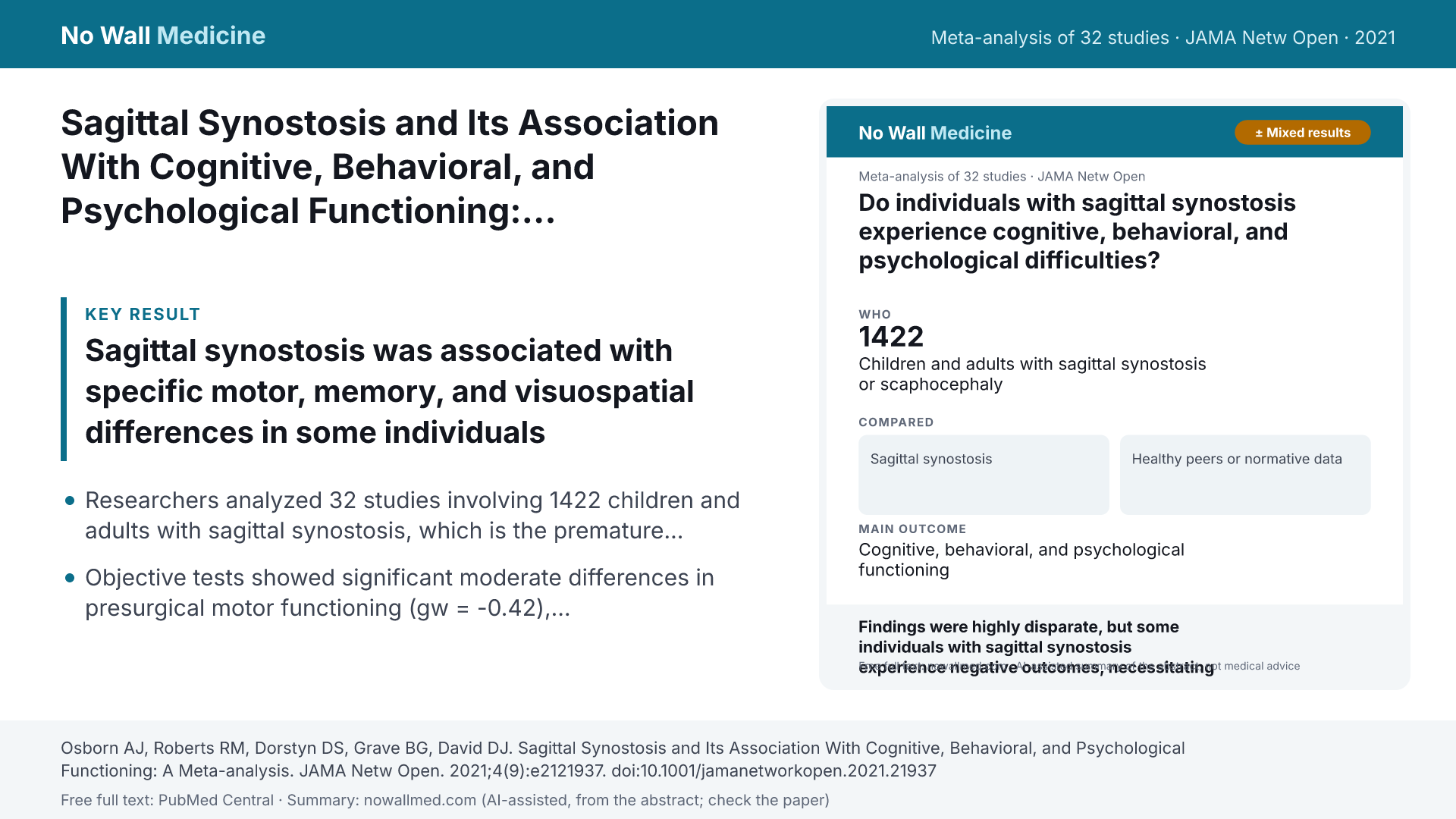
Sagittal synostosis was associated with specific motor, memory, and visuospatial differences in some individuals
Sagittal Synostosis and Its Association With Cognitive, Behavioral, and Psychological Functioning: A Meta-analysis
Meta-analysis of 32 studiesMixed results
Do individuals with sagittal synostosis experience cognitive, behavioral, and psychological difficulties?
Who
1422
Children and adults with sagittal synostosis or scaphocephaly
Compared
Sagittal synostosis
Healthy peers or normative data
Main outcome
Cognitive, behavioral, and psychological functioning
Bottom line: Findings were highly disparate, but some individuals with sagittal synostosis experience negative outcomes, necessitating routine assessment.
Limitation: Findings were often of low quality, with small sample sizes and control groups rarely recruited.
JAMA Netw Open · 2021-09-01Download image
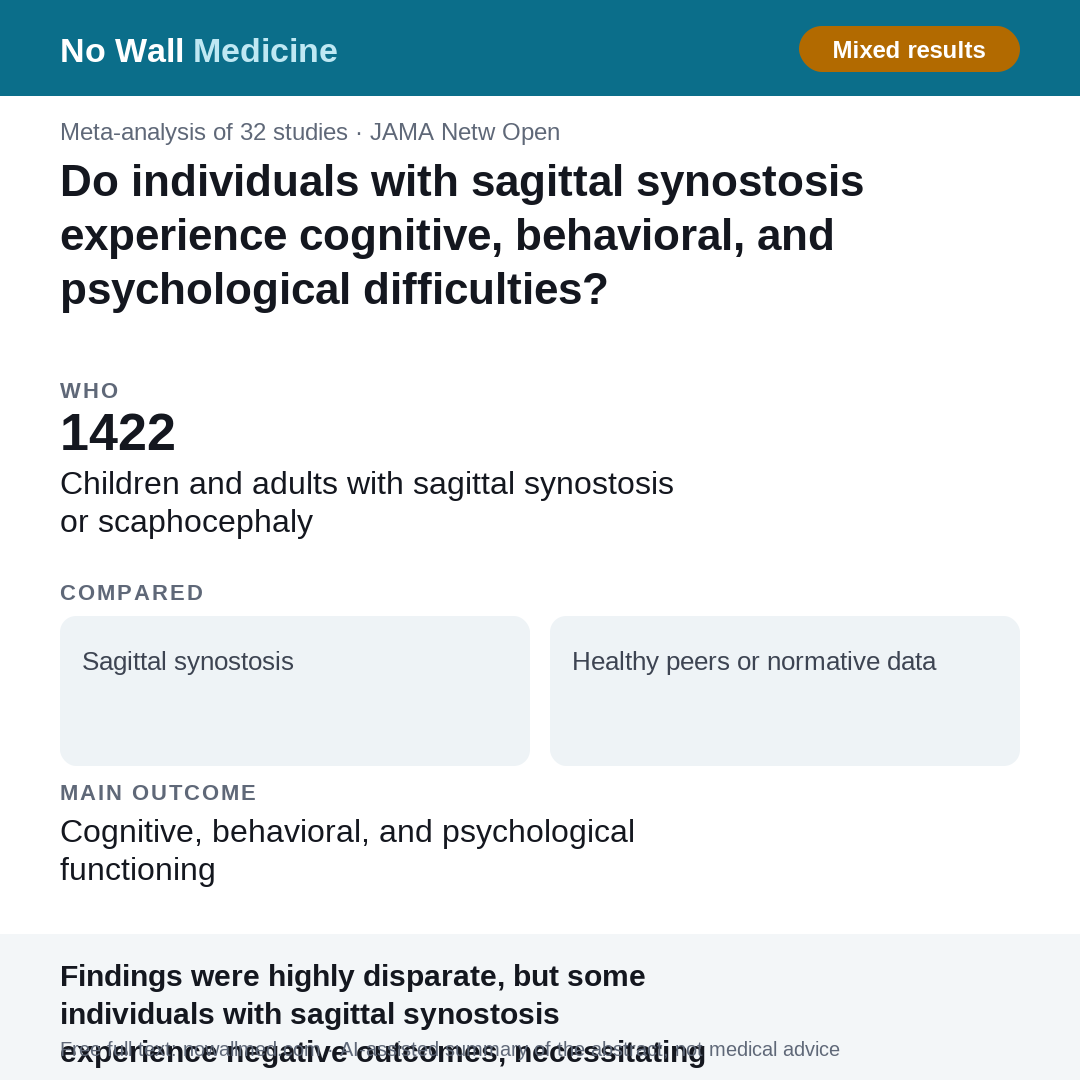
Clinical question: Do individuals with sagittal synostosis experience cognitive, behavioral, and psychological difficulties?
Why it matters: Findings regarding the cognitive, behavioral, and psychological functioning of individuals with sagittal synostosis are highly disparate, which limits their clinical utility.
Key points
- Researchers analyzed 32 studies involving 1422 children and adults with sagittal synostosis, which is the premature fusion of the sagittal suture in the skull.
- Objective tests showed significant moderate differences in presurgical motor functioning (gw = -0.42), postsurgical short-term memory (gw = -0.45), and postsurgical visuospatial ability (gw = 0.31).
- Prevalence estimates for various difficulties ranged from 3% to 37% across 15 different studies.
Limitation the authors note: The included studies were often of low quality, featured small sample sizes, and rarely recruited control groups.
Headline and key points written with AI from the paper’s abstract, with every number checked against it. Read the paper before relying on them.
Was this summary helpful?
Subject terms
Cite this article
Osborn AJ, Roberts RM, Dorstyn DS, Grave BG, David DJ. Sagittal Synostosis and Its Association With Cognitive, Behavioral, and Psychological Functioning: A Meta-analysis. JAMA Netw Open. 2021. doi:10.1001/jamanetworkopen.2021.21937
Spotted a mistake? Suggest a correction