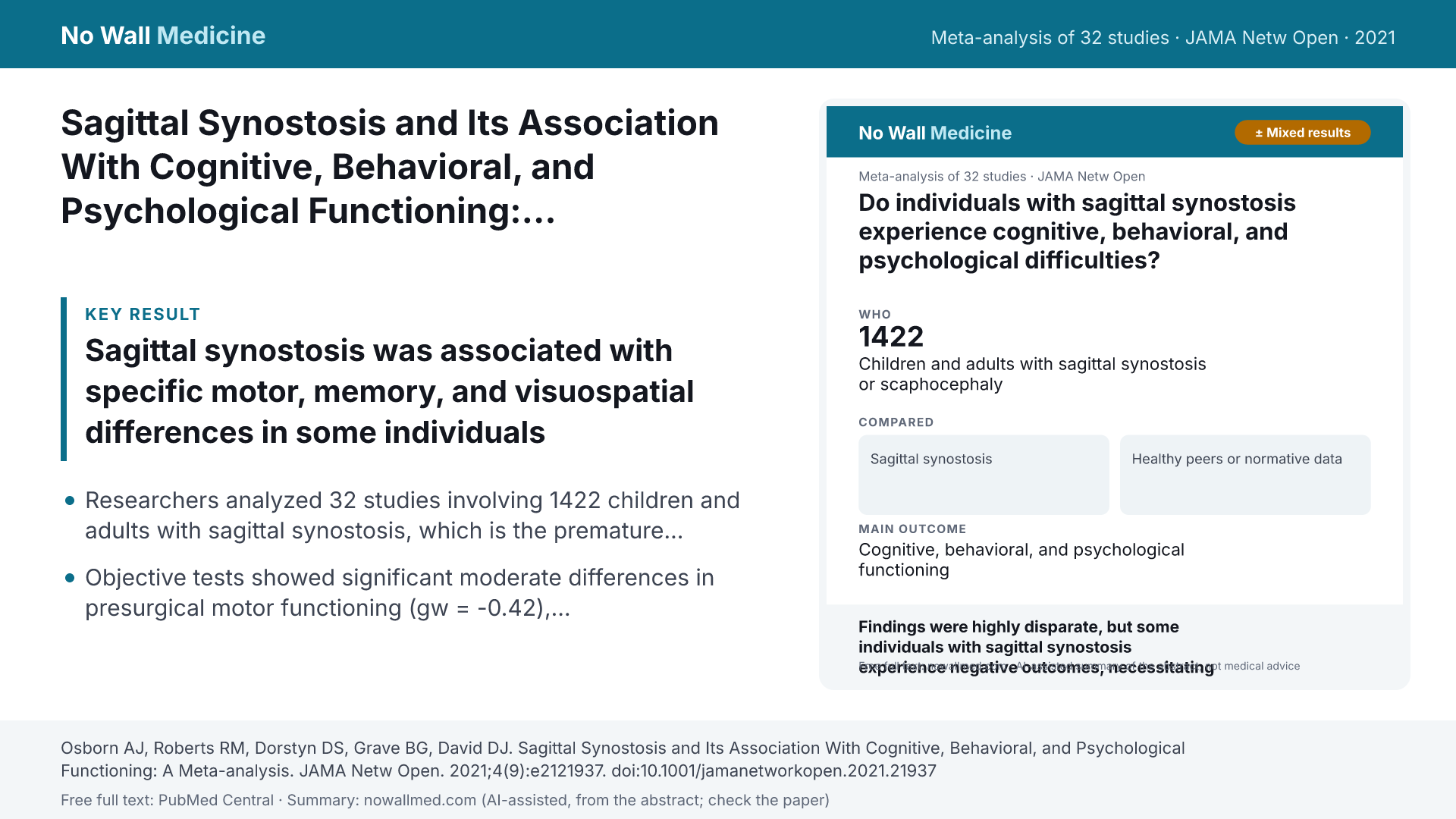
Sagittal Synostosis and Its Association With Cognitive, Behavioral, and Psychological Functioning: A Meta-analysis
Key result: Sagittal synostosis was associated with specific motor, memory, and visuospatial differences in some individuals
Key points
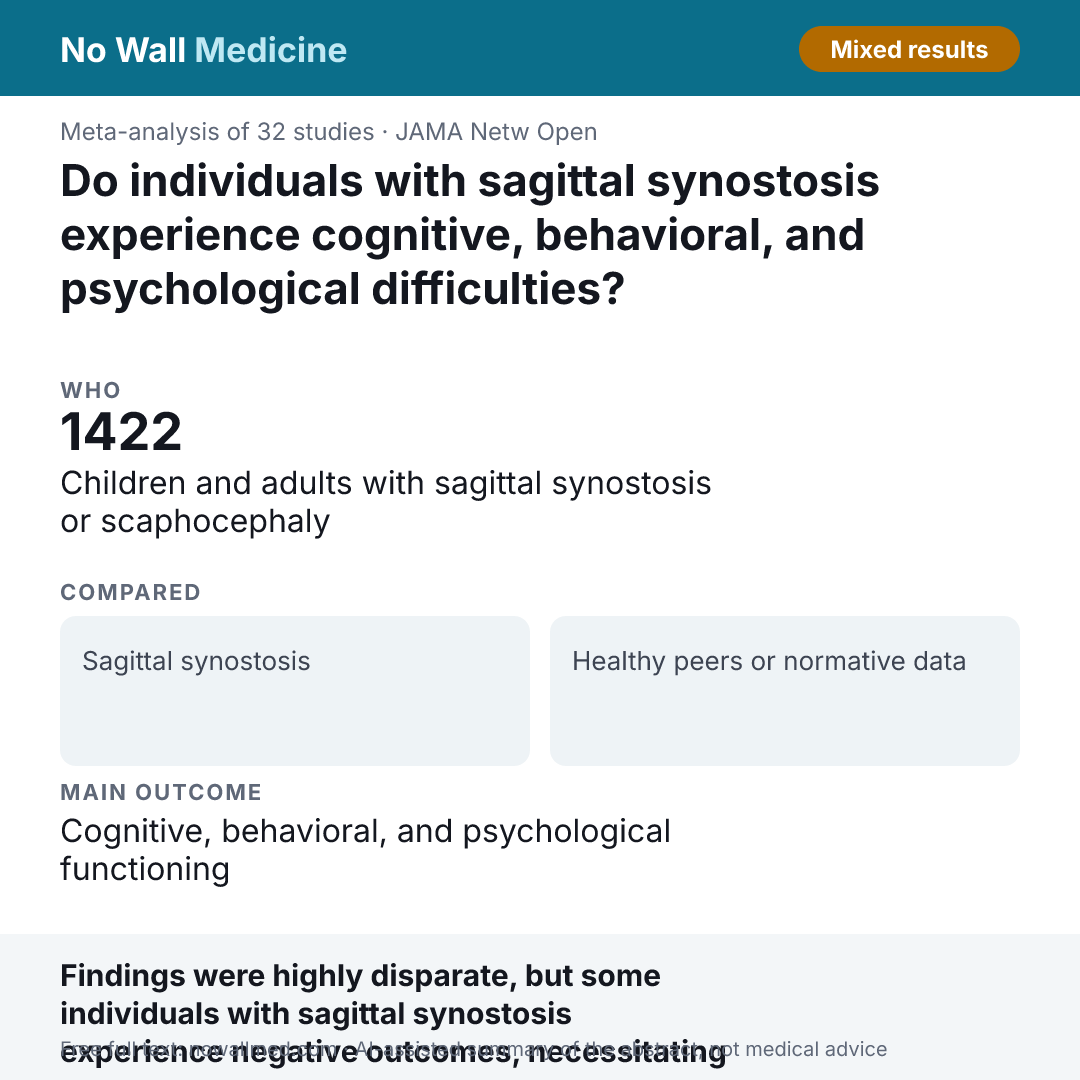
- Researchers analyzed 32 studies involving 1422 children and adults with sagittal synostosis, which is the premature fusion of the sagittal suture in the skull.
- Objective tests showed significant moderate differences in presurgical motor functioning (gw = -0.42), postsurgical short-term memory (gw = -0.45), and postsurgical visuospatial ability (gw = 0.31).
- Prevalence estimates for various difficulties ranged from 3% to 37% across 15 different studies.
Why it matters: Findings regarding the cognitive, behavioral, and psychological functioning of individuals with sagittal synostosis are highly disparate, which limits their clinical utility.
Limitation the authors note: The included studies were often of low quality, featured small sample sizes, and rarely recruited control groups.
Discussion prompts
- Would these patients look like yours? Who was left out?
- Is the main outcome one that matters to patients?
- Is the difference large enough to change what you do?
Cite: Osborn AJ, Roberts RM, Dorstyn DS, Grave BG, David DJ. Sagittal Synostosis and Its Association With Cognitive, Behavioral, and Psychological Functioning: A Meta-analysis. JAMA Netw Open. 2021;4(9):e2121937. doi:10.1001/jamanetworkopen.2021.21937
Free full text: PubMed Central · Summary and visual abstract: nowallmed.com/a/sagittal-synostosis-and-its-association-with-cognitive-behavioral-and-1ivuod9/ (AI-assisted from the abstract; check the paper before relying on it).