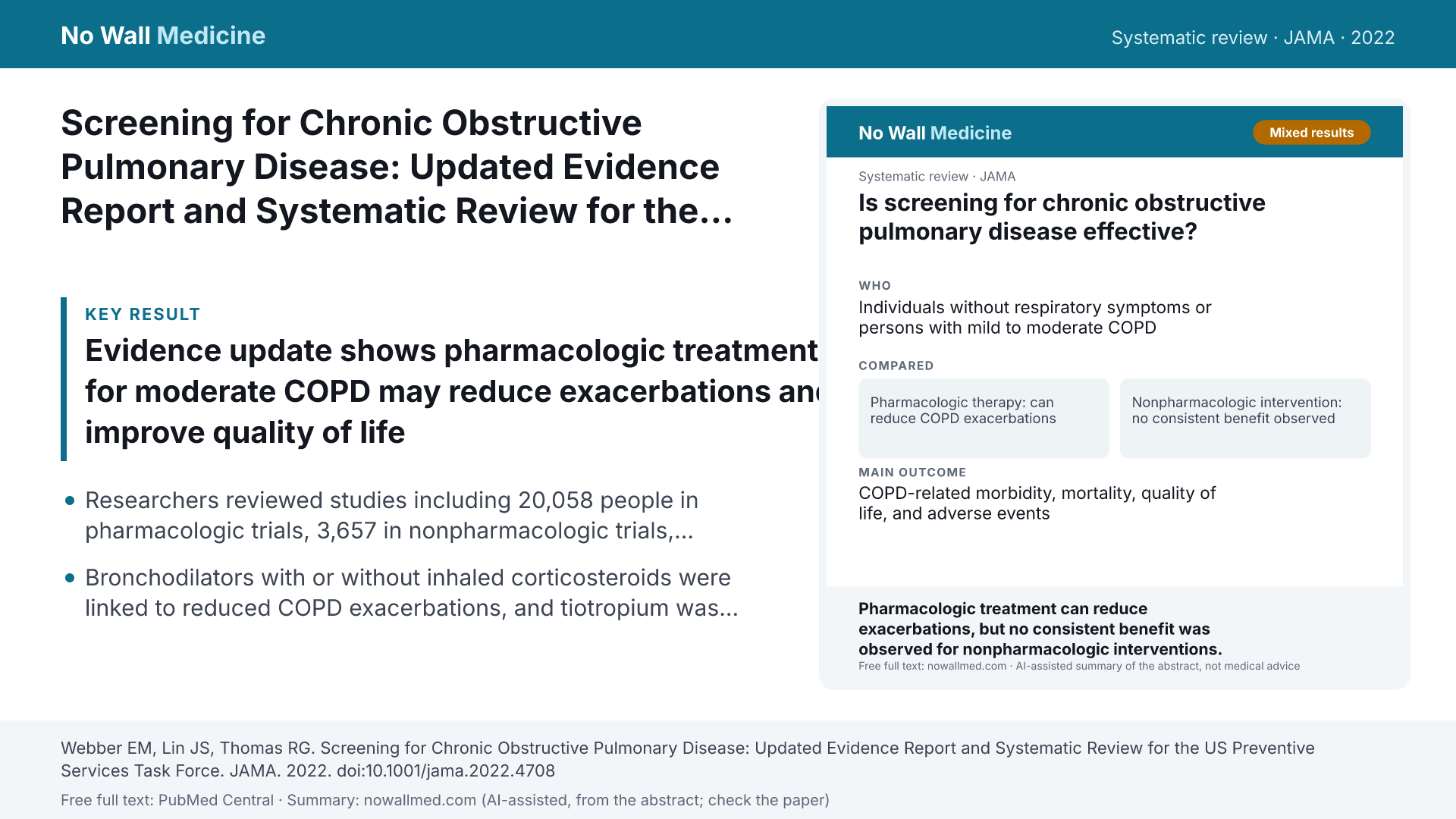
Evidence update shows pharmacologic treatments for moderate COPD may reduce exacerbations and improve quality of life
Screening for Chronic Obstructive Pulmonary Disease: Updated Evidence Report and Systematic Review for the US Preventive Services Task Force
Systematic reviewMixed results
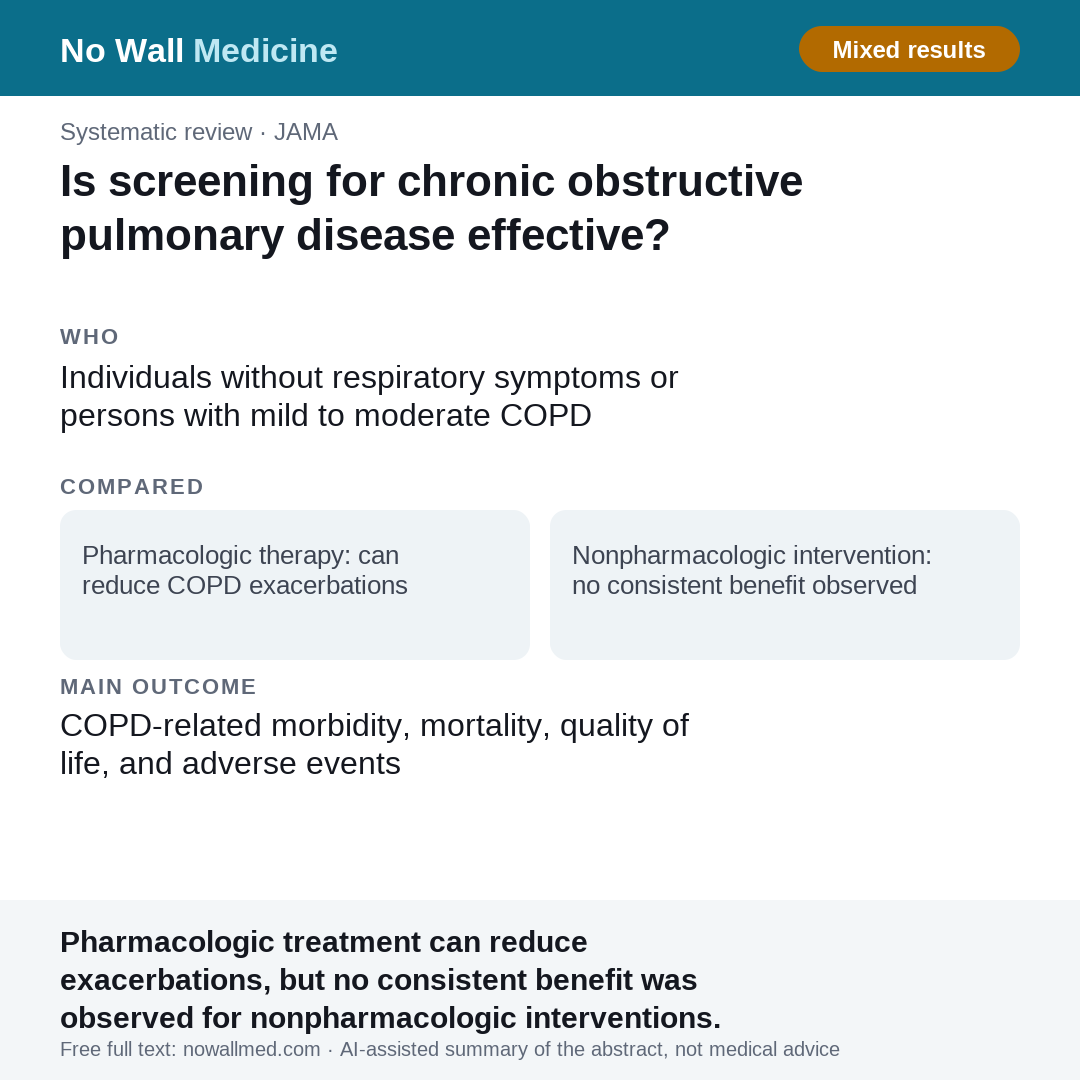
Is screening for chronic obstructive pulmonary disease effective?
Who
Individuals without respiratory symptoms or persons with mild to moderate COPD
Compared
Pharmacologic therapy: can reduce COPD exacerbations
Nonpharmacologic intervention: no consistent benefit observed
Main outcome
COPD-related morbidity, mortality, quality of life, and adverse events
Bottom line: Pharmacologic treatment can reduce exacerbations, but no consistent benefit was observed for nonpharmacologic interventions.
Limitation: The review included no trials on the effectiveness of screening.
JAMA · 2022-05-10Download image
Clinical question: Is screening for chronic obstructive pulmonary disease effective?
Why it matters: The effectiveness of screening for chronic obstructive pulmonary disease and the benefits of various treatments needed updating to inform current recommendation statements.
Key points
- Researchers reviewed studies including 20,058 people in pharmacologic trials, 3,657 in nonpharmacologic trials, and 243,517 in observational studies regarding COPD treatment.
- Bronchodilators with or without inhaled corticosteroids were linked to reduced COPD exacerbations, and tiotropium was linked to improved quality of life in adults with moderate COPD.
- In observational studies, starting long-acting muscarinic antagonists or long-acting beta agonists was associated with serious cardiovascular event risks, and inhaled corticosteroids were associated with diabetes risk.
Limitation the authors note: The review included no trials on the effectiveness of screening for chronic obstructive pulmonary disease.
Headline and key points written with AI from the paper’s abstract, with every number checked against it. Read the paper before relying on them.
Was this summary helpful?
Subject terms
Headline, design, result, key points, caveat and citation as plain text.
Cite this article
Webber EM, Lin JS, Thomas RG. Screening for Chronic Obstructive Pulmonary Disease: Updated Evidence Report and Systematic Review for the US Preventive Services Task Force. JAMA. 2022. doi:10.1001/jama.2022.4708
Spotted a mistake? Suggest a correction