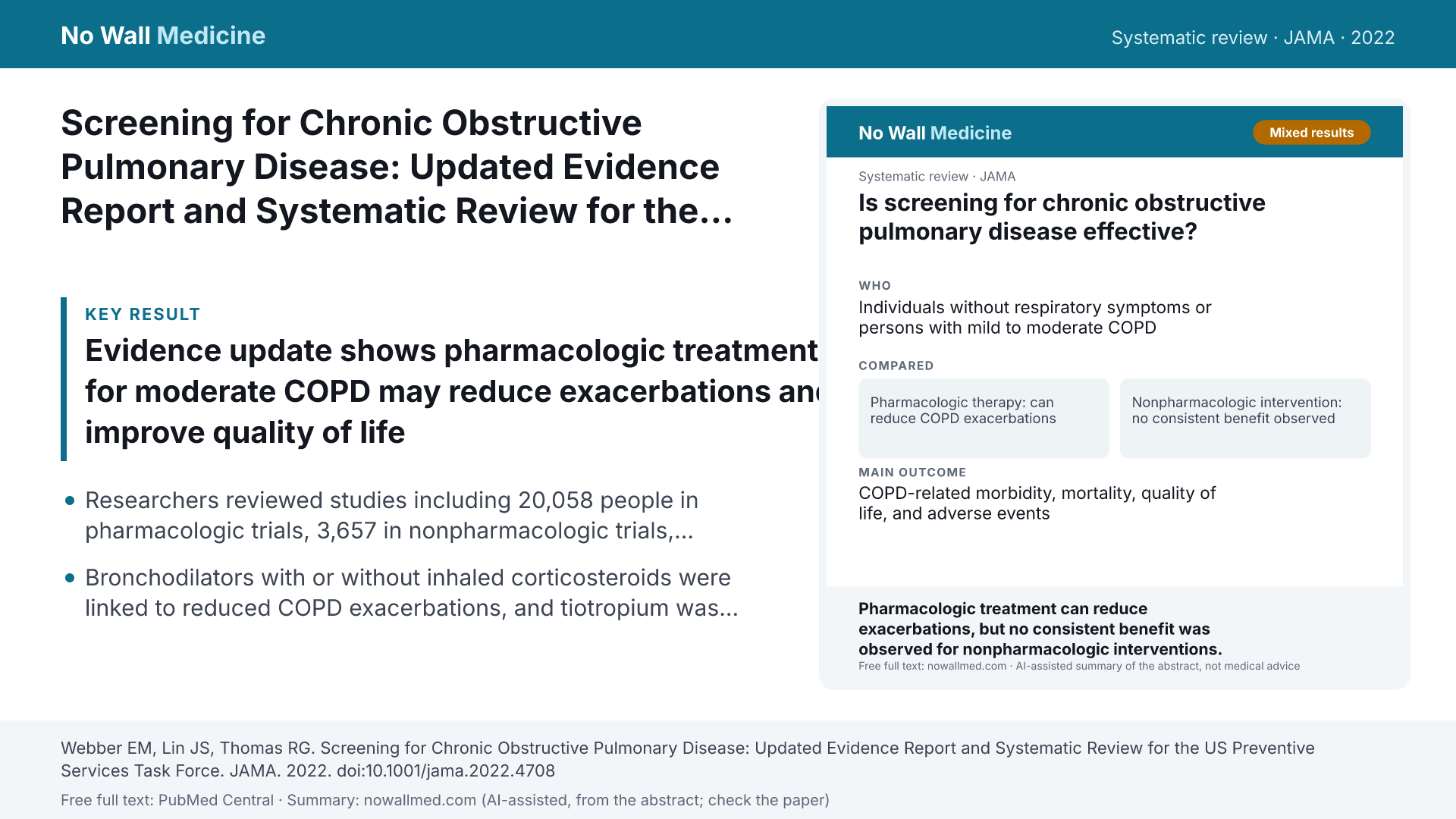
Screening for Chronic Obstructive Pulmonary Disease: Updated Evidence Report and Systematic Review for the US Preventive Services Task Force
Key result: Evidence update shows pharmacologic treatments for moderate COPD may reduce exacerbations and improve quality of life
Key points
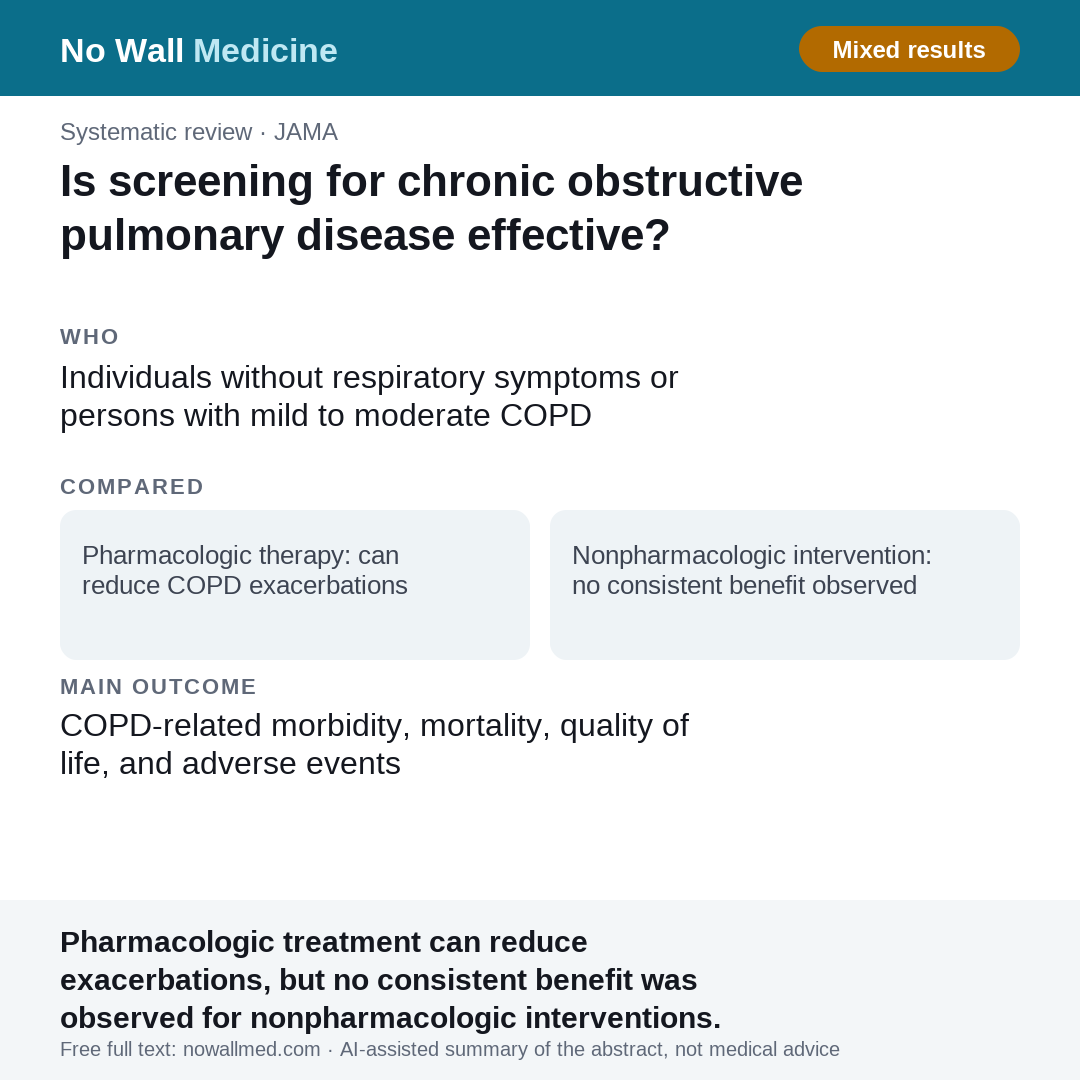
- Researchers reviewed studies including 20,058 people in pharmacologic trials, 3,657 in nonpharmacologic trials, and 243,517 in observational studies regarding COPD treatment.
- Bronchodilators with or without inhaled corticosteroids were linked to reduced COPD exacerbations, and tiotropium was linked to improved quality of life in adults with moderate COPD.
- In observational studies, starting long-acting muscarinic antagonists or long-acting beta agonists was associated with serious cardiovascular event risks, and inhaled corticosteroids were associated with diabetes risk.
Why it matters: The effectiveness of screening for chronic obstructive pulmonary disease and the benefits of various treatments needed updating to inform current recommendation statements.
Limitation the authors note: The review included no trials on the effectiveness of screening for chronic obstructive pulmonary disease.
Discussion prompts
- Would these patients look like yours? Who was left out?
- Is the main outcome one that matters to patients?
- Is the difference large enough to change what you do?
Cite: Webber EM, Lin JS, Thomas RG. Screening for Chronic Obstructive Pulmonary Disease: Updated Evidence Report and Systematic Review for the US Preventive Services Task Force. JAMA. 2022. doi:10.1001/jama.2022.4708
Free full text: PubMed Central · Summary and visual abstract: nowallmed.com/a/screening-for-chronic-obstructive-pulmonary-disease-updated-evidence-9m7gw5/ (AI-assisted from the abstract; check the paper before relying on it).