No single sedation regimen was superior for successful awake tracheal intubation in a network meta-analysis
Sedation for awake tracheal intubation: A systematic review and network meta-analysis
Systematic review and network meta-analysisNo clear difference
Which sedation regimens are most effective for successful and safe awake tracheal intubation?
Who
2837
Patients undergoing awake tracheal intubation
Compared
All sedation regimens
Placebo
Main outcome
Tracheal intubation success, time, and arterial oxygen desaturation
Bottom line: No individual sedation regimen was superior for intubation success, time, or oxygen desaturation.
Limitation: The quality of evidence for each outcome was low.
Anaesthesia · 2024-10-28Download image
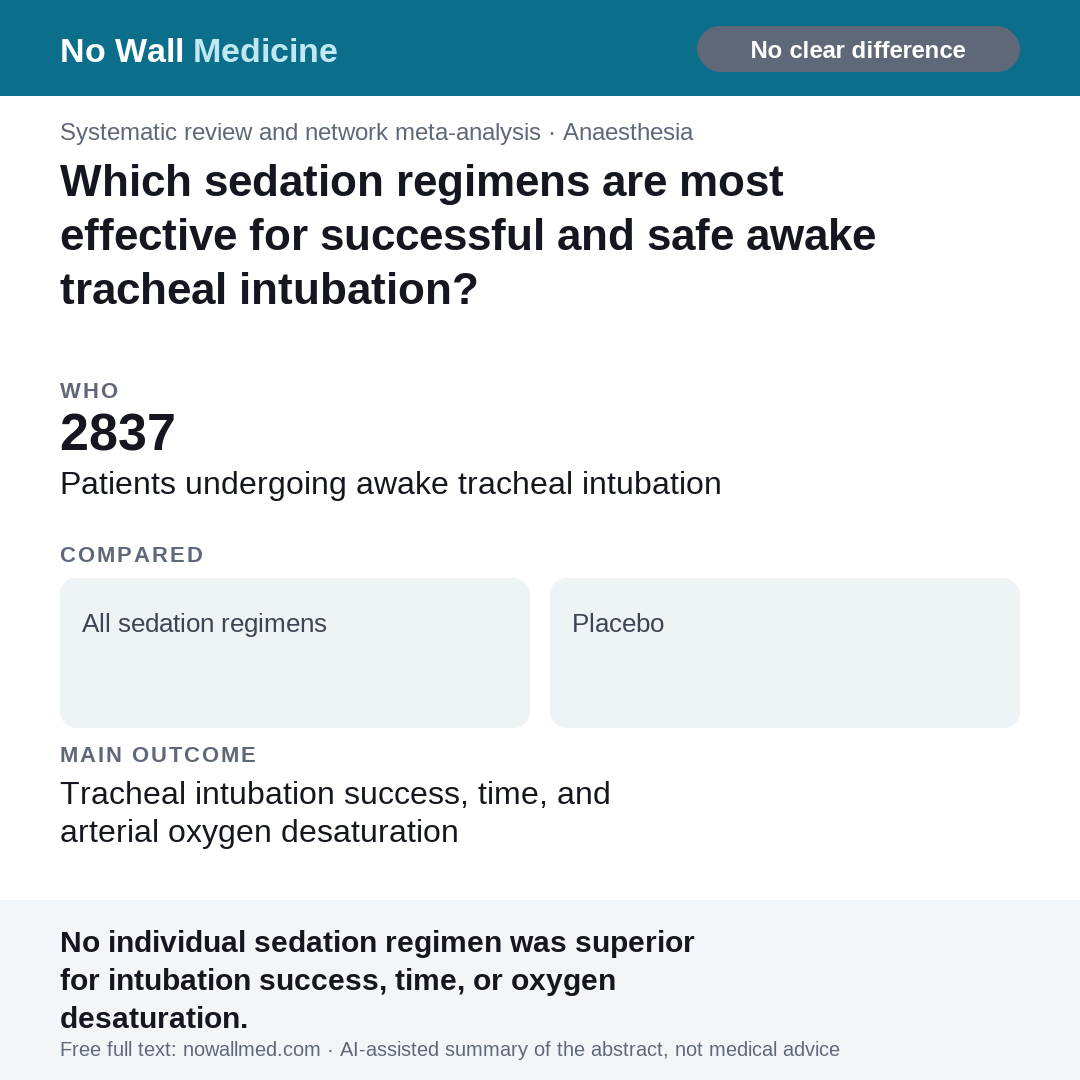
Clinical question: Which sedation regimens are most effective for successful and safe awake tracheal intubation?
Why it matters: It was unknown which specific sedation techniques are most effective for successful intubation, speed, and maintaining oxygen levels during the procedure.
Key points
- Researchers analyzed 48 studies involving 2837 patients to compare 33 different sedation regimens for awake tracheal intubation.
- No individual sedation regimen was found to be superior for overall intubation success rates among 2139 patients.
- While some data suggested dexmedetomidine and magnesium sulphate were associated with a lower risk of arterial oxygen desaturation, excluding high-risk trials showed no relevant differences.
Limitation the authors note: The quality of evidence for each outcome was low.
Headline and key points written with AI from the paper’s abstract, with every number checked against it. Read the paper before relying on them.
Was this summary helpful?
Subject terms
Cite this article
El-Boghdadly K, Desai N, Jones JB, Elghazali S, Ahmad I, Sneyd JR. Sedation for awake tracheal intubation: A systematic review and network meta-analysis. Anaesthesia. 2024. doi:10.1111/anae.16452
Spotted a mistake? Suggest a correction
Top studies every Monday
The week’s key trials and guidelines in your specialties, plus any topics you follow. By email, free.
Get the weekly digest