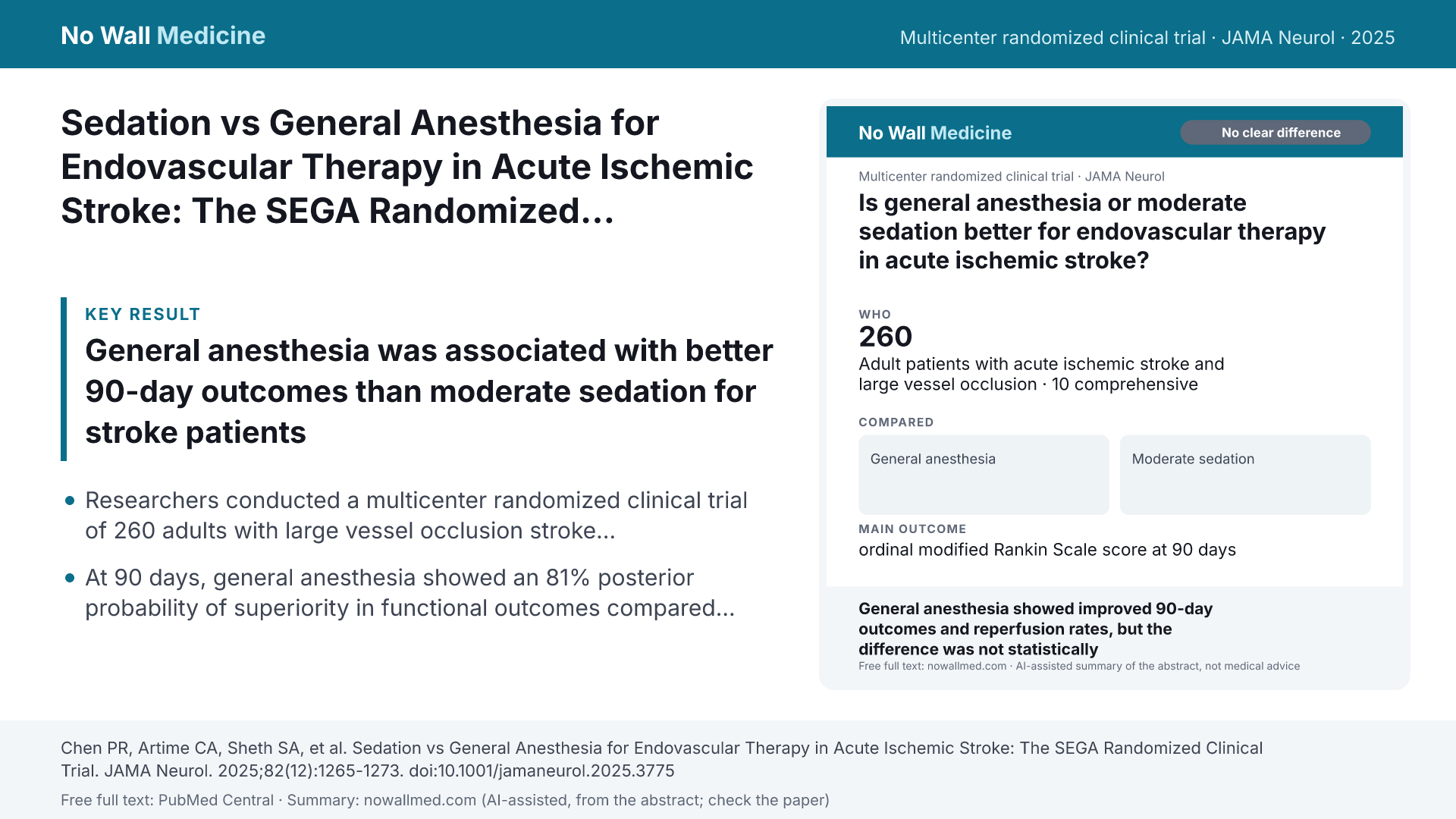
General anesthesia was associated with better 90-day outcomes than moderate sedation for stroke patients
Sedation vs General Anesthesia for Endovascular Therapy in Acute Ischemic Stroke: The SEGA Randomized Clinical Trial
Multicenter randomized clinical trialNo clear difference
Is general anesthesia or moderate sedation better for endovascular therapy in acute ischemic stroke?
Who
260
Adult patients with acute ischemic stroke and large vessel occlusion · 10 comprehensive stroke centers in the US
Compared
General anesthesia
Moderate sedation
Main outcome
ordinal modified Rankin Scale score at 90 days
Result: odds ratio 1.22 (95% credible interval 0.79-1.87)
Bottom line: General anesthesia showed improved 90-day outcomes and reperfusion rates, but the difference was not statistically significant.
JAMA Neurol · 2025-10-13Download image
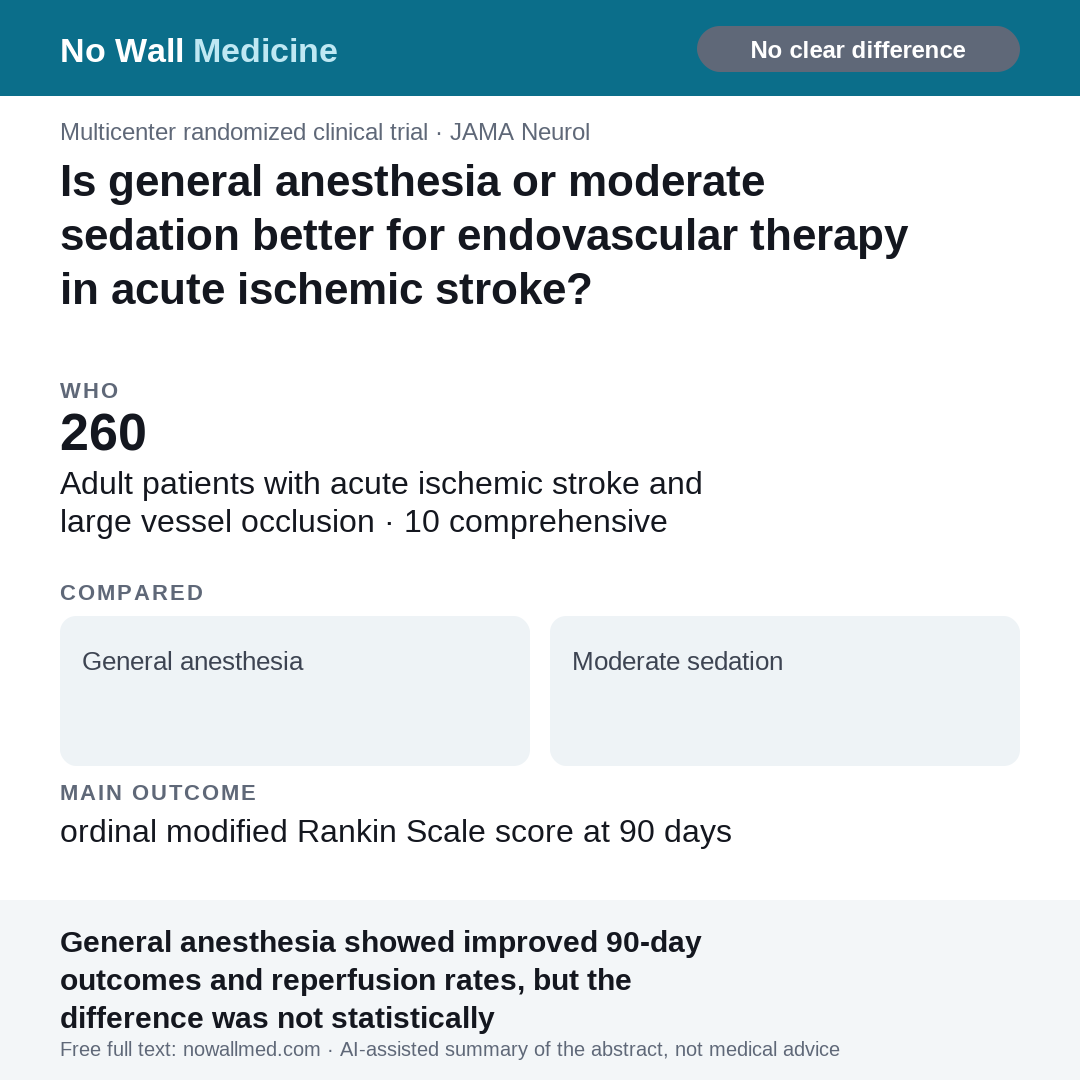
Clinical question: Is general anesthesia or moderate sedation better for endovascular therapy in acute ischemic stroke?
Why it matters: The optimal anesthetic strategy for patients undergoing endovascular therapy for acute ischemic stroke remains unclear.
Key points
- Researchers conducted a multicenter randomized clinical trial of 260 adults with large vessel occlusion stroke undergoing endovascular therapy.
- At 90 days, general anesthesia showed an 81% posterior probability of superiority in functional outcomes compared to moderate sedation.
- The rate of symptomatic bleeding in the brain was 0.8% in the general anesthesia group versus 2.4% in the sedation group.
Headline and key points written with AI from the paper’s abstract, with every number checked against it. Read the paper before relying on them.
Was this summary helpful?
Subject terms
Cite this article
Chen PR, Artime CA, Sheth SA, Pedroza C, Ortega-Gutierrez S, Wolfe S. Sedation vs General Anesthesia for Endovascular Therapy in Acute Ischemic Stroke: The SEGA Randomized Clinical Trial. JAMA Neurol. 2025. doi:10.1001/jamaneurol.2025.3775
Spotted a mistake? Suggest a correction