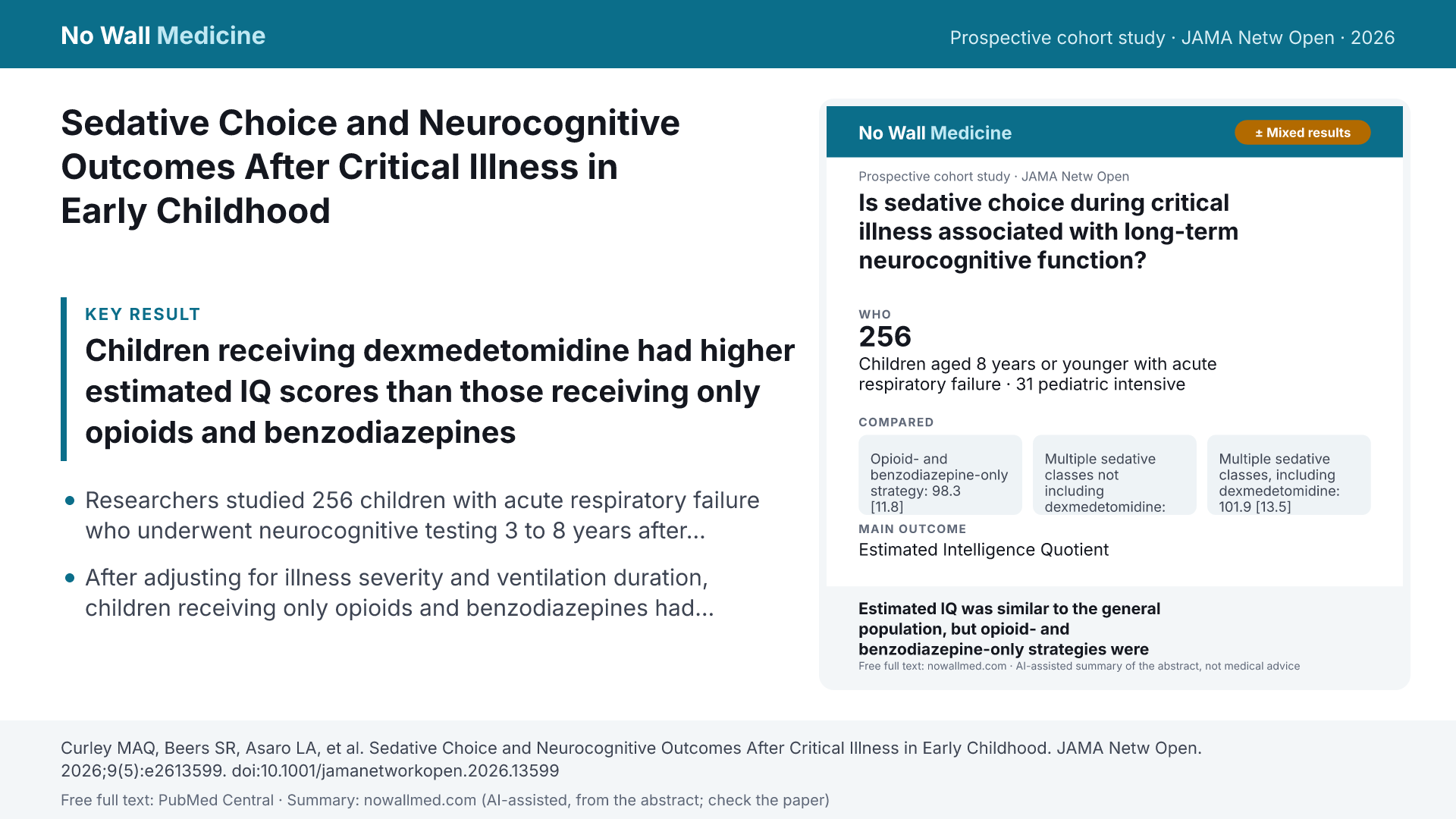
Children receiving dexmedetomidine had higher estimated IQ scores than those receiving only opioids and benzodiazepines
Sedative Choice and Neurocognitive Outcomes After Critical Illness in Early Childhood
Prospective cohort studyMixed results
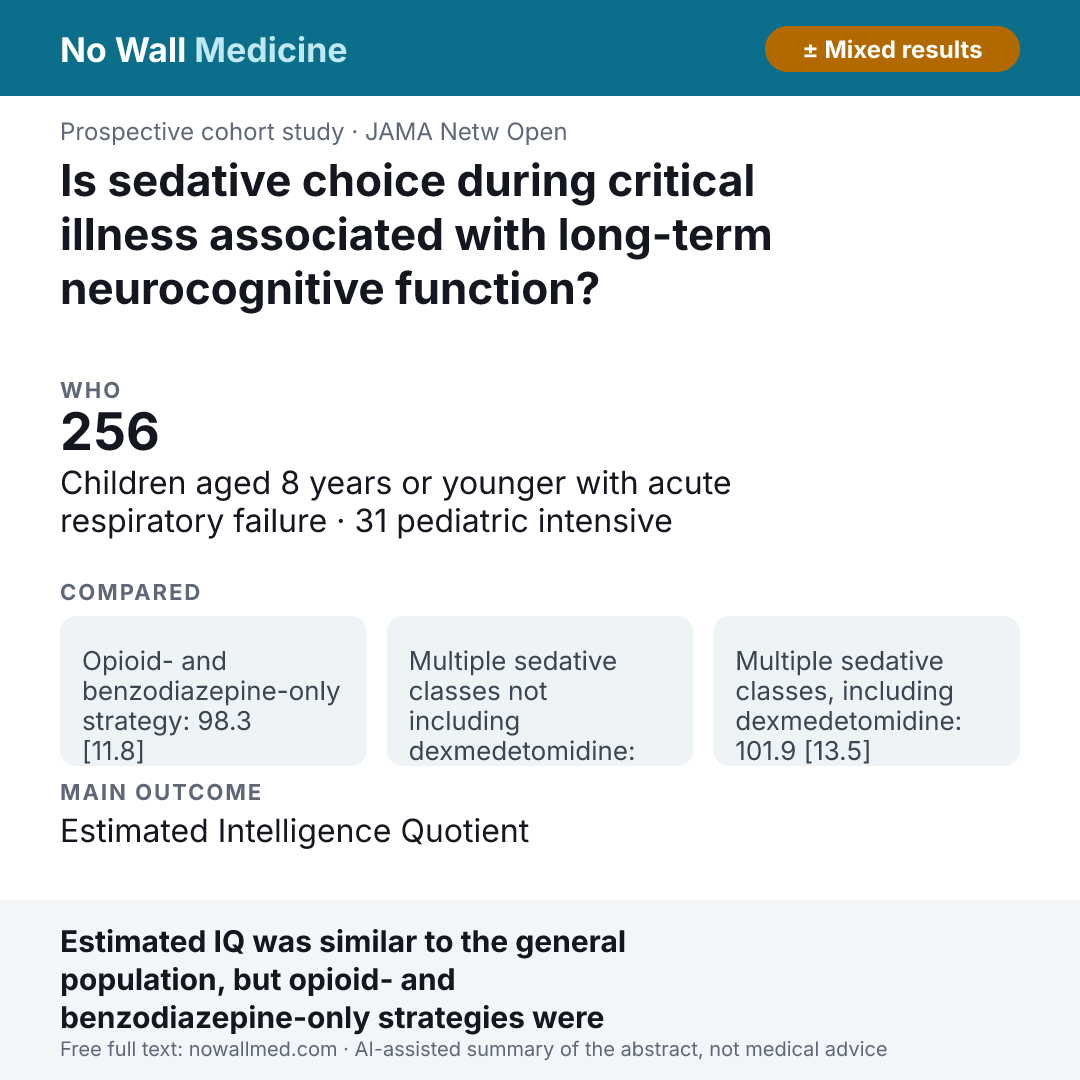
Is sedative choice during critical illness associated with long-term neurocognitive function?
Who
256
Children aged 8 years or younger with acute respiratory failure · 31 pediatric intensive care units
Compared
Opioid- and benzodiazepine-only strategy: 98.3 [11.8]
Multiple sedative classes not including dexmedetomidine: 100.6 [14.5]
Multiple sedative classes, including dexmedetomidine: 101.9 [13.5]
Main outcome
Estimated Intelligence Quotient
Result: -4.1 (95% CI, -7.3 to -0.9)
Bottom line: Estimated IQ was similar to the general population, but opioid- and benzodiazepine-only strategies were associated with lower IQ scores.
JAMA Netw Open · 2026-05-01 · Save PNG
Clinical question: Is sedative choice during critical illness associated with long-term neurocognitive function?
Why it matters: Sedatives used to treat critically ill young children may be harmful to early brain development.
Key points
- Researchers studied 256 children with acute respiratory failure who underwent neurocognitive testing 3 to 8 years after their intensive care unit hospitalization.
- After adjusting for illness severity and ventilation duration, children receiving only opioids and benzodiazepines had an estimated IQ 4.1 points lower than those receiving dexmedetomidine.
- The mean estimated intelligence quotient score for all children was 100.3, which was similar to the published test mean of 100.
Headline and key points written with AI from the paper’s abstract, with every number checked against it. Read the paper before relying on them.
Was this summary helpful?
Subject terms
Headline, design, result, key points, caveat and citation as plain text.
Cite this article
Curley MAQ, Beers SR, Asaro LA, et al. Sedative Choice and Neurocognitive Outcomes After Critical Illness in Early Childhood. JAMA Netw Open. 2026;9(5):e2613599. doi:10.1001/jamanetworkopen.2026.13599
Spotted a mistake? Suggest a correction