High frequency electrical stimulation at 40 kHz increased pain thresholds in a randomized trial
Selective nociceptive modulation using a novel prototype of transcutaneous kilohertz high-frequency alternating current stimulation: a crossover double-blind randomized sham-controlled trial
Randomized, double-blind, sham-controlled crossover studyBenefit found
Does novel transcutaneous kilohertz high-frequency alternating current stimulation affect pain and safety?
Who
34
34 healthy participants
Compared
30 kilohertz
40 kilohertz: greatest difference (1.4 °C; 0.6 to 2.1) occurring immediately post-intervention
50 kilohertz
sham stimulation
Main outcome
heat pain threshold, pressure pain threshold, and adverse effects
Bottom line: Kilohertz high-frequency alternating current stimulation, especially at 40 kilohertz, effectively increases pain thresholds without affecting motor or tactile outcomes.
J Neuroeng Rehabil · 2024-11-15Download image
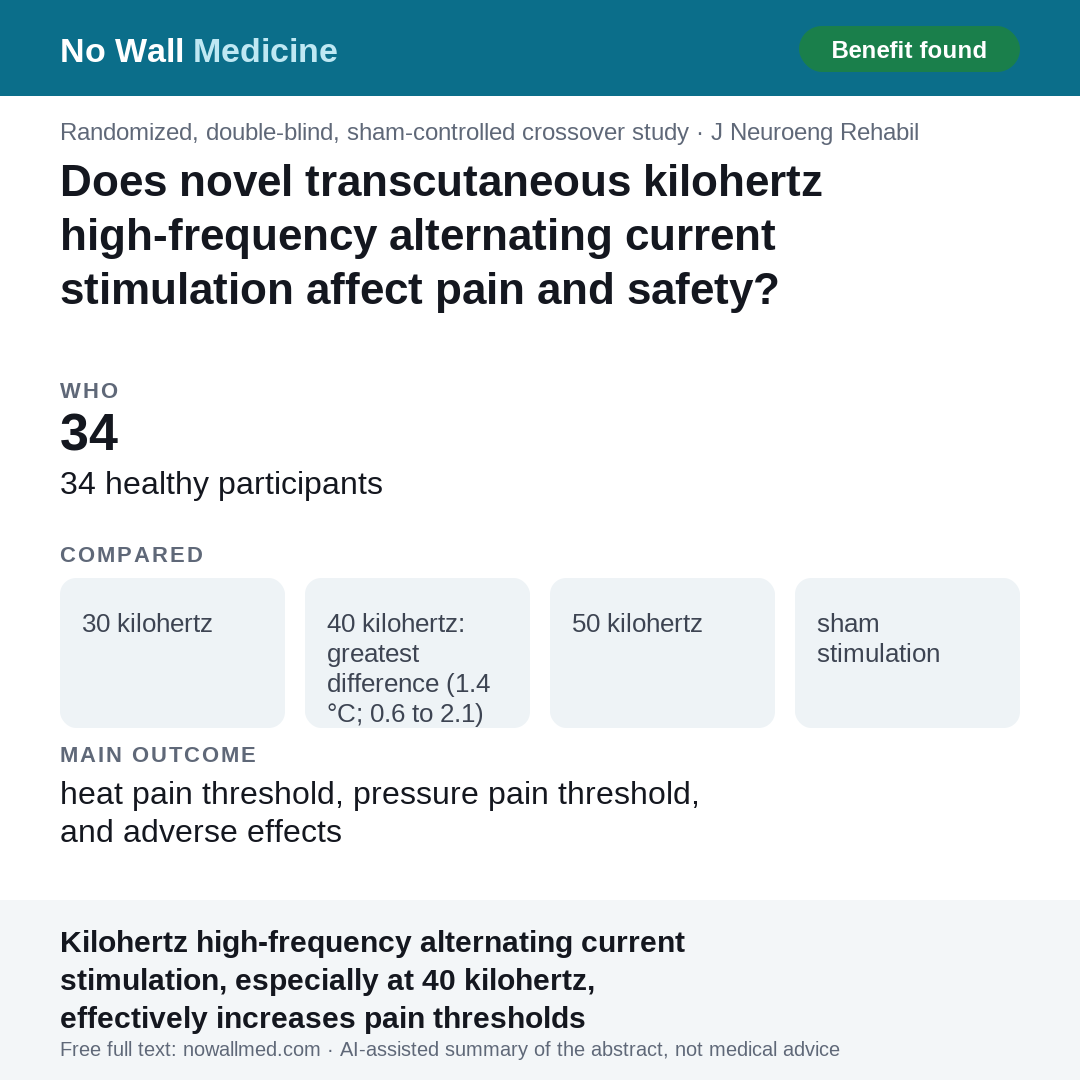
Clinical question: Does novel transcutaneous kilohertz high-frequency alternating current stimulation affect pain and safety?
Why it matters: It was unknown if a novel prototype stimulator capable of frequencies above 20 kHz could safely and effectively modulate pain through the skin.
Key points
- Researchers studied 34 healthy participants using a prototype stimulator to compare 30, 40, and 50 kilohertz high-frequency alternating current stimulation against a sham treatment.
- The 40 kHz intervention increased the heat pain threshold at all time points, with a 1.4 °C difference immediately after stimulation.
- All active frequencies increased the pressure pain threshold during and immediately after stimulation, while 40 kHz showed a 4.1 N/cm2 increase at 15 min post-intervention.
Headline and key points written with AI from the paper’s abstract, with every number checked against it. Read the paper before relying on them.
Topics
Cite this article
Fernández-Pérez JJ, Serrano-Muñoz D, Gómez-Soriano J, Álvarez DM, Avendaño-Coy J. Selective nociceptive modulation using a novel prototype of transcutaneous kilohertz high-frequency alternating current stimulation: a crossover double-blind randomized sham-controlled trial. J Neuroeng Rehabil. 2024. doi:10.1186/s12984-024-01503-w
Spotted a mistake? Suggest a correction
Top studies every Monday
The week’s key trials and guidelines in your specialties, by email. Free.
Get the weekly digest