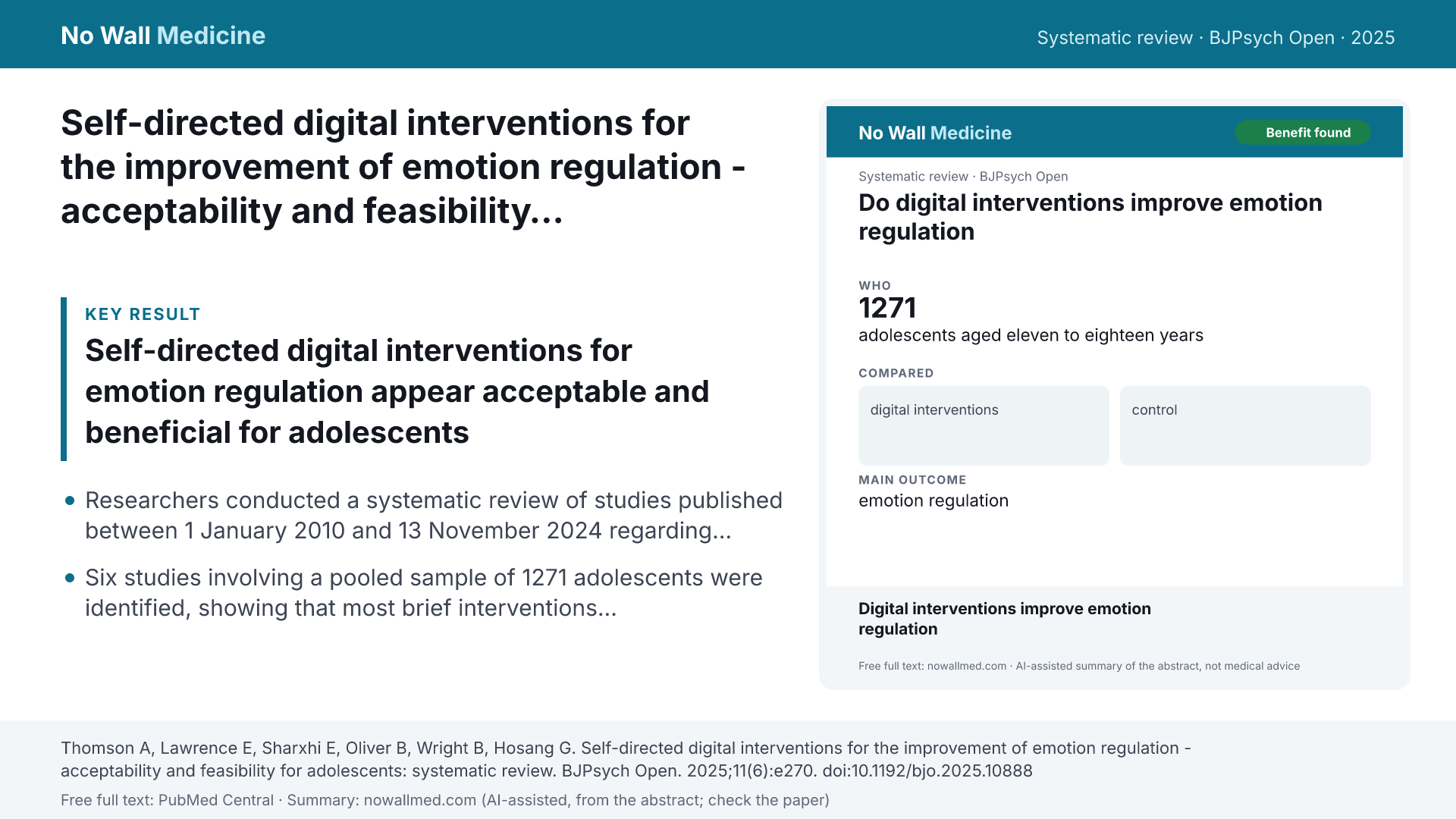
Self-directed digital interventions for emotion regulation appear acceptable and beneficial for adolescents
Self-directed digital interventions for the improvement of emotion regulation - acceptability and feasibility for adolescents: systematic review
Systematic reviewBenefit found
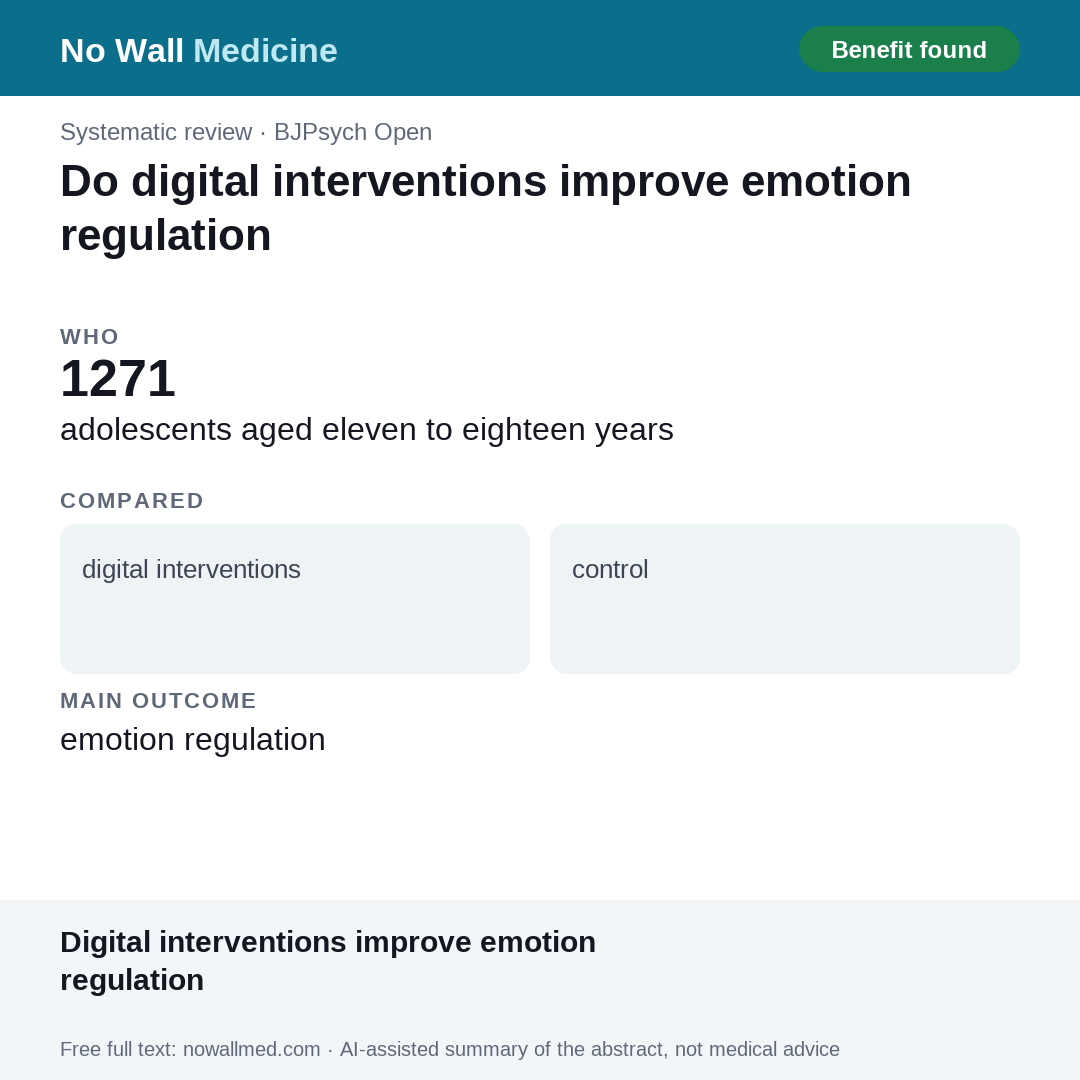
Do digital interventions improve emotion regulation
Who
1271
adolescents aged eleven to eighteen years
Compared
digital interventions
control
Main outcome
emotion regulation
Bottom line: Digital interventions improve emotion regulation
Limitation: small evidence base
BJPsych Open · 2025-11-06Download image
Why it matters: Evidence regarding the acceptability and feasibility of self-directed digital tools for adolescent emotion regulation has not yet been synthesized.
Key points
- Researchers conducted a systematic review of studies published between 1 January 2010 and 13 November 2024 regarding digital tools for emotion regulation in adolescents aged 11-18 years.
- Six studies involving a pooled sample of 1271 adolescents were identified, showing that most brief interventions were acceptable and demonstrated benefits for emotion regulation.
- The identified interventions were mostly shorter than 1 month and included components such as mindfulness and mood monitoring.
Limitation the authors note: The evidence base was small, with only six studies meeting the eligibility criteria.
Headline and key points written with AI from the paper’s abstract, with every number checked against it. Read the paper before relying on them.
Was this summary helpful?
Cite this article
Thomson A, Lawrence E, Sharxhi E, Oliver B, Wright B, Hosang G. Self-directed digital interventions for the improvement of emotion regulation - acceptability and feasibility for adolescents: systematic review. BJPsych Open. 2025. doi:10.1192/bjo.2025.10888
Spotted a mistake? Suggest a correction
Top studies every Monday
The week’s key trials and guidelines in your specialties, plus any topics you follow. By email, free.
Get the weekly digest