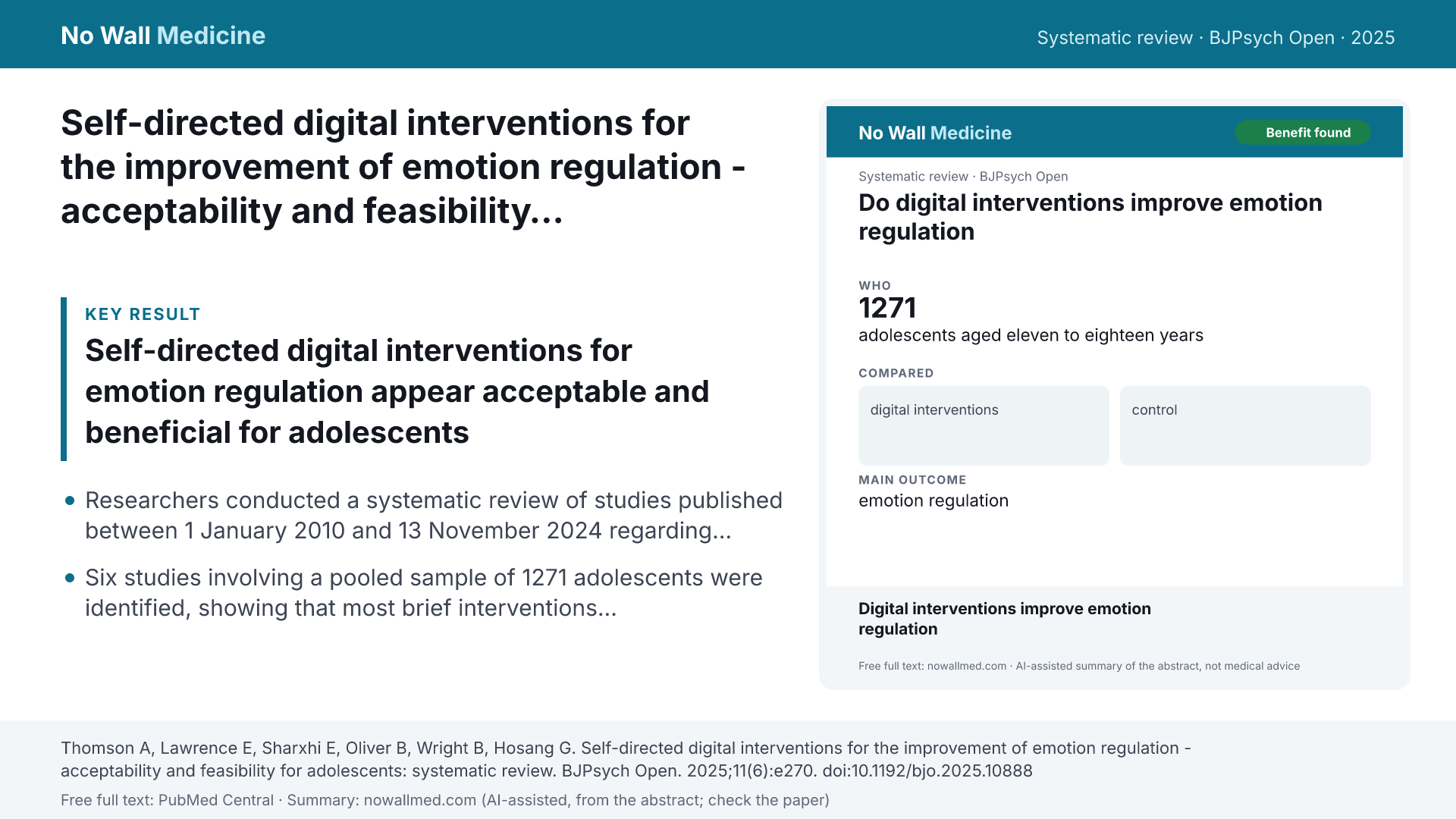
Self-directed digital interventions for the improvement of emotion regulation - acceptability and feasibility for adolescents: systematic review
Key result: Self-directed digital interventions for emotion regulation appear acceptable and beneficial for adolescents
Key points
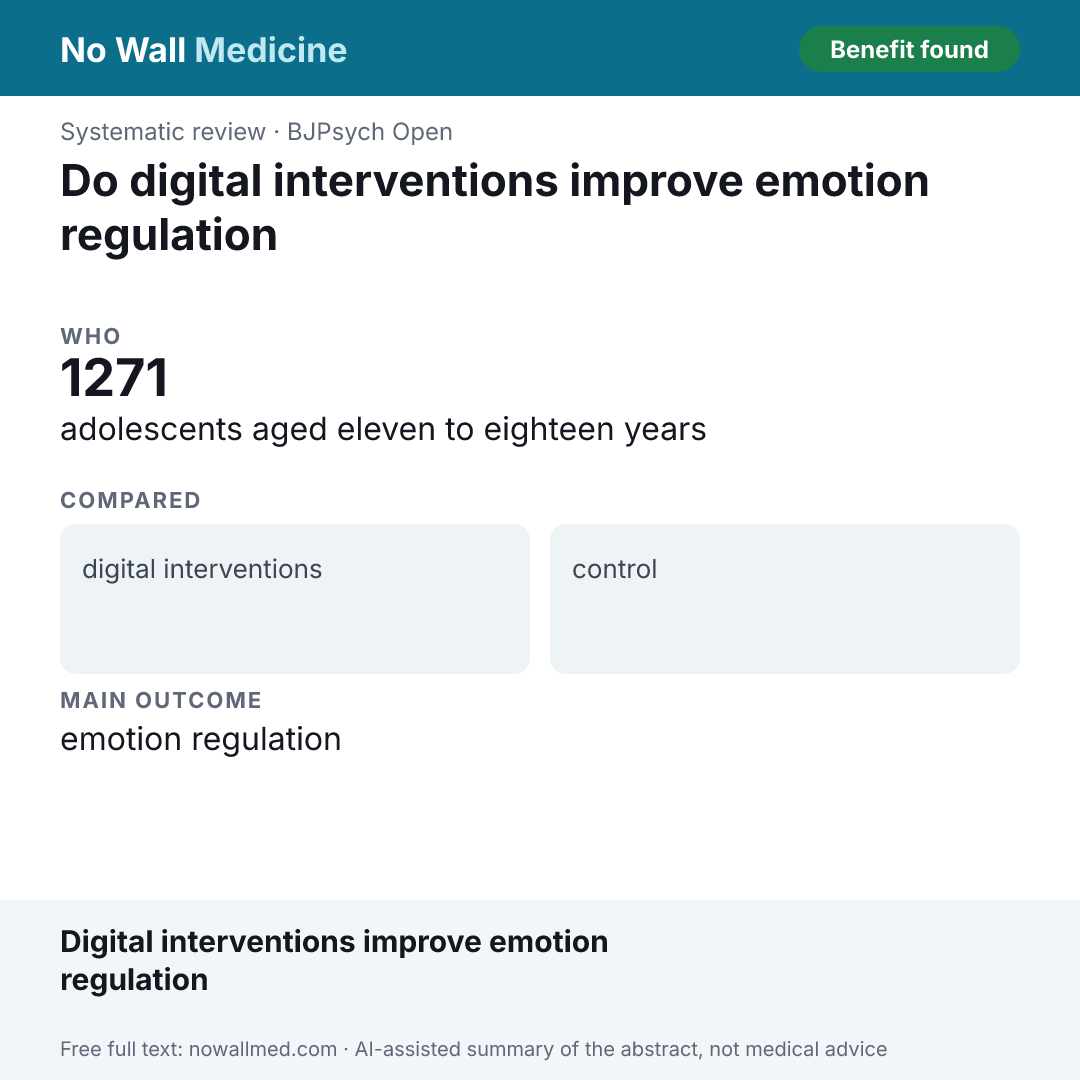
- Researchers conducted a systematic review of studies published between 1 January 2010 and 13 November 2024 regarding digital tools for emotion regulation in adolescents aged 11-18 years.
- Six studies involving a pooled sample of 1271 adolescents were identified, showing that most brief interventions were acceptable and demonstrated benefits for emotion regulation.
- The identified interventions were mostly shorter than 1 month and included components such as mindfulness and mood monitoring.
Why it matters: Evidence regarding the acceptability and feasibility of self-directed digital tools for adolescent emotion regulation has not yet been synthesized.
Limitation the authors note: The evidence base was small, with only six studies meeting the eligibility criteria.
Discussion prompts
- Would these patients look like yours? Who was left out?
- Is the main outcome one that matters to patients?
- Is the difference large enough to change what you do?
Cite: Thomson A, Lawrence E, Sharxhi E, Oliver B, Wright B, Hosang G. Self-directed digital interventions for the improvement of emotion regulation - acceptability and feasibility for adolescents: systematic review. BJPsych Open. 2025;11(6):e270. doi:10.1192/bjo.2025.10888
Free full text: PubMed Central · Summary and visual abstract: nowallmed.com/a/self-directed-digital-interventions-for-the-improvement-of-emotion-eyjhnf/ (AI-assisted from the abstract; check the paper before relying on it).