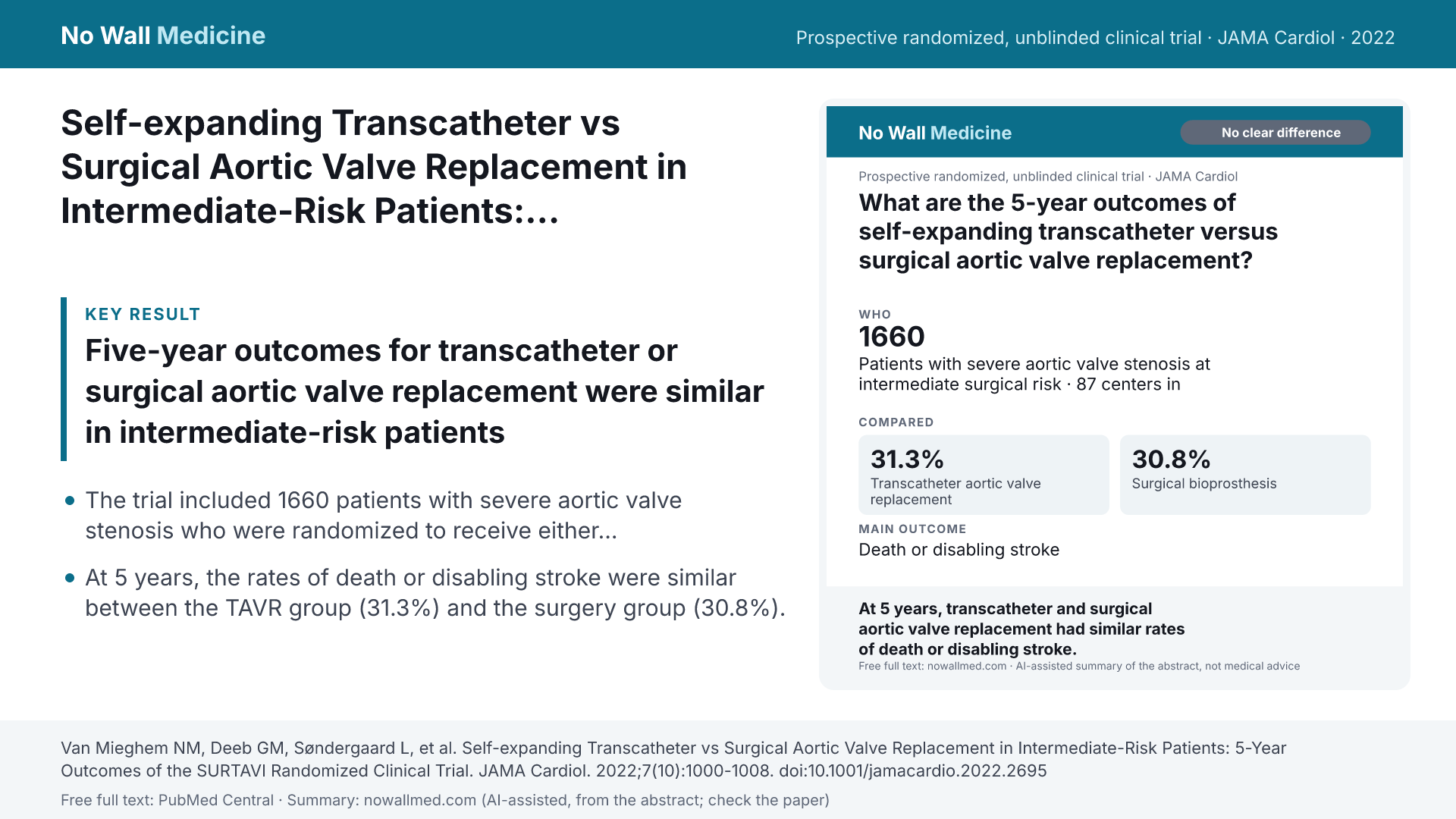
Five-year outcomes for transcatheter or surgical aortic valve replacement were similar in intermediate-risk patients
Self-expanding Transcatheter vs Surgical Aortic Valve Replacement in Intermediate-Risk Patients: 5-Year Outcomes of the SURTAVI Randomized Clinical Trial
Prospective randomized, unblinded clinical trialNo clear difference
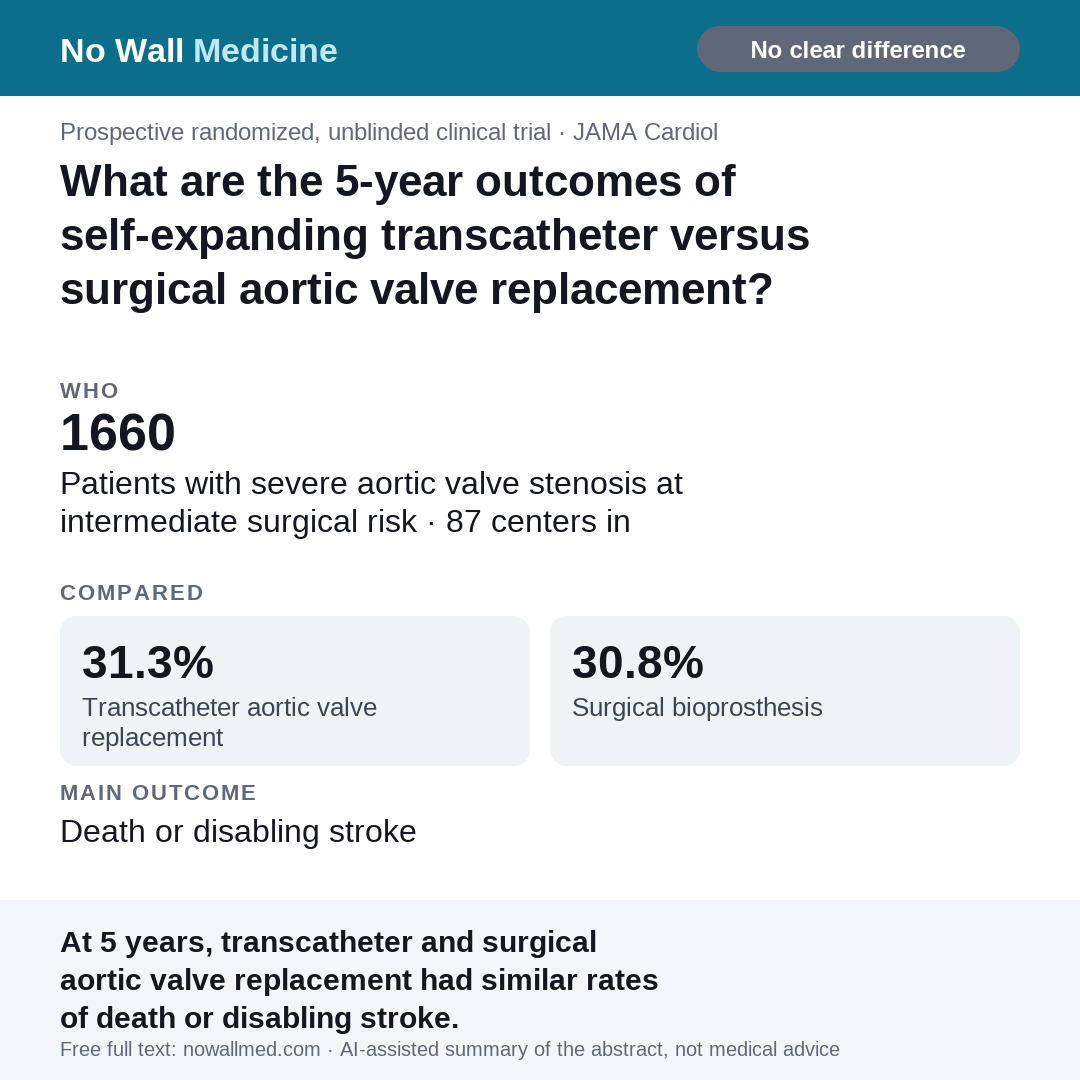
What are the 5-year outcomes of self-expanding transcatheter versus surgical aortic valve replacement?
Who
1660
Patients with severe aortic valve stenosis at intermediate surgical risk · 87 centers in Europe and North America
Compared
31.3%Transcatheter aortic valve replacement
30.8%Surgical bioprosthesis
Main outcome
Death or disabling stroke
Result: hazard ratio 1.02 (95% CI 0.85-1.22)
Bottom line: At 5 years, transcatheter and surgical aortic valve replacement had similar rates of death or disabling stroke.
JAMA Cardiol · 2022-08-25Download image
Clinical question: What are the 5-year outcomes of self-expanding transcatheter versus surgical aortic valve replacement?
Why it matters: Long-term clinical and hemodynamic outcomes beyond 2 years were unknown for patients with severe aortic valve stenosis at intermediate surgical risk.
Key points
- The trial included 1660 patients with severe aortic valve stenosis who were randomized to receive either transcatheter aortic valve replacement (TAVR) or surgical valve replacement.
- At 5 years, the rates of death or disabling stroke were similar between the TAVR group (31.3%) and the surgery group (30.8%).
- TAVR was associated with higher rates of new pacemaker implantation (39.1% vs 15.1%) and valve reintervention (3.5% vs 1.9%) compared to surgery.
Headline and key points written with AI from the paper’s abstract, with every number checked against it. Read the paper before relying on them.
Was this summary helpful?
Subject terms
Cite this article
Van Mieghem NM, Deeb GM, Søndergaard L, et al. Self-expanding Transcatheter vs Surgical Aortic Valve Replacement in Intermediate-Risk Patients: 5-Year Outcomes of the SURTAVI Randomized Clinical Trial. JAMA Cardiol. 2022. doi:10.1001/jamacardio.2022.2695
Spotted a mistake? Suggest a correction