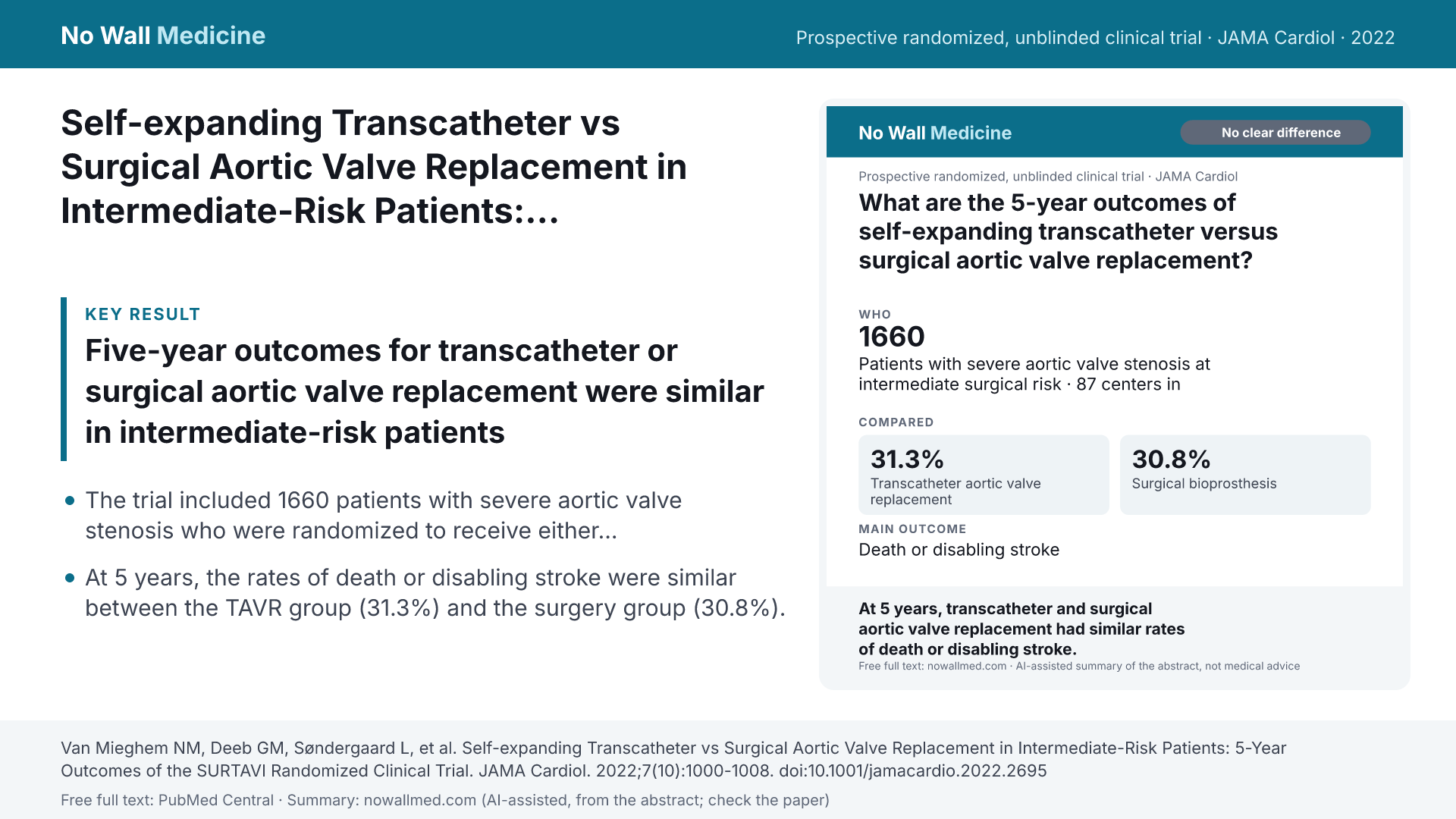
Self-expanding Transcatheter vs Surgical Aortic Valve Replacement in Intermediate-Risk Patients: 5-Year Outcomes of the SURTAVI Randomized Clinical Trial
Key result: Five-year outcomes for transcatheter or surgical aortic valve replacement were similar in intermediate-risk patients
Key points
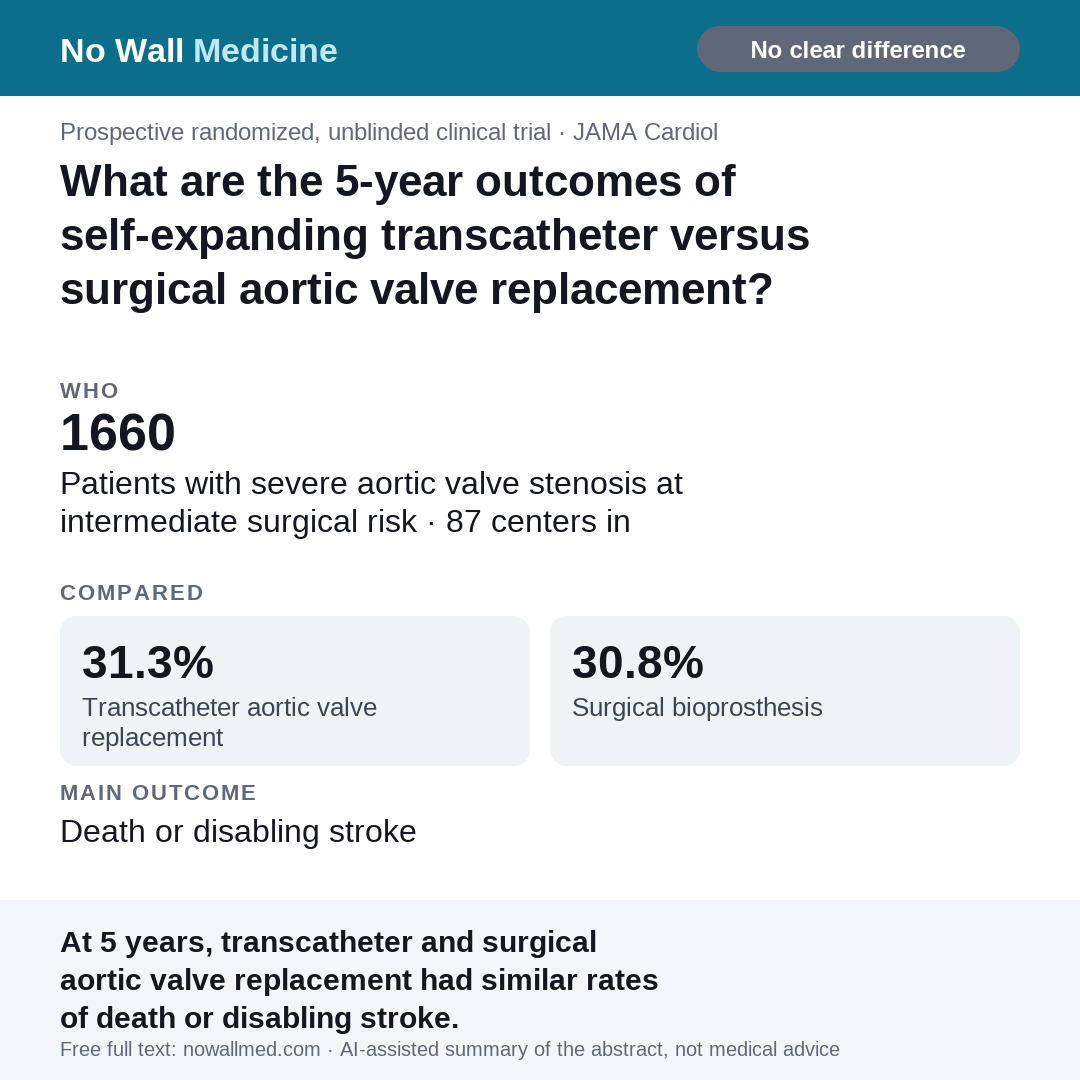
- The trial included 1660 patients with severe aortic valve stenosis who were randomized to receive either transcatheter aortic valve replacement (TAVR) or surgical valve replacement.
- At 5 years, the rates of death or disabling stroke were similar between the TAVR group (31.3%) and the surgery group (30.8%).
- TAVR was associated with higher rates of new pacemaker implantation (39.1% vs 15.1%) and valve reintervention (3.5% vs 1.9%) compared to surgery.
Why it matters: Long-term clinical and hemodynamic outcomes beyond 2 years were unknown for patients with severe aortic valve stenosis at intermediate surgical risk.
Discussion prompts
- Would these patients look like yours? Who was left out?
- Is the main outcome one that matters to patients?
- Is the difference large enough to change what you do?
Cite: Van Mieghem NM, Deeb GM, Søndergaard L, et al. Self-expanding Transcatheter vs Surgical Aortic Valve Replacement in Intermediate-Risk Patients: 5-Year Outcomes of the SURTAVI Randomized Clinical Trial. JAMA Cardiol. 2022. doi:10.1001/jamacardio.2022.2695
Free full text: PubMed Central · Summary and visual abstract: nowallmed.com/a/self-expanding-transcatheter-vs-surgical-aortic-valve-replacement-in-8i8lus/ (AI-assisted from the abstract; check the paper before relying on it).