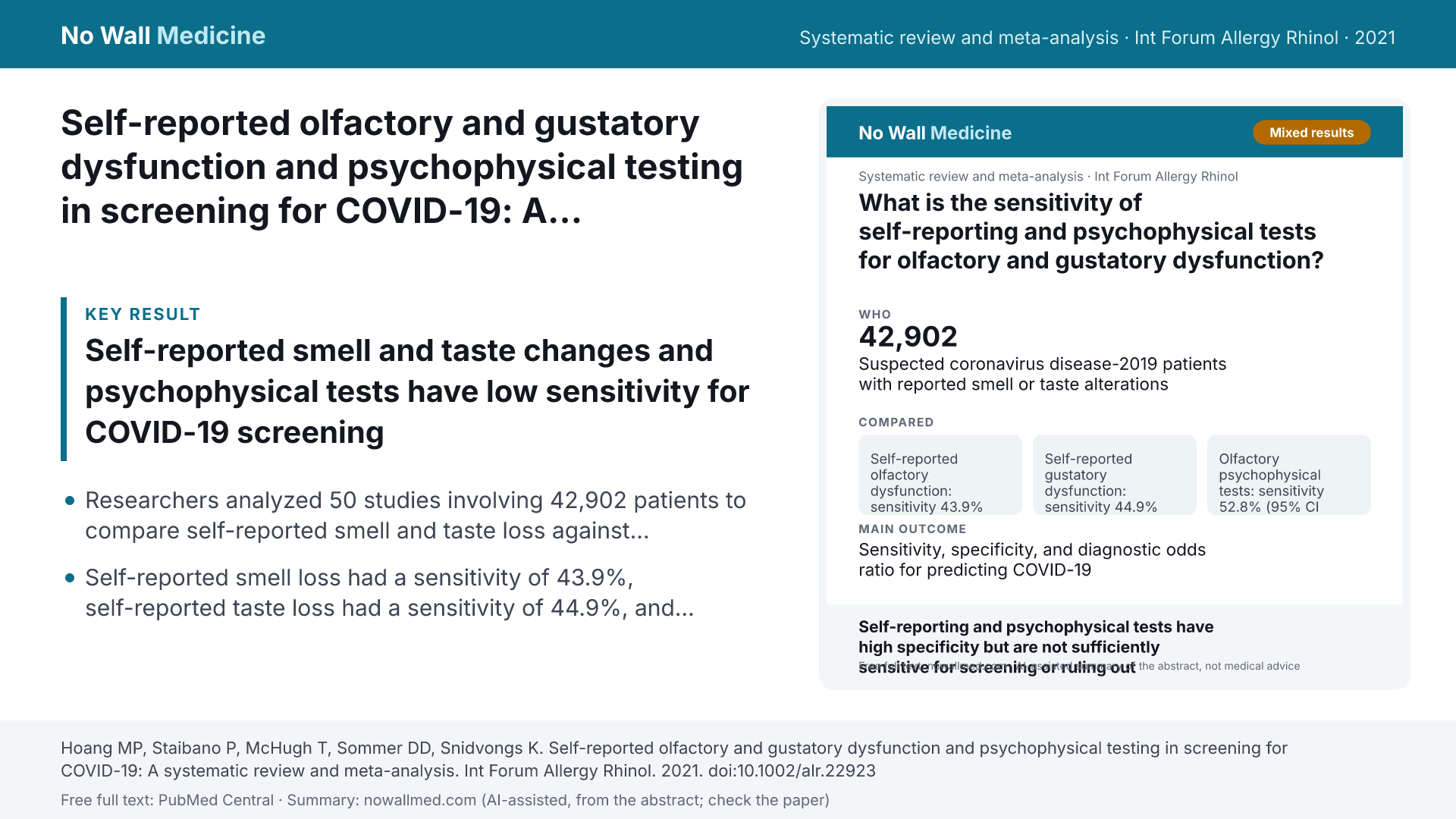
Self-reported olfactory and gustatory dysfunction and psychophysical testing in screening for COVID-19: A systematic review and meta-analysis
Key result: Self-reported smell and taste changes and psychophysical tests have low sensitivity for COVID-19 screening
Key points
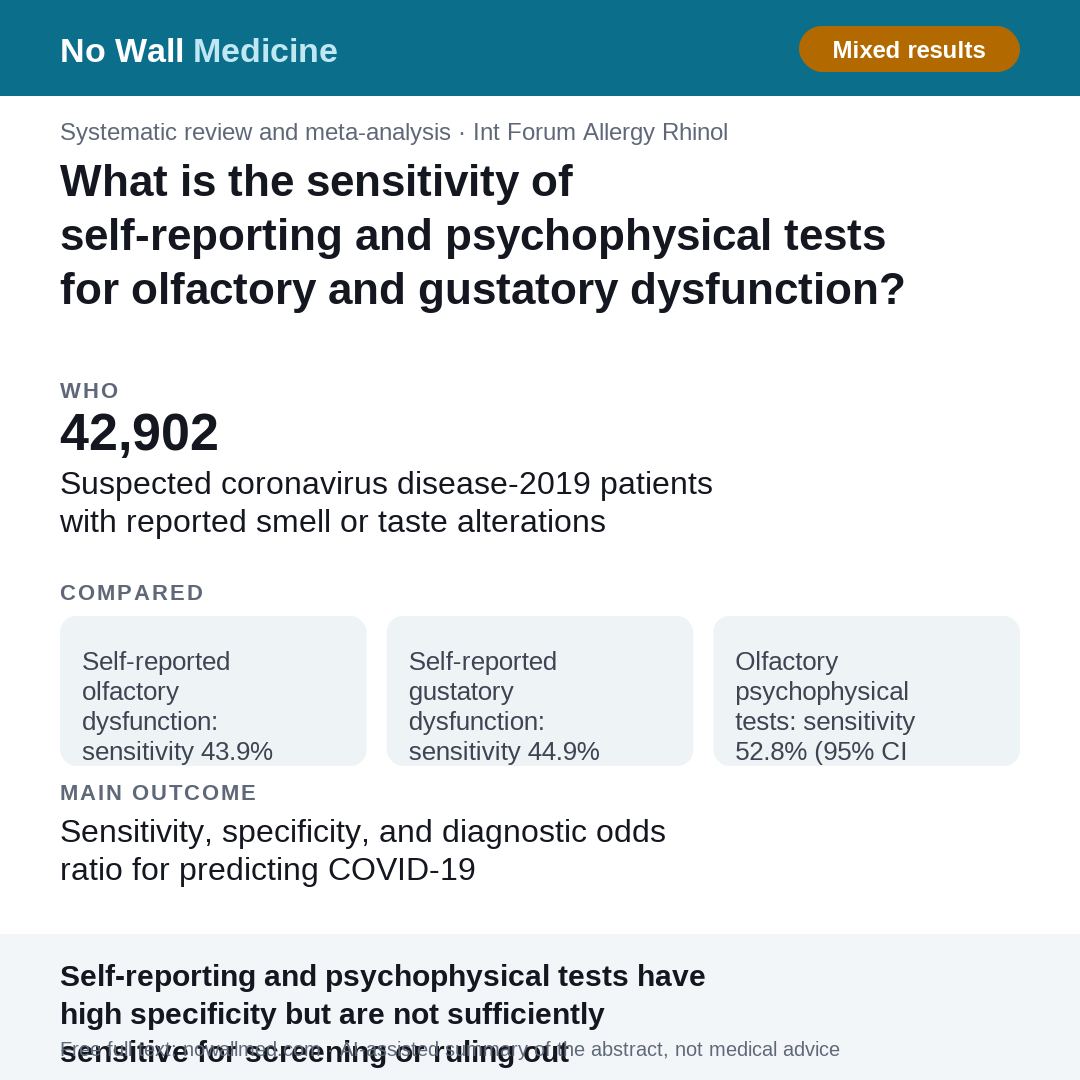
- Researchers analyzed 50 studies involving 42,902 patients to compare self-reported smell and taste loss against objective psychophysical testing for COVID-19.
- Self-reported smell loss had a sensitivity of 43.9%, self-reported taste loss had a sensitivity of 44.9%, and smell psychophysical tests had a sensitivity of 52.8%.
- All methods showed high specificity, with self-reported smell loss at 91.8%, self-reported taste loss at 91.5%, and smell psychophysical tests at 88.0%.
Why it matters: The sensitivity of self-reporting and psychophysical testing for detecting smell and taste changes in COVID-19 screening remains unclear.
Discussion prompts
- Would these patients look like yours? Who was left out?
- Is the main outcome one that matters to patients?
- Is the difference large enough to change what you do?
Cite: Hoang MP, Staibano P, McHugh T, Sommer DD, Snidvongs K. Self-reported olfactory and gustatory dysfunction and psychophysical testing in screening for COVID-19: A systematic review and meta-analysis. Int Forum Allergy Rhinol. 2021. doi:10.1002/alr.22923
Free full text: PubMed Central · Summary and visual abstract: nowallmed.com/a/self-reported-olfactory-and-gustatory-dysfunction-and-psychophysical-1435tup/ (AI-assisted from the abstract; check the paper before relying on it).