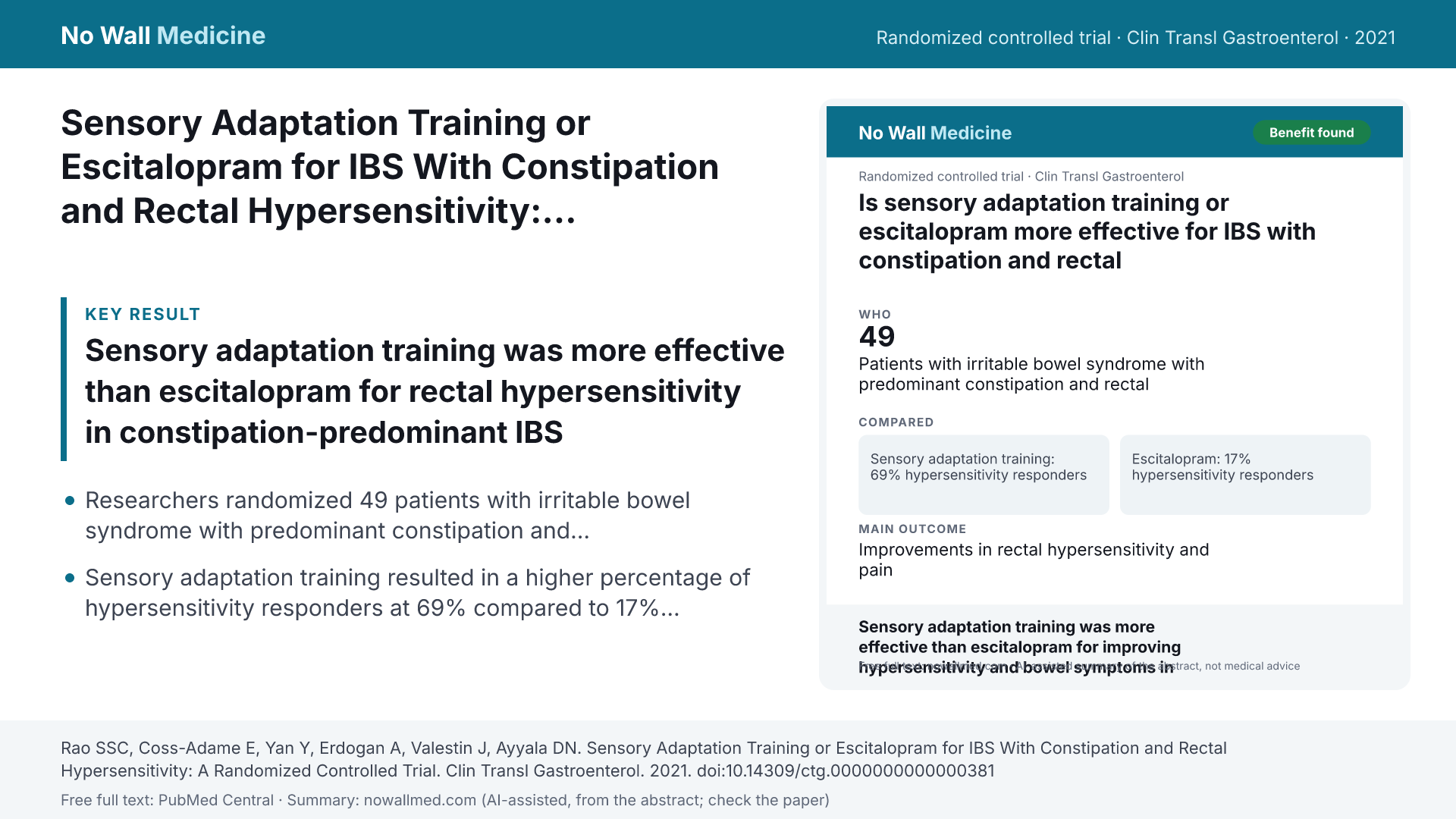
Sensory adaptation training was more effective than escitalopram for rectal hypersensitivity in constipation-predominant IBS
Sensory Adaptation Training or Escitalopram for IBS With Constipation and Rectal Hypersensitivity: A Randomized Controlled Trial
Randomized controlled trialBenefit found
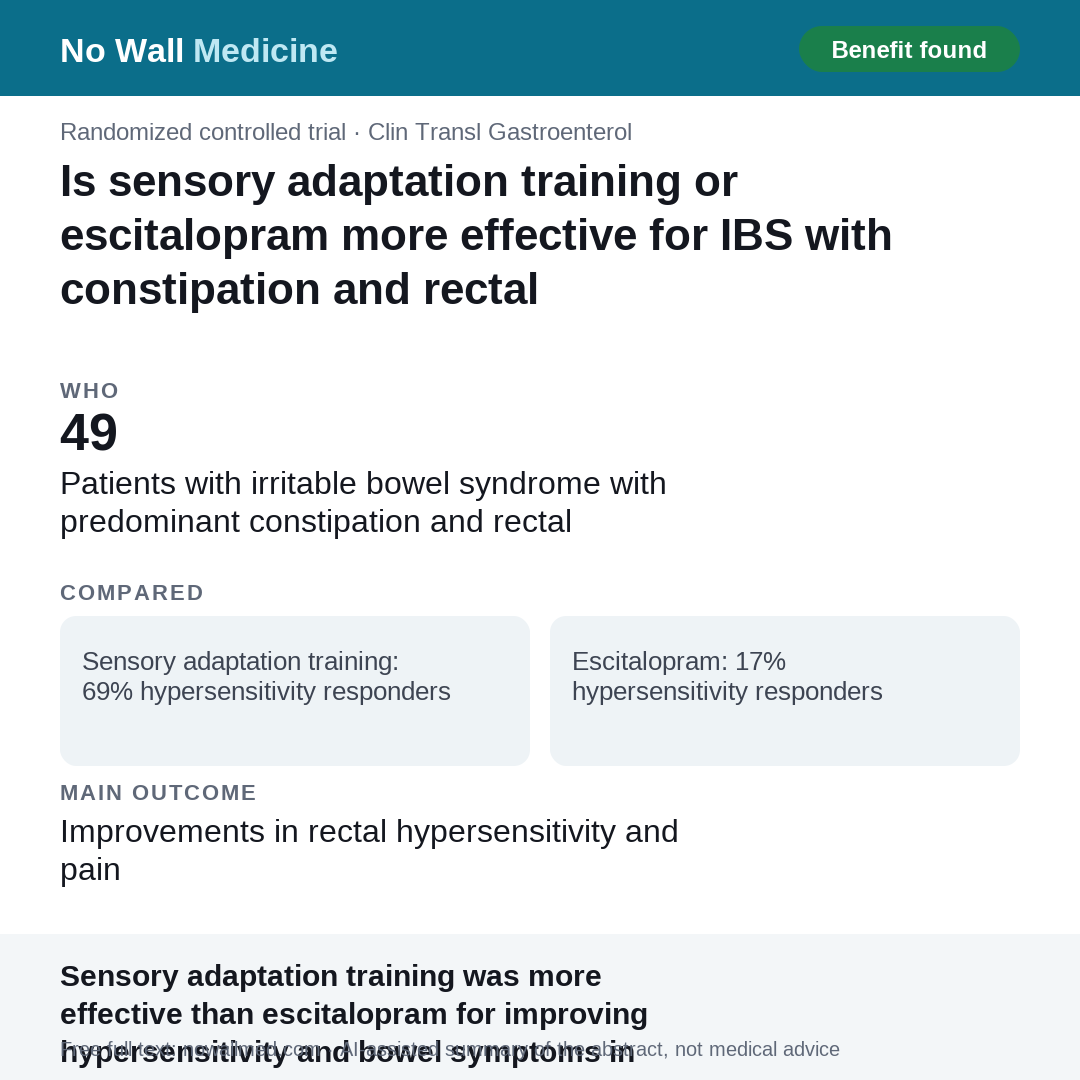
Is sensory adaptation training or escitalopram more effective for IBS with constipation and rectal hypersensitivity?
Who
49
Patients with irritable bowel syndrome with predominant constipation and rectal hypersensitivity
Compared
Sensory adaptation training: 69% hypersensitivity responders
Escitalopram: 17% hypersensitivity responders
Main outcome
Improvements in rectal hypersensitivity and pain
Bottom line: Sensory adaptation training was more effective than escitalopram for improving hypersensitivity and bowel symptoms in patients.
Clin Transl Gastroenterol · 2021-07-13Download image
Clinical question: Is sensory adaptation training or escitalopram more effective for IBS with constipation and rectal hypersensitivity?
Why it matters: Treating rectal hypersensitivity, a dysfunction in irritable bowel syndrome with predominant constipation, remains a clinical challenge.
Key points
- Researchers randomized 49 patients with irritable bowel syndrome with predominant constipation and rectal hypersensitivity to receive either sensory adaptation training or 10 mg of escitalopram daily for 3 months.
- Sensory adaptation training resulted in a higher percentage of hypersensitivity responders at 69% compared to 17% for escitalopram, though pain responder rates were 58% versus 44%.
- The sensory adaptation training group showed significantly greater increases in desire to defecate and maximum tolerability thresholds compared to the escitalopram group.
Headline and key points written with AI from the paper’s abstract, with every number checked against it. Read the paper before relying on them.
Was this summary helpful?
Subject terms
Cite this article
Rao SSC, Coss-Adame E, Yan Y, Erdogan A, Valestin J, Ayyala DN. Sensory Adaptation Training or Escitalopram for IBS With Constipation and Rectal Hypersensitivity: A Randomized Controlled Trial. Clin Transl Gastroenterol. 2021. doi:10.14309/ctg.0000000000000381
Spotted a mistake? Suggest a correction