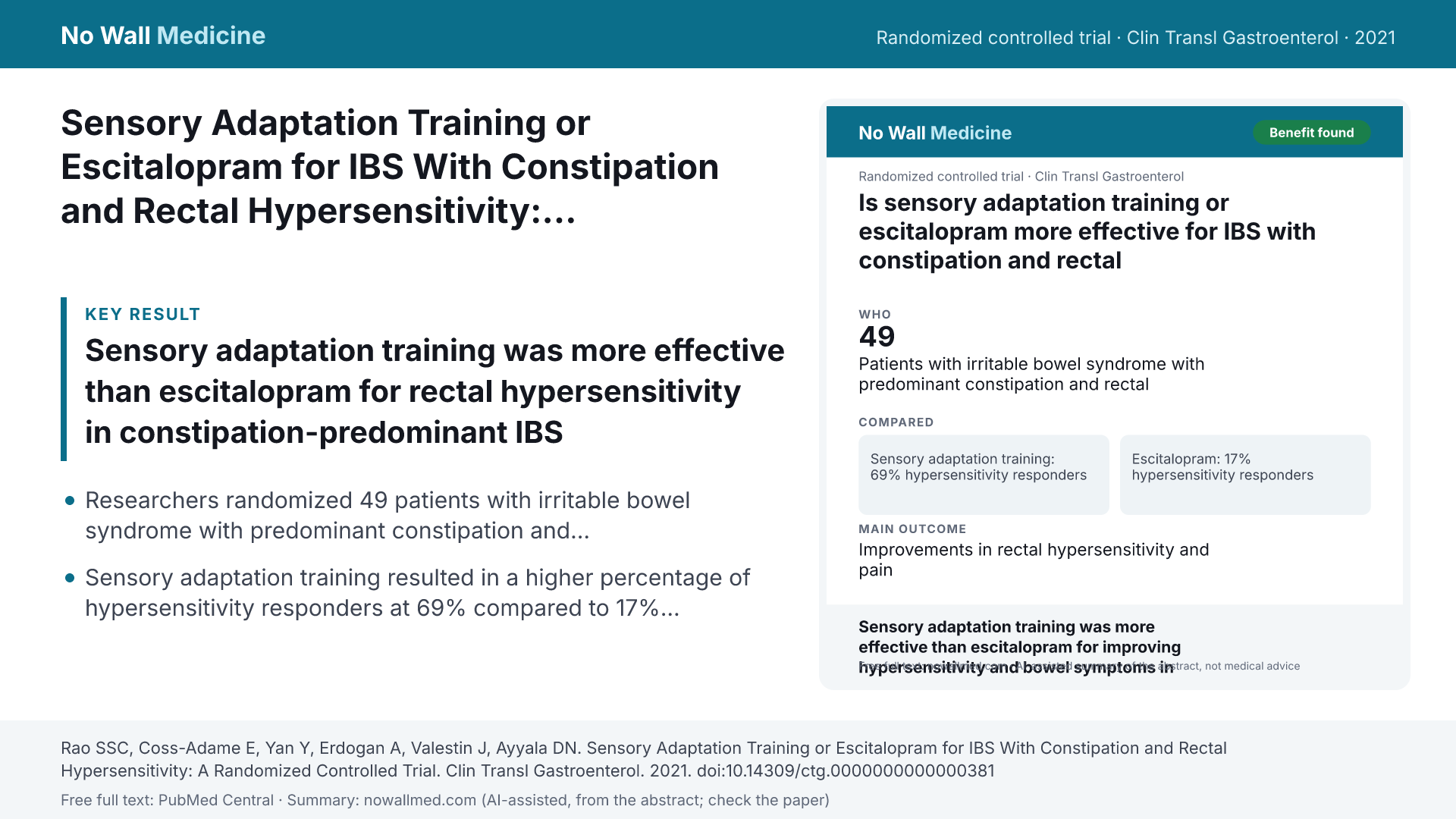
Sensory Adaptation Training or Escitalopram for IBS With Constipation and Rectal Hypersensitivity: A Randomized Controlled Trial
Key result: Sensory adaptation training was more effective than escitalopram for rectal hypersensitivity in constipation-predominant IBS
Key points
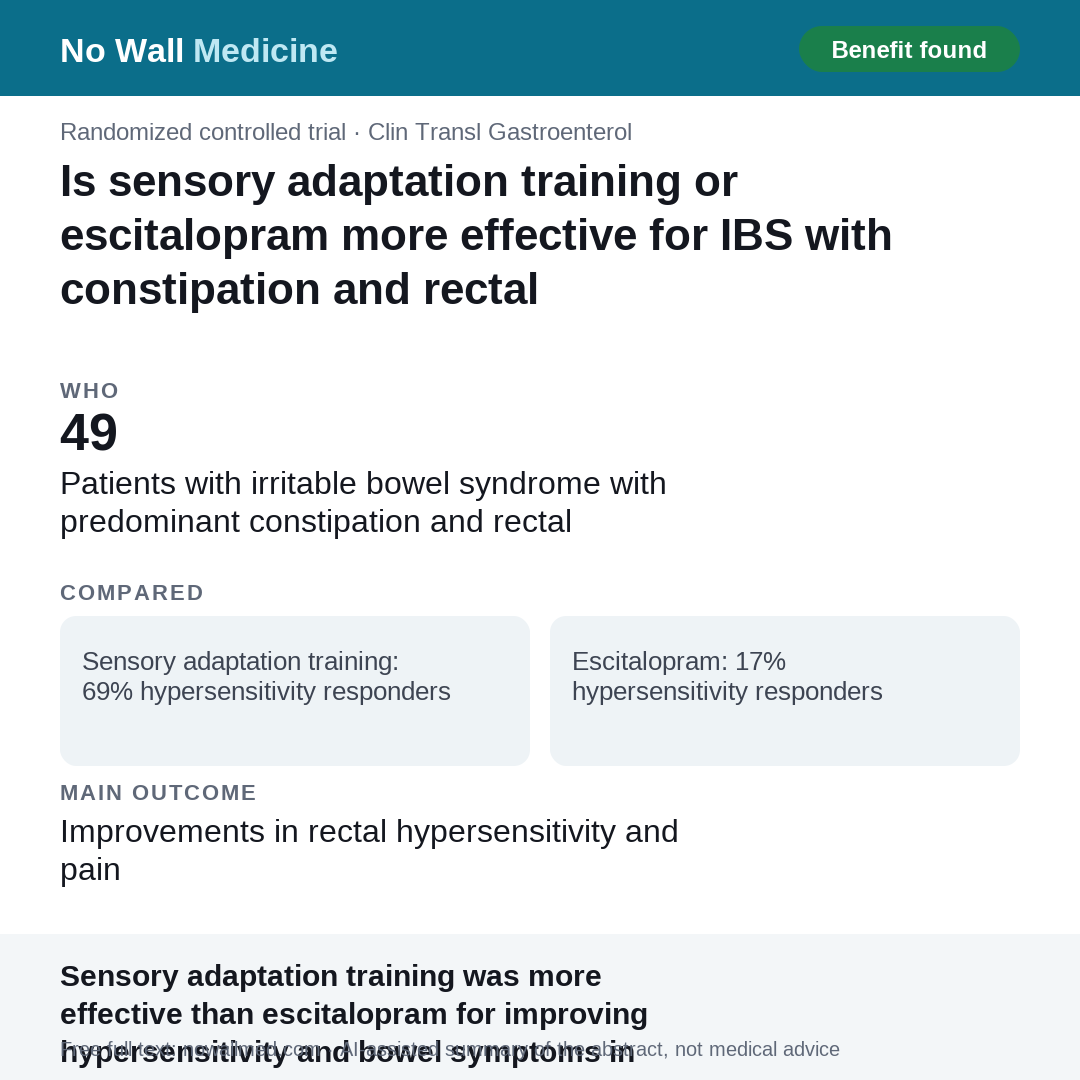
- Researchers randomized 49 patients with irritable bowel syndrome with predominant constipation and rectal hypersensitivity to receive either sensory adaptation training or 10 mg of escitalopram daily for 3 months.
- Sensory adaptation training resulted in a higher percentage of hypersensitivity responders at 69% compared to 17% for escitalopram, though pain responder rates were 58% versus 44%.
- The sensory adaptation training group showed significantly greater increases in desire to defecate and maximum tolerability thresholds compared to the escitalopram group.
Why it matters: Treating rectal hypersensitivity, a dysfunction in irritable bowel syndrome with predominant constipation, remains a clinical challenge.
Discussion prompts
- Would these patients look like yours? Who was left out?
- Is the main outcome one that matters to patients?
- Is the difference large enough to change what you do?
Cite: Rao SSC, Coss-Adame E, Yan Y, Erdogan A, Valestin J, Ayyala DN. Sensory Adaptation Training or Escitalopram for IBS With Constipation and Rectal Hypersensitivity: A Randomized Controlled Trial. Clin Transl Gastroenterol. 2021. doi:10.14309/ctg.0000000000000381
Free full text: PubMed Central · Summary and visual abstract: nowallmed.com/a/sensory-adaptation-training-or-escitalopram-for-ibs-with-constipation-xc4jps/ (AI-assisted from the abstract; check the paper before relying on it).