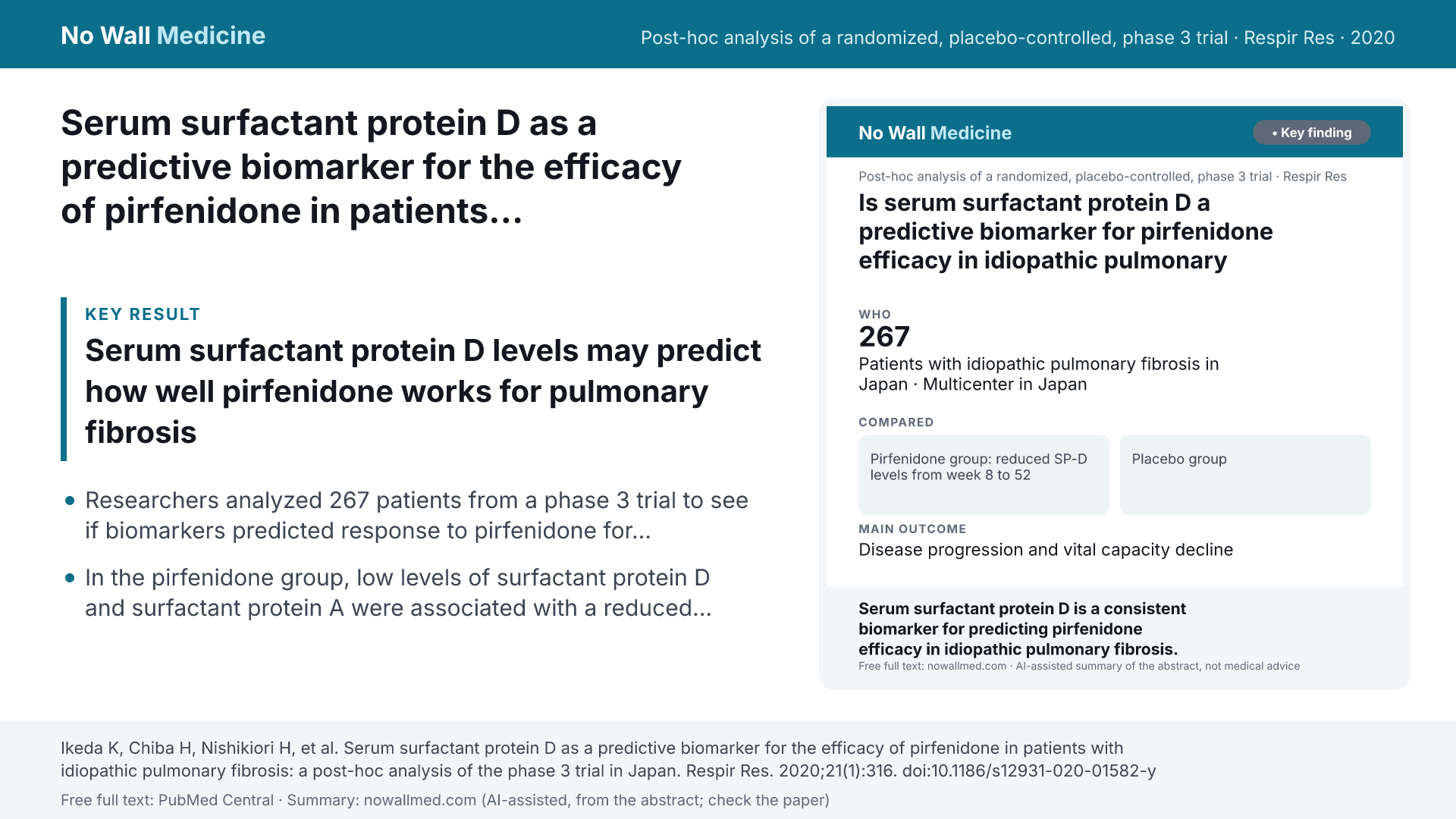
Serum surfactant protein D levels may predict how well pirfenidone works for pulmonary fibrosis
Serum surfactant protein D as a predictive biomarker for the efficacy of pirfenidone in patients with idiopathic pulmonary fibrosis: a post-hoc analysis of the phase 3 trial in Japan
Post-hoc analysis of a randomized, placebo-controlled, phase 3 trialBenefit found
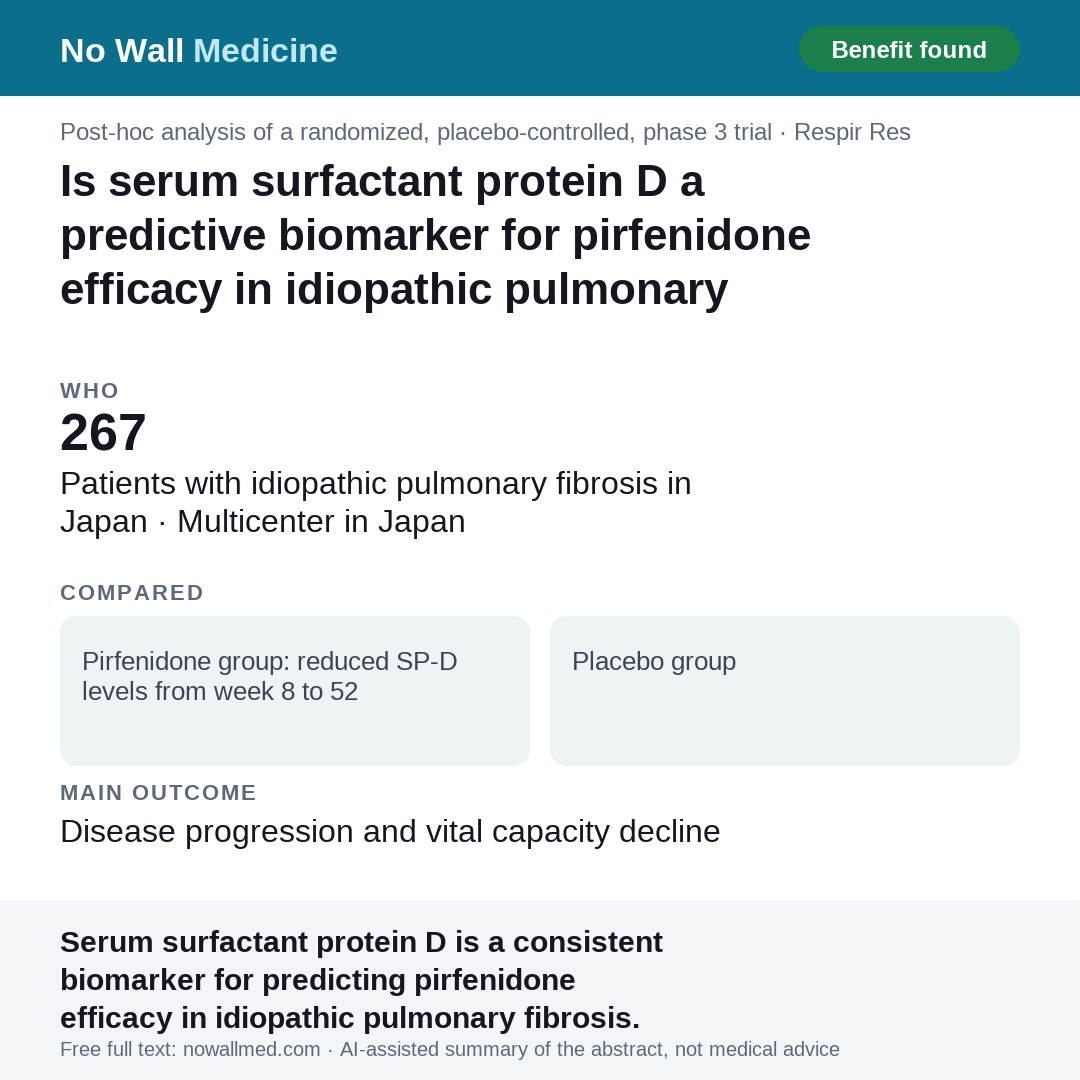
Is serum surfactant protein D a predictive biomarker for pirfenidone efficacy in idiopathic pulmonary fibrosis?
Who
267
Patients with idiopathic pulmonary fibrosis in Japan · Multicenter in Japan
Compared
Pirfenidone group: reduced SP-D levels from week 8 to 52
Placebo group
Main outcome
Disease progression and vital capacity decline
Bottom line: Serum surfactant protein D is a consistent biomarker for predicting pirfenidone efficacy in idiopathic pulmonary fibrosis.
Respir Res · 2020-11-30Download image
Clinical question: Is serum surfactant protein D a predictive biomarker for pirfenidone efficacy in idiopathic pulmonary fibrosis?
Why it matters: It is unknown if specific alveolar epithelial biomarkers can predict how patients will respond to antifibrotic therapy for idiopathic pulmonary fibrosis.
Key points
- Researchers analyzed 267 patients from a phase 3 trial to see if biomarkers predicted response to pirfenidone for idiopathic pulmonary fibrosis.
- In the pirfenidone group, low levels of surfactant protein D and surfactant protein A were associated with a reduced decline in vital capacity.
- Low levels of surfactant protein D and Krebs von den Lungen-6 were associated with prolonged progression-free survival in the pirfenidone group.
Headline and key points written with AI from the paper’s abstract, with every number checked against it. Read the paper before relying on them.
Was this summary helpful?
Subject terms
Cite this article
Ikeda K, Chiba H, Nishikiori H, et al. Serum surfactant protein D as a predictive biomarker for the efficacy of pirfenidone in patients with idiopathic pulmonary fibrosis: a post-hoc analysis of the phase 3 trial in Japan. Respir Res. 2020. doi:10.1186/s12931-020-01582-y
Spotted a mistake? Suggest a correction