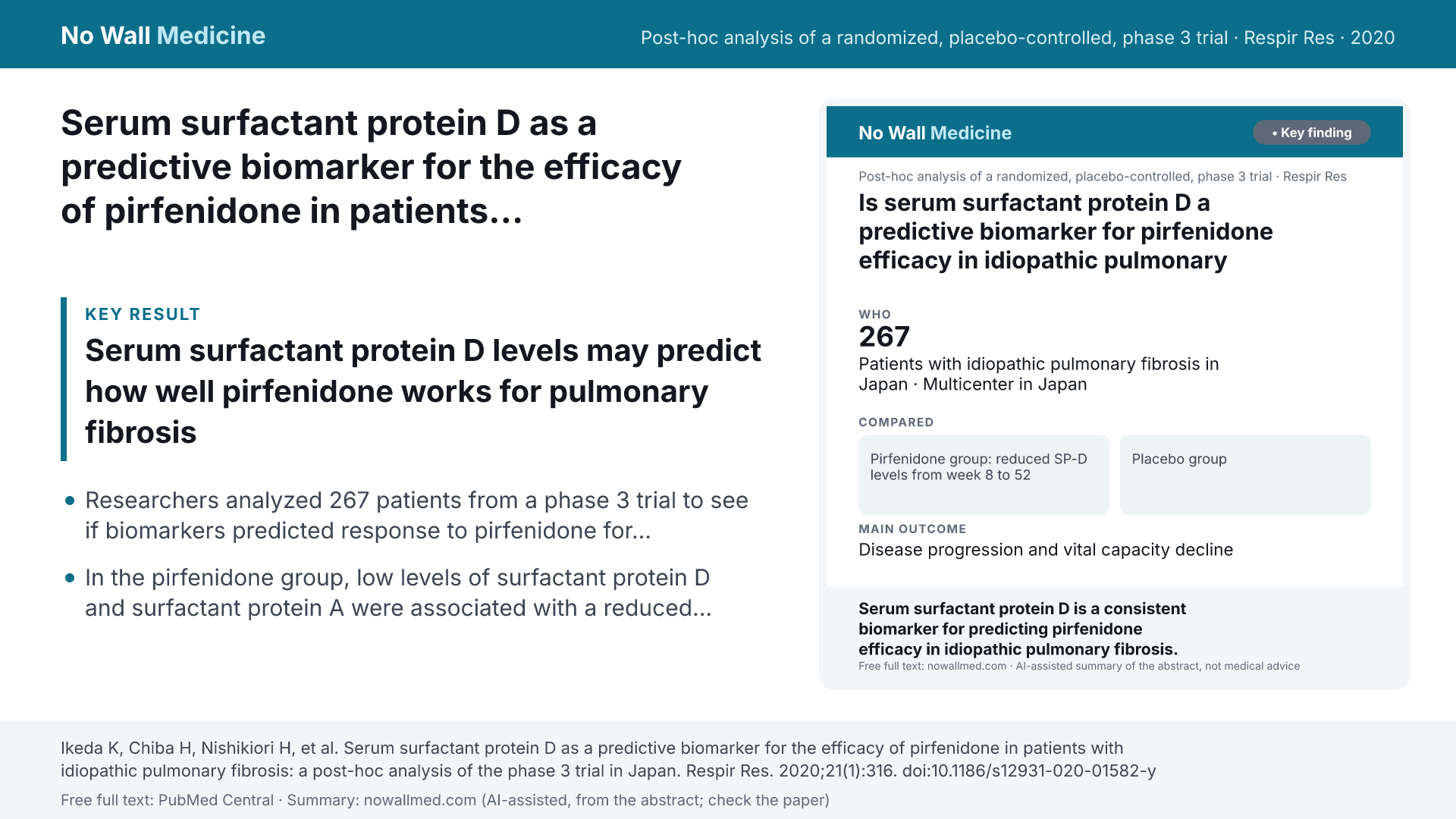
Serum surfactant protein D as a predictive biomarker for the efficacy of pirfenidone in patients with idiopathic pulmonary fibrosis: a post-hoc analysis of the phase 3 trial in Japan
Key result: Serum surfactant protein D levels may predict how well pirfenidone works for pulmonary fibrosis
Post-hoc analysis of a randomized, placebo-controlled, phase 3 trialKey finding
Is serum surfactant protein D a predictive biomarker for pirfenidone efficacy in idiopathic pulmonary fibrosis?
Who
267
Patients with idiopathic pulmonary fibrosis in Japan · Multicenter in Japan
Compared
Pirfenidone group: reduced SP-D levels from week 8 to 52
Placebo group
Main outcome
Disease progression and vital capacity decline
Bottom line: Serum surfactant protein D is a consistent biomarker for predicting pirfenidone efficacy in idiopathic pulmonary fibrosis.
Respir Res · 2020-11-30
Key points
- Researchers analyzed 267 patients from a phase 3 trial to see if biomarkers predicted response to pirfenidone for idiopathic pulmonary fibrosis.
- In the pirfenidone group, low levels of surfactant protein D and surfactant protein A were associated with a reduced decline in vital capacity.
- Low levels of surfactant protein D and Krebs von den Lungen-6 were associated with prolonged progression-free survival in the pirfenidone group.
Discussion prompts
- Would these patients look like yours? Who was left out?
- Is the main outcome one that matters to patients?
- Is the difference large enough to change what you do?
Cite: Ikeda K, Chiba H, Nishikiori H, et al. Serum surfactant protein D as a predictive biomarker for the efficacy of pirfenidone in patients with idiopathic pulmonary fibrosis: a post-hoc analysis of the phase 3 trial in Japan. Respir Res. 2020;21(1):316. doi:10.1186/s12931-020-01582-y
Free full text: PubMed Central · Summary and visual abstract: nowallmed.com/a/serum-surfactant-protein-d-as-a-predictive-biomarker-for-the-efficacy-1kj4lem/ (AI-assisted from the abstract; check the paper before relying on it).