SGLT2 inhibitors and nephrolithiasis risk: a meta-analysis
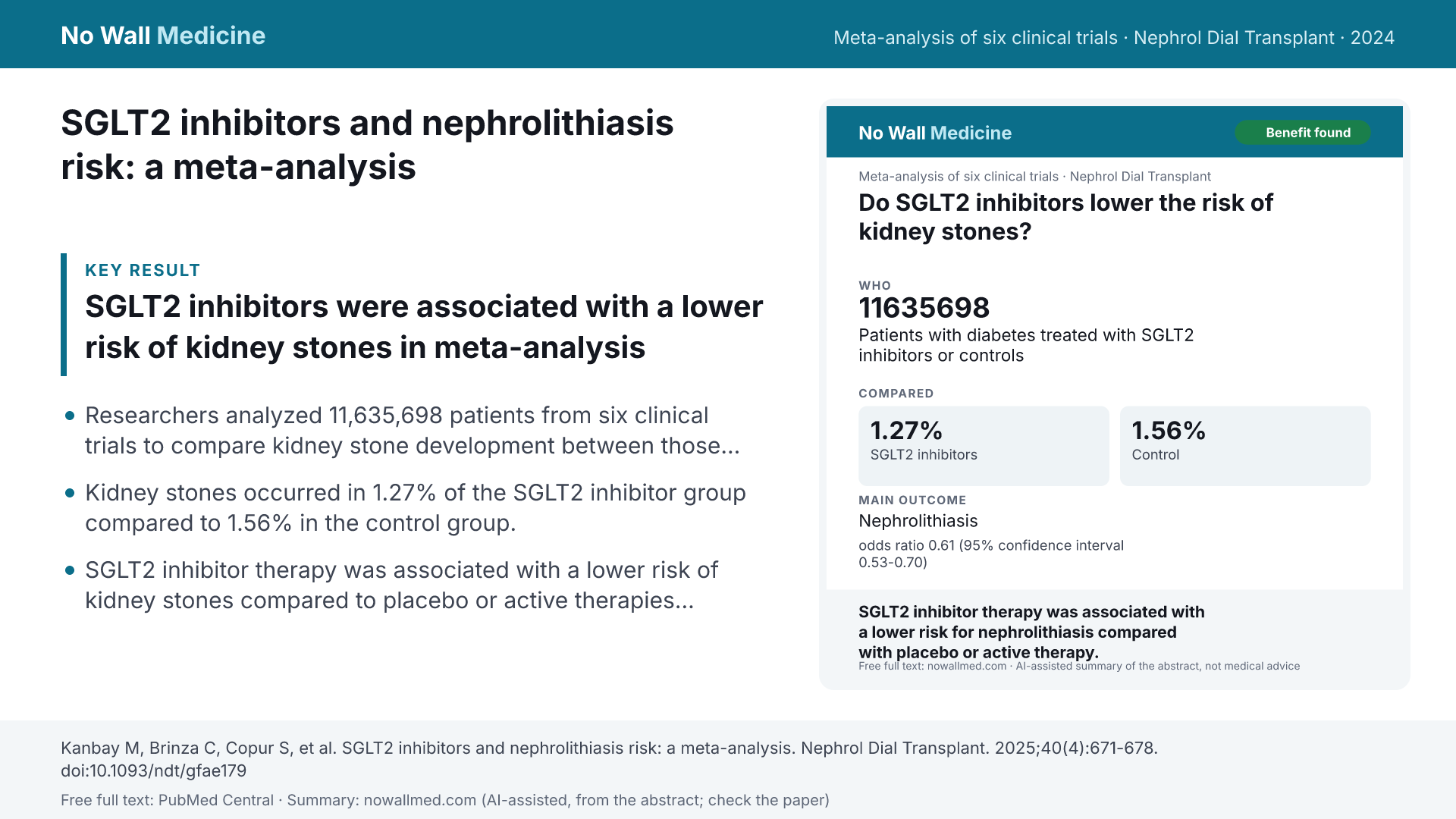
Key result: SGLT2 inhibitors were associated with a lower risk of kidney stones in meta-analysis
Meta-analysis of six clinical trialsBenefit found
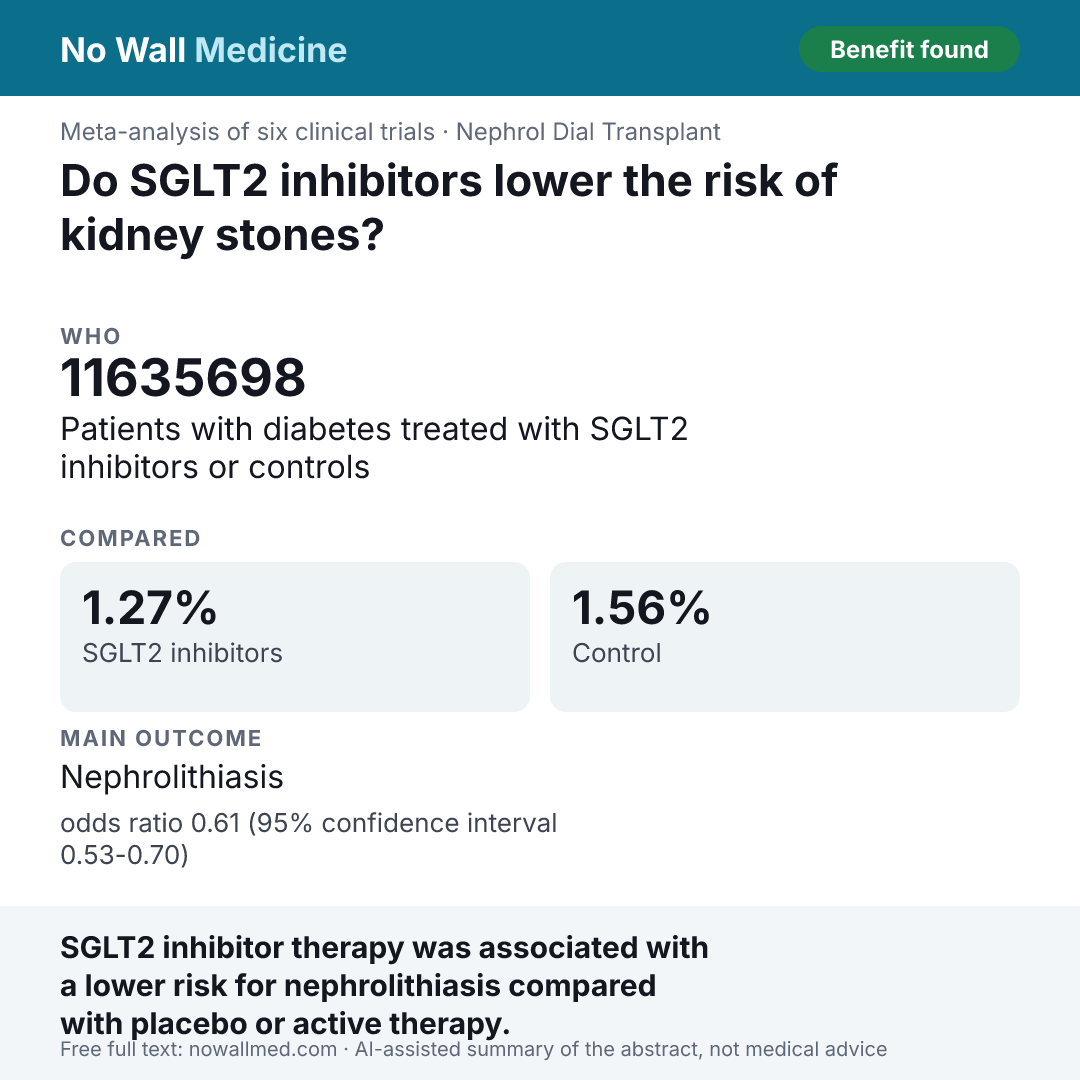
Do SGLT2 inhibitors lower the risk of kidney stones?
Who
11635698
Patients with diabetes treated with SGLT2 inhibitors or controls
Compared
1.27%SGLT2 inhibitors
1.56%Control
Main outcome
Nephrolithiasis
Result: odds ratio 0.61 (95% confidence interval 0.53-0.70)
Bottom line: SGLT2 inhibitor therapy was associated with a lower risk for nephrolithiasis compared with placebo or active therapy.
Nephrol Dial Transplant · 2024-08-08 · Save PNG
Key points
- Researchers analyzed 11,635,698 patients from six clinical trials to compare kidney stone development between those taking SGLT2 inhibitors and control groups.
- Kidney stones occurred in 1.27% of the SGLT2 inhibitor group compared to 1.56% in the control group.
- SGLT2 inhibitor therapy was associated with a lower risk of kidney stones compared to placebo or active therapies like glucagon-like peptide 1 and dipeptidyl peptidase 4 inhibitors.
Discussion prompts
- Would these patients look like yours? Who was left out?
- Is the main outcome one that matters to patients?
- Is the difference large enough to change what you do?
Cite: Kanbay M, Brinza C, Copur S, et al. SGLT2 inhibitors and nephrolithiasis risk: a meta-analysis. Nephrol Dial Transplant. 2025;40(4):671-678. doi:10.1093/ndt/gfae179
Free full text: PubMed Central · Summary and visual abstract: nowallmed.com/a/sglt2-inhibitors-and-nephrolithiasis-risk-a-meta-1cme4zj/ (AI-assisted from the abstract; check the paper before relying on it).