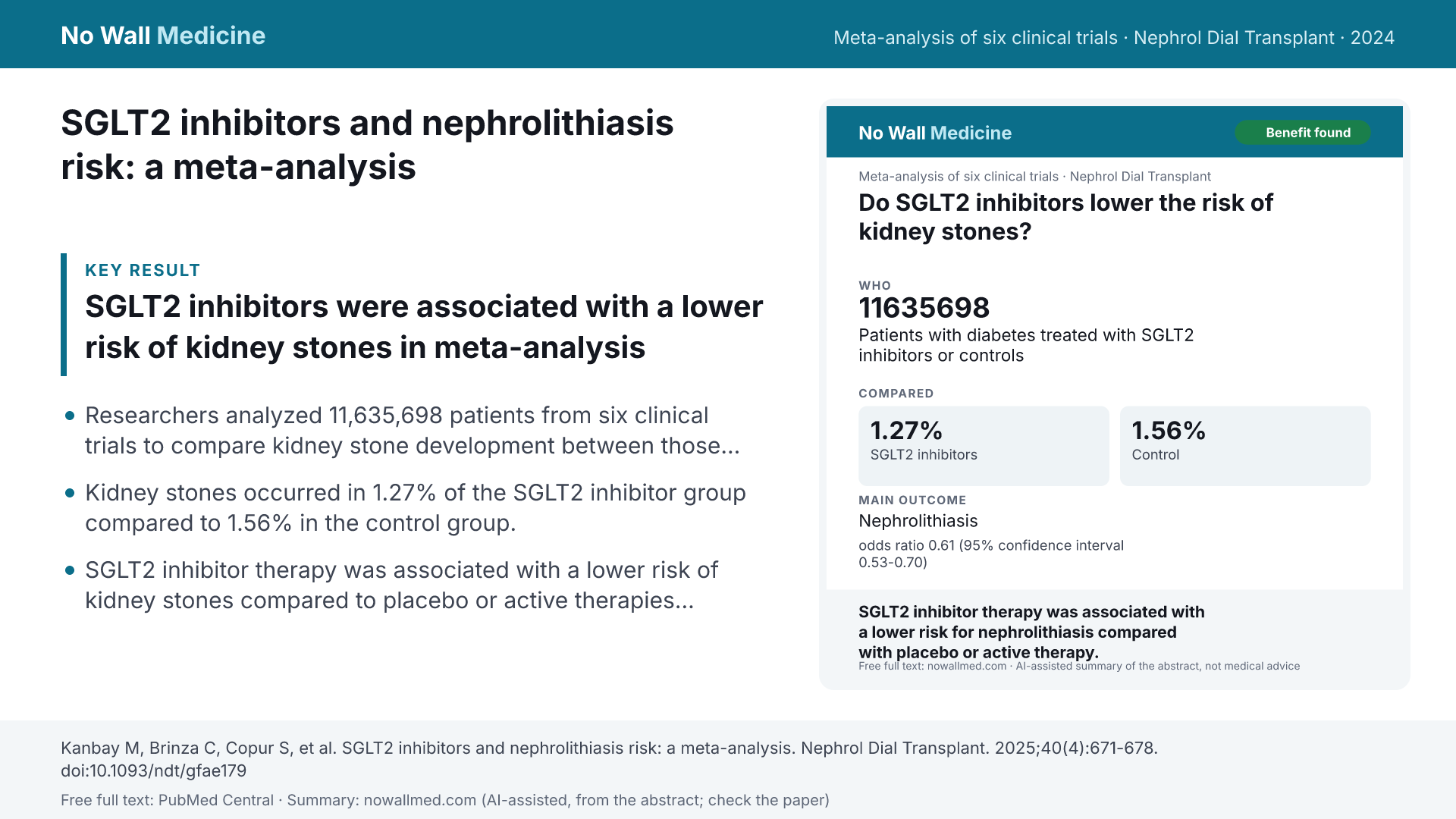
SGLT2 inhibitors were associated with a lower risk of kidney stones in meta-analysis
SGLT2 inhibitors and nephrolithiasis risk: a meta-analysis
Meta-analysis of trialsBenefit found
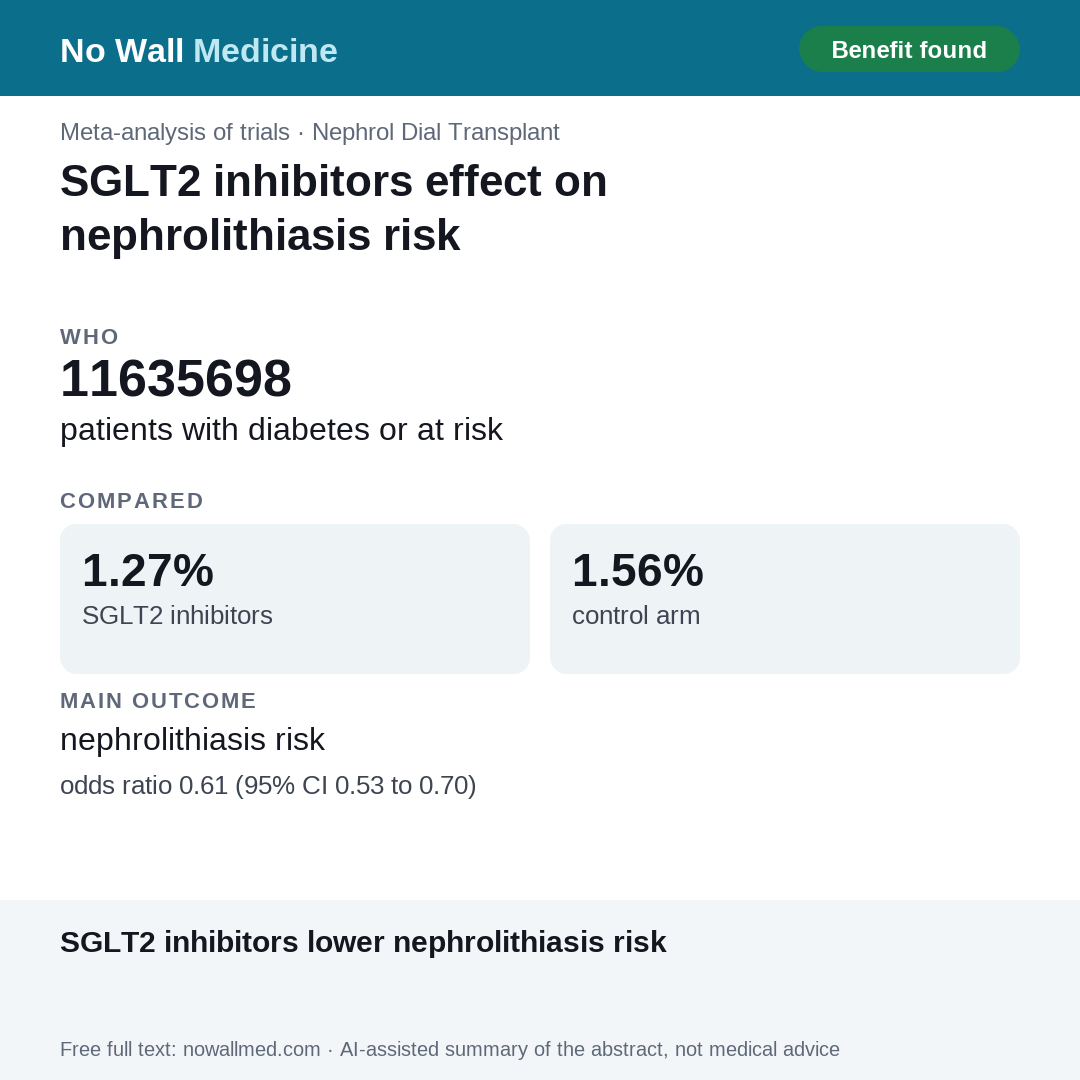
SGLT2 inhibitors effect on nephrolithiasis risk
Who
11635698
patients with diabetes or at risk
Compared
1.27%SGLT2 inhibitors (739197/11635698)
1.56%control arm (10896501/11635698)
Main outcome
nephrolithiasis risk
Result: odds ratio 0.61 (95% CI 0.53 to 0.70)
Bottom line: SGLT2 inhibitors lower nephrolithiasis risk
Nephrol Dial Transplant · 2024-08-08Download image
Why it matters: It was unknown if sodium-glucose co-transporter 2 inhibitors, which are used to treat diabetes, affect the development of nephrolithiasis, also known as kidney stones.
Key points
- Researchers analyzed 11,635,698 patients from six clinical trials to compare kidney stone development between those taking SGLT2 inhibitors and control groups.
- Kidney stones occurred in 1.27% of the SGLT2 inhibitor group compared to 1.56% in the control group.
- SGLT2 inhibitor therapy was associated with a lower risk of kidney stones compared to placebo or active therapies like glucagon-like peptide 1 and dipeptidyl peptidase 4 inhibitors.
Headline and key points written with AI from the paper’s abstract, with every number checked against it. Read the paper before relying on them.
Was this summary helpful?
Subject terms
Cite this article
Kanbay M, Brinza C, Copur S, Sekreter O, Burlacu A, Tuttle KR. SGLT2 inhibitors and nephrolithiasis risk: a meta-analysis. Nephrol Dial Transplant. 2024. doi:10.1093/ndt/gfae179
Spotted a mistake? Suggest a correction
Top studies every Monday
The week’s key trials and guidelines in your specialties, plus any topics you follow. By email, free.
Get the weekly digest