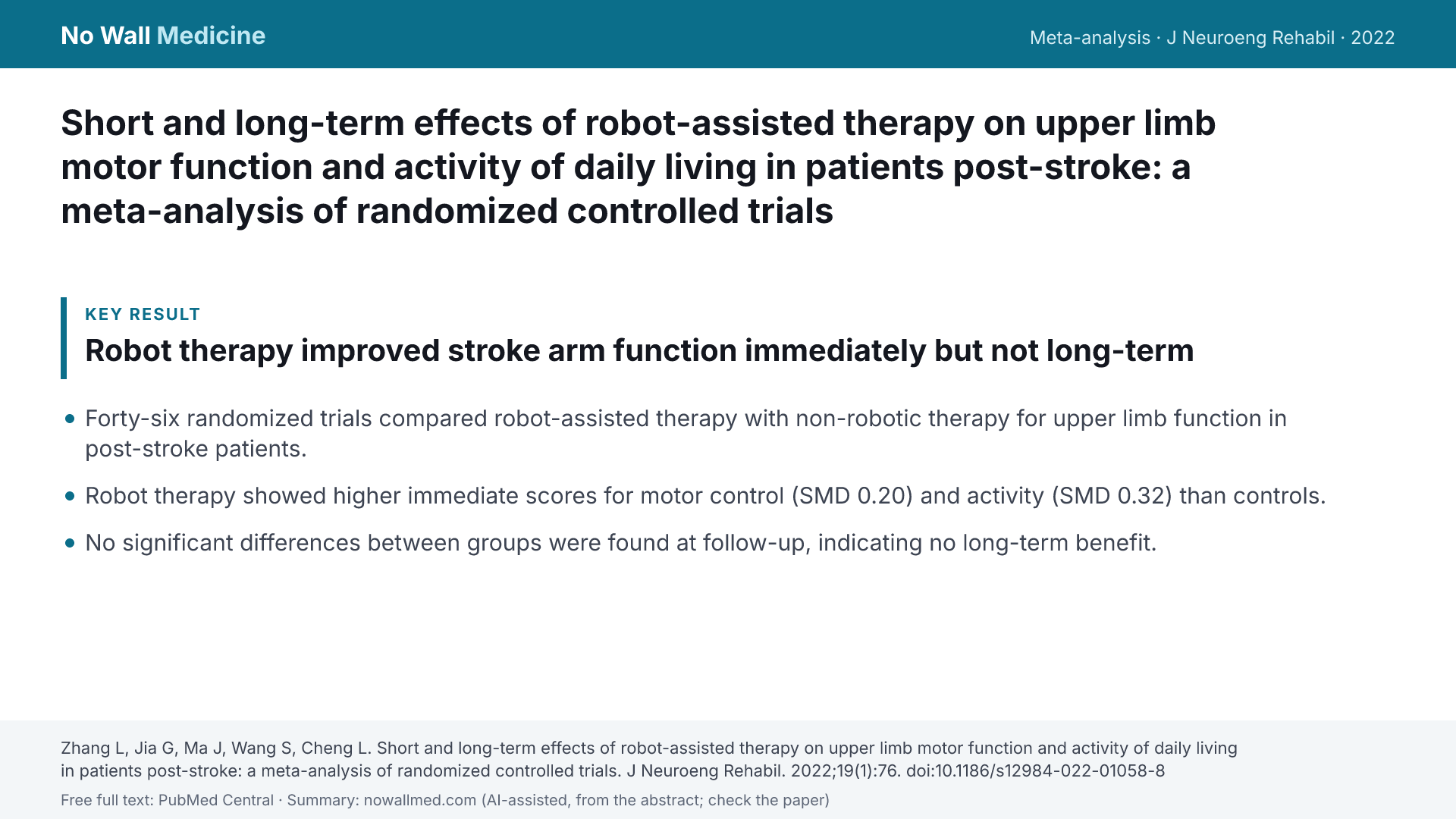
Short and long-term effects of robot-assisted therapy on upper limb motor function and activity of daily living in patients post-stroke: a meta-analysis of randomized controlled trials
Key result: Robot therapy improved stroke arm function immediately but not long-term
Key points
- Forty-six randomized trials compared robot-assisted therapy with non-robotic therapy for upper limb function in post-stroke patients.
- Robot therapy showed higher immediate scores for motor control (SMD 0.20) and activity (SMD 0.32) than controls.
- No significant differences between groups were found at follow-up, indicating no long-term benefit.
Limitation the authors note: The meta-analysis included only studies published from 2010 to the present, potentially excluding earlier relevant trials.
Discussion prompts
- Would these patients look like yours? Who was left out?
- Is the main outcome one that matters to patients?
- Is the difference large enough to change what you do?
Cite: Zhang L, Jia G, Ma J, Wang S, Cheng L. Short and long-term effects of robot-assisted therapy on upper limb motor function and activity of daily living in patients post-stroke: a meta-analysis of randomized controlled trials. J Neuroeng Rehabil. 2022;19(1):76. doi:10.1186/s12984-022-01058-8
Free full text: PubMed Central · Summary and visual abstract: nowallmed.com/a/short-and-long-term-effects-of-robot-assisted-therapy-on-upper-limb-b1uv63/ (AI-assisted from the abstract; check the paper before relying on it).