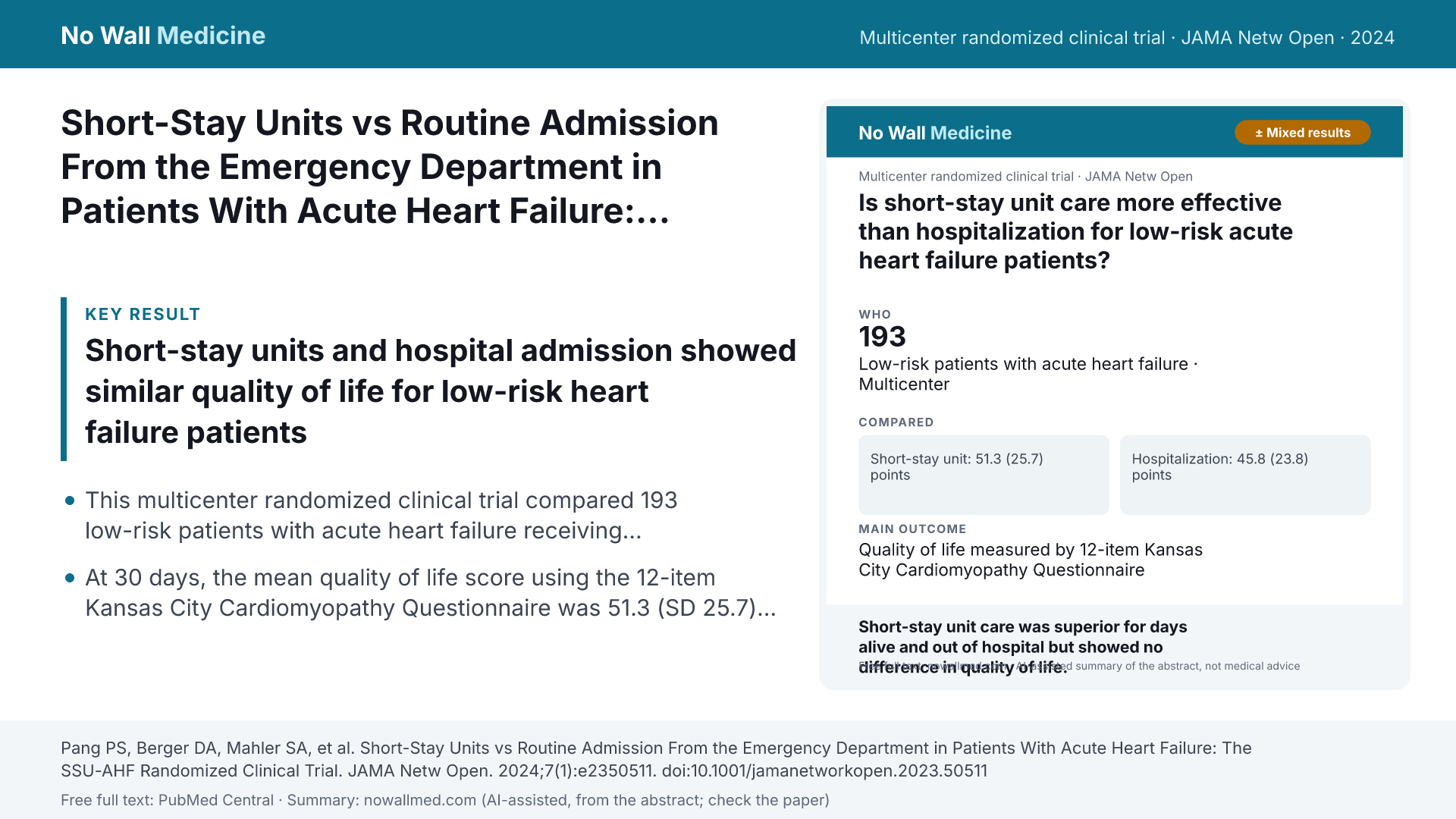
Short-stay units and hospital admission showed similar quality of life for low-risk heart failure patients
Short-Stay Units vs Routine Admission From the Emergency Department in Patients With Acute Heart Failure: The SSU-AHF Randomized Clinical Trial
Multicenter randomized clinical trialMixed results
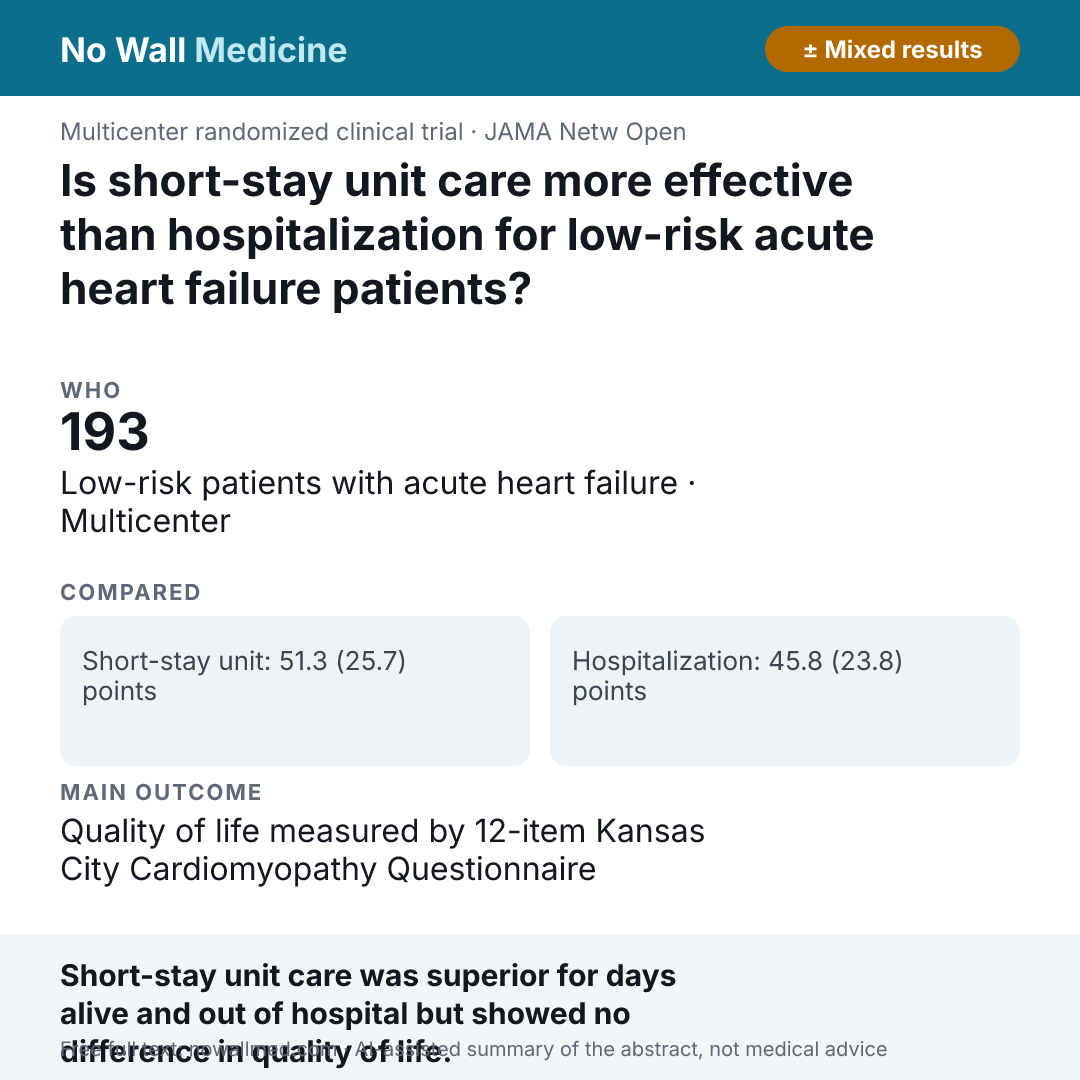
Is short-stay unit care more effective than hospitalization for low-risk acute heart failure patients?
Who
193
Low-risk patients with acute heart failure · Multicenter
Compared
Short-stay unit: 51.3 (25.7) points
Hospitalization: 45.8 (23.8) points
Main outcome
Quality of life measured by 12-item Kansas City Cardiomyopathy Questionnaire
Bottom line: Short-stay unit care was superior for days alive and out of hospital but showed no difference in quality of life.
JAMA Netw Open · 2024-01-02 · Save PNG
Clinical question: Is short-stay unit care more effective than hospitalization for low-risk acute heart failure patients?
Key points
- This multicenter randomized clinical trial compared 193 low-risk patients with acute heart failure receiving either less than 24 hours of short-stay unit care or routine hospital admission.
- At 30 days, the mean quality of life score using the 12-item Kansas City Cardiomyopathy Questionnaire was 51.3 (SD 25.7) for the short-stay unit group versus 45.8 (SD 23.8) for hospitalization.
- The short-stay unit group had 1.6 more median days alive and out of hospital at 30-day follow-up compared to the hospitalization group, with adverse events being uncommon and similar.
Limitation the authors note: Due to the COVID-19 pandemic, enrollment was truncated at 194 participants, which was fewer than the 534 participants originally planned to detect the primary outcome.
Headline and key points written with AI from the paper’s abstract, with every number checked against it. Read the paper before relying on them.
Was this summary helpful?
Subject terms
Headline, design, result, key points, caveat and citation as plain text.
Cite this article
Pang PS, Berger DA, Mahler SA, et al. Short-Stay Units vs Routine Admission From the Emergency Department in Patients With Acute Heart Failure: The SSU-AHF Randomized Clinical Trial. JAMA Netw Open. 2024;7(1):e2350511. doi:10.1001/jamanetworkopen.2023.50511
Spotted a mistake? Suggest a correction