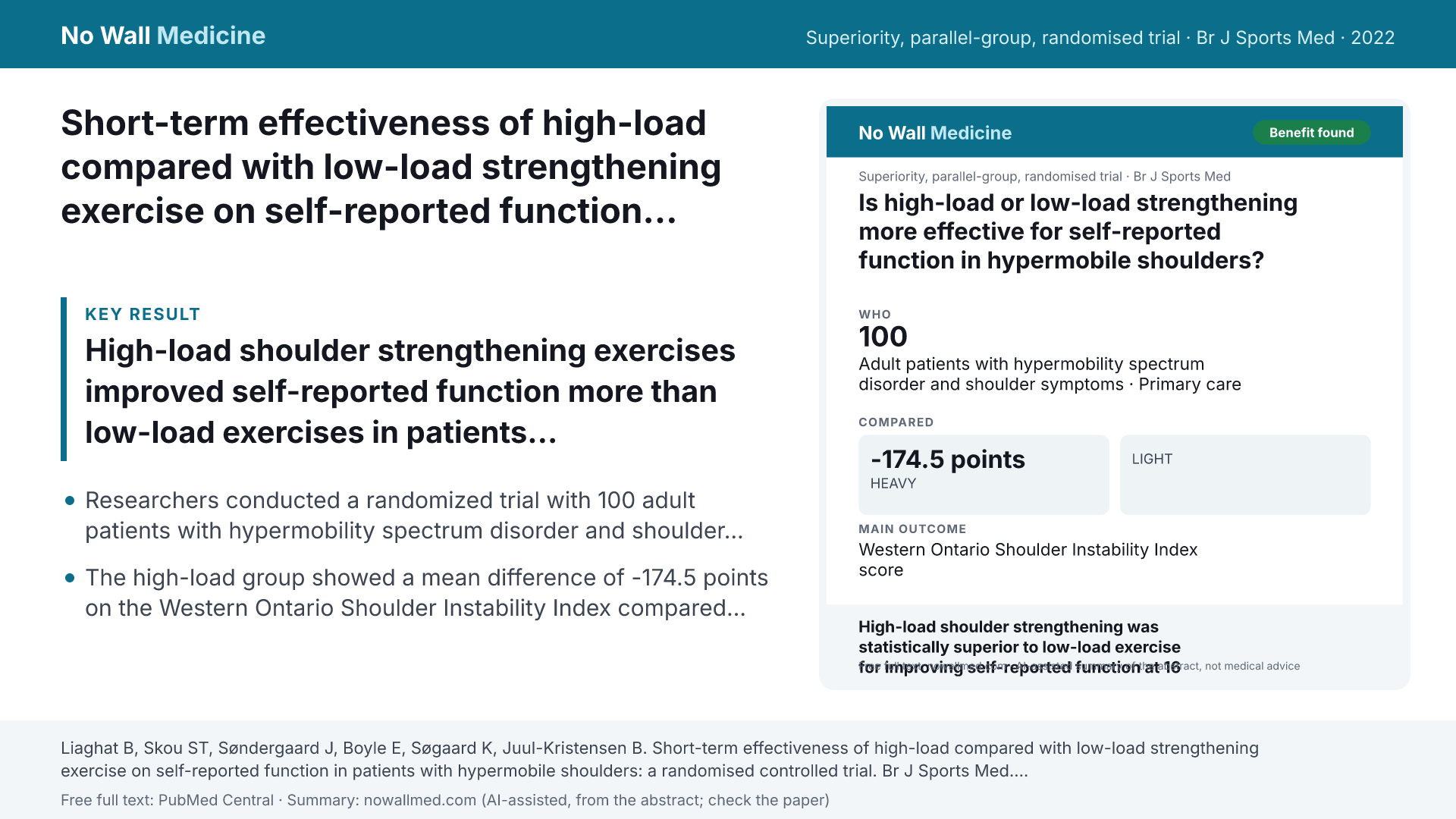
Short-term effectiveness of high-load compared with low-load strengthening exercise on self-reported function in patients with hypermobile shoulders: a randomised controlled trial
Key result: High-load shoulder strengthening exercises improved self-reported function more than low-load exercises in patients with hypermobility
Key points
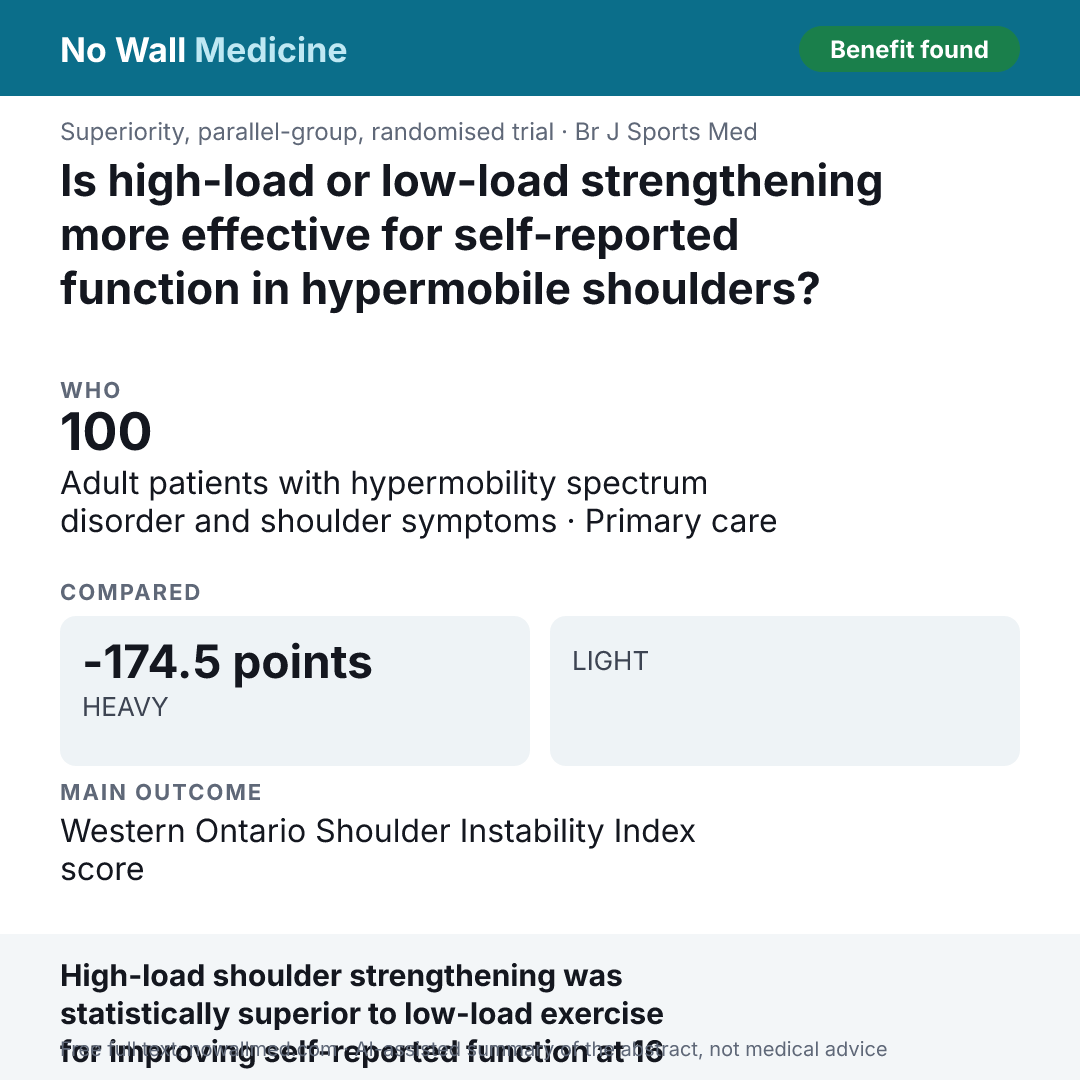
- Researchers conducted a randomized trial with 100 adult patients with hypermobility spectrum disorder and shoulder pain or instability for 16 weeks.
- The high-load group showed a mean difference of -174.5 points on the Western Ontario Shoulder Instability Index compared to the low-load group.
- High-load exercise was associated with more transient muscle soreness (56% vs 37%) and headaches (40% vs 20%) than low-load exercise.
Limitation the authors note: Further studies are needed to confirm the clinical relevance of these findings.
Discussion prompts
- Would these patients look like yours? Who was left out?
- Is the main outcome one that matters to patients?
- Is the difference large enough to change what you do?
Cite: Liaghat B, Skou ST, Søndergaard J, Boyle E, Søgaard K, Juul-Kristensen B. Short-term effectiveness of high-load compared with low-load strengthening exercise on self-reported function in patients with hypermobile shoulders: a randomised controlled trial. Br J Sports Med. 2022. doi:10.1136/bjsports-2021-105223
Free full text: PubMed Central · Summary and visual abstract: nowallmed.com/a/short-term-effectiveness-of-high-load-compared-with-low-load-1i5csoj/ (AI-assisted from the abstract; check the paper before relying on it).