Sigh breaths did not significantly increase ventilator-free days in trauma patients
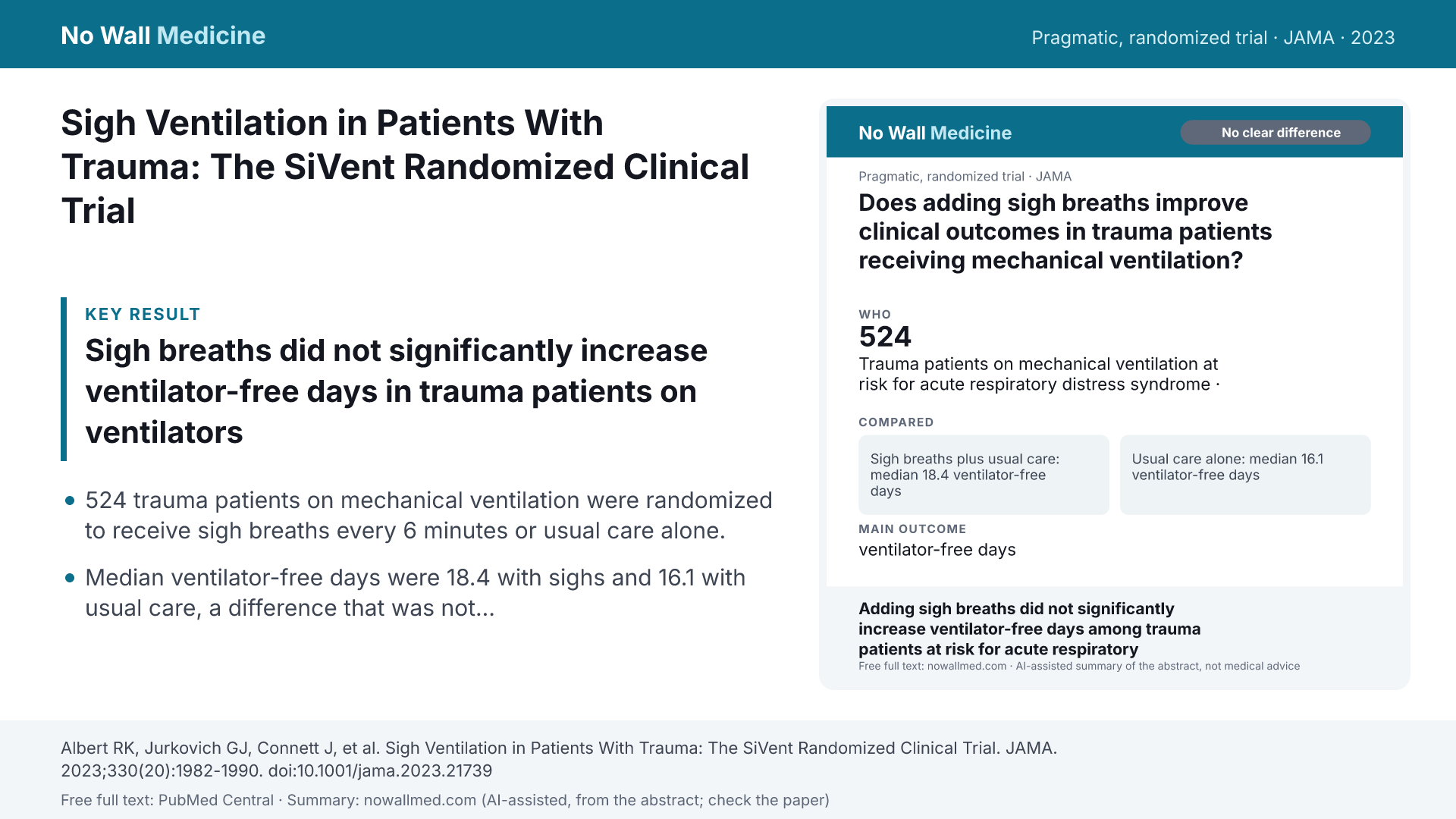
Sigh Ventilation in Patients With Trauma: The SiVent Randomized Clinical Trial
Pragmatic, randomized trialNo clear difference
Does adding sigh breaths improve clinical outcomes in trauma patients receiving mechanical ventilation?
Who
524
Trauma patients on mechanical ventilation at risk for acute respiratory distress syndrome · 15 academic trauma centers in the US
Compared
Sigh breaths plus usual care: median 18.4 ventilator-free days
Usual care alone: median 16.1 ventilator-free days
Main outcome
ventilator-free days
Result: adjusted mean difference 1.4 days (95% CI, -0.2 to 3.0)
Bottom line: Adding sigh breaths did not significantly increase ventilator-free days among trauma patients at risk for acute respiratory distress syndrome.
JAMA · 2023-10-25Download image
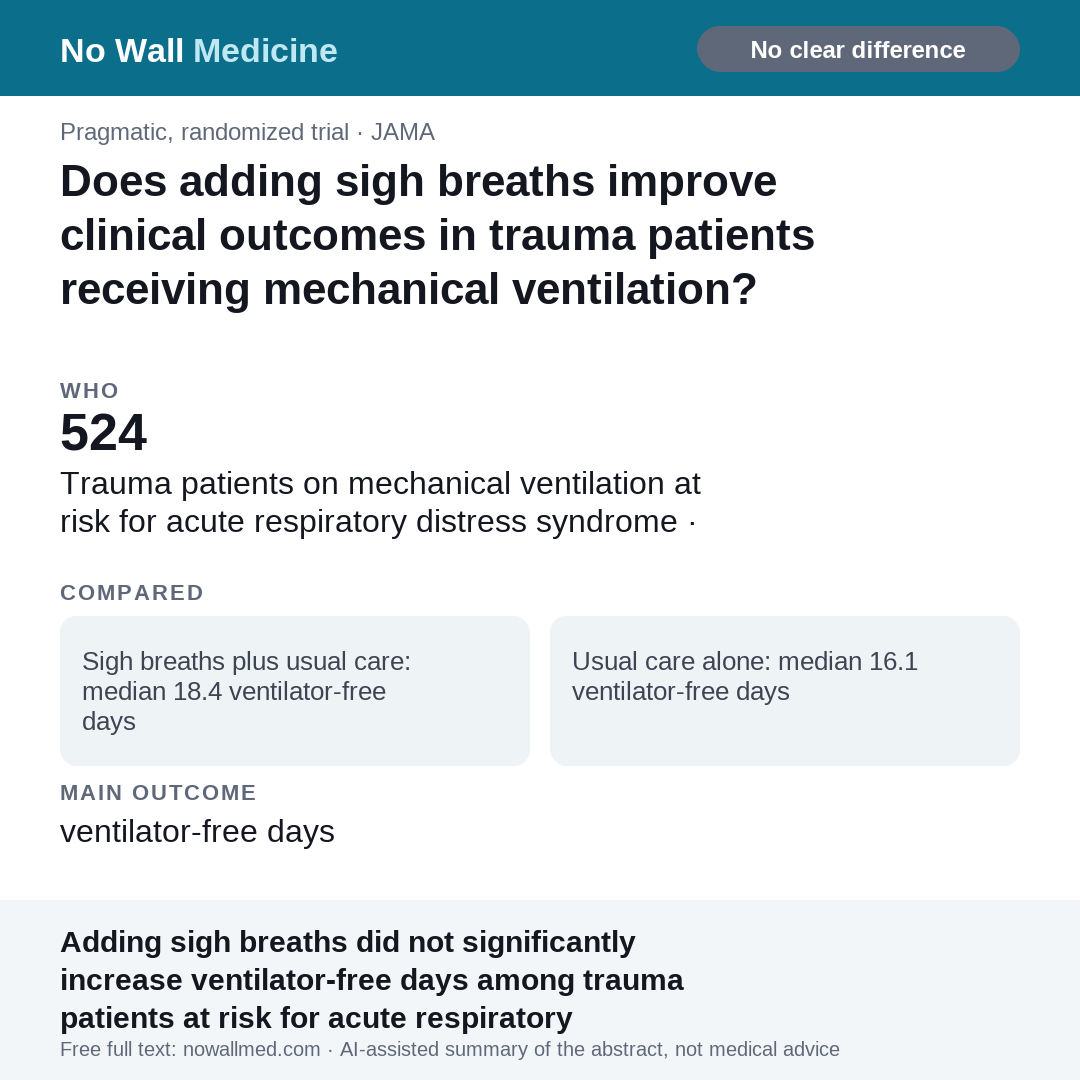
Clinical question: Does adding sigh breaths improve clinical outcomes in trauma patients receiving mechanical ventilation?
Why it matters: The role of sigh breaths in reducing ventilator-induced lung injury among trauma patients is unknown
Key points
- 524 trauma patients receiving mechanical ventilation were randomized to sigh breaths or usual care.
- Median ventilator-free days was 18.4 in sigh group and 16.1 in usual care group.
- 28-day mortality was 11.6% with sighs and 17.6% with usual care.
Headline and key points written with AI from the paper’s abstract, with every number checked against it. Read the paper before relying on them.
Was this summary helpful?
Subject terms
Cite this article
Albert RK, Jurkovich GJ, Connett J, et al. Sigh Ventilation in Patients With Trauma: The SiVent Randomized Clinical Trial. JAMA. 2023. doi:10.1001/jama.2023.21739
Spotted a mistake? Suggest a correction