Simulated daylight photodynamic therapy was less effective than conventional photodynamic therapy for superficial basal cell carcinoma
Simulated daylight vs. conventional PDT for clinical superficial BCC: A randomized controlled trial
Single-centre, non-inferiority, randomized controlled trialHarm found
Is simulated daylight photodynamic therapy non-inferior to conventional photodynamic therapy for superficial basal cell carcinoma?
Who
78
Adult patients with superficial basal cell carcinoma · Single-centre
Compared
Simulated daylight photodynamic therapy: 62.4% clearance rate
Conventional photodynamic therapy: 91.8% clearance rate
Main outcome
Overall clearance rates after 1 year
Result: p < 0.001
Bottom line: Simulated daylight photodynamic therapy is less painful but less effective than conventional photodynamic therapy for superficial basal cell carcinoma.
J Eur Acad Dermatol Venereol · 2025-02-18Download image
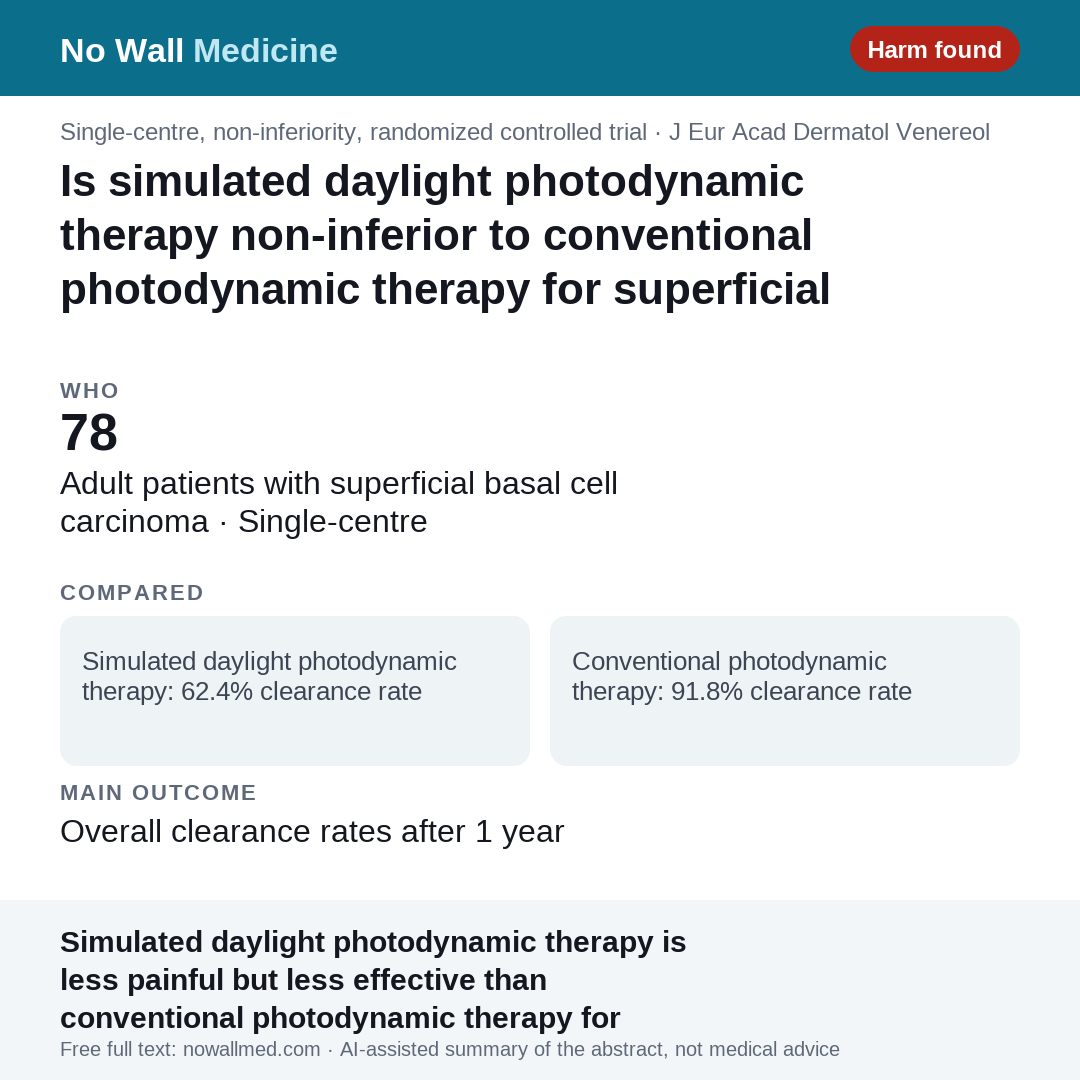
Clinical question: Is simulated daylight photodynamic therapy non-inferior to conventional photodynamic therapy for superficial basal cell carcinoma?
Why it matters: It was unknown if simulated daylight photodynamic therapy is as effective as conventional photodynamic therapy for treating superficial basal cell carcinoma.
Key points
- Researchers conducted a randomized controlled trial with 78 participants and 193 superficial basal cell carcinoma lesions.
- The 1 year clearance rate was 62.4% for simulated daylight photodynamic therapy compared to 91.8% for conventional photodynamic therapy.
- Simulated daylight photodynamic therapy was associated with less pain, with a mean numeric rating scale score of 0.1 compared to 3.5 and 3.7 for conventional photodynamic therapy.
Limitation the authors note: This was a single-centre study.
Headline and key points written with AI from the paper’s abstract, with every number checked against it. Read the paper before relying on them.
Topics
Cite this article
Sjöholm A, Backman E, Modin M, Fougelberg J, Claeson M, Paoli J. Simulated daylight vs. conventional PDT for clinical superficial BCC: A randomized controlled trial. J Eur Acad Dermatol Venereol. 2025. doi:10.1111/jdv.20602
Spotted a mistake? Suggest a correction
Top studies every Monday
The week’s key trials and guidelines in your specialties, plus any topics you follow. By email, free.
Get the weekly digest