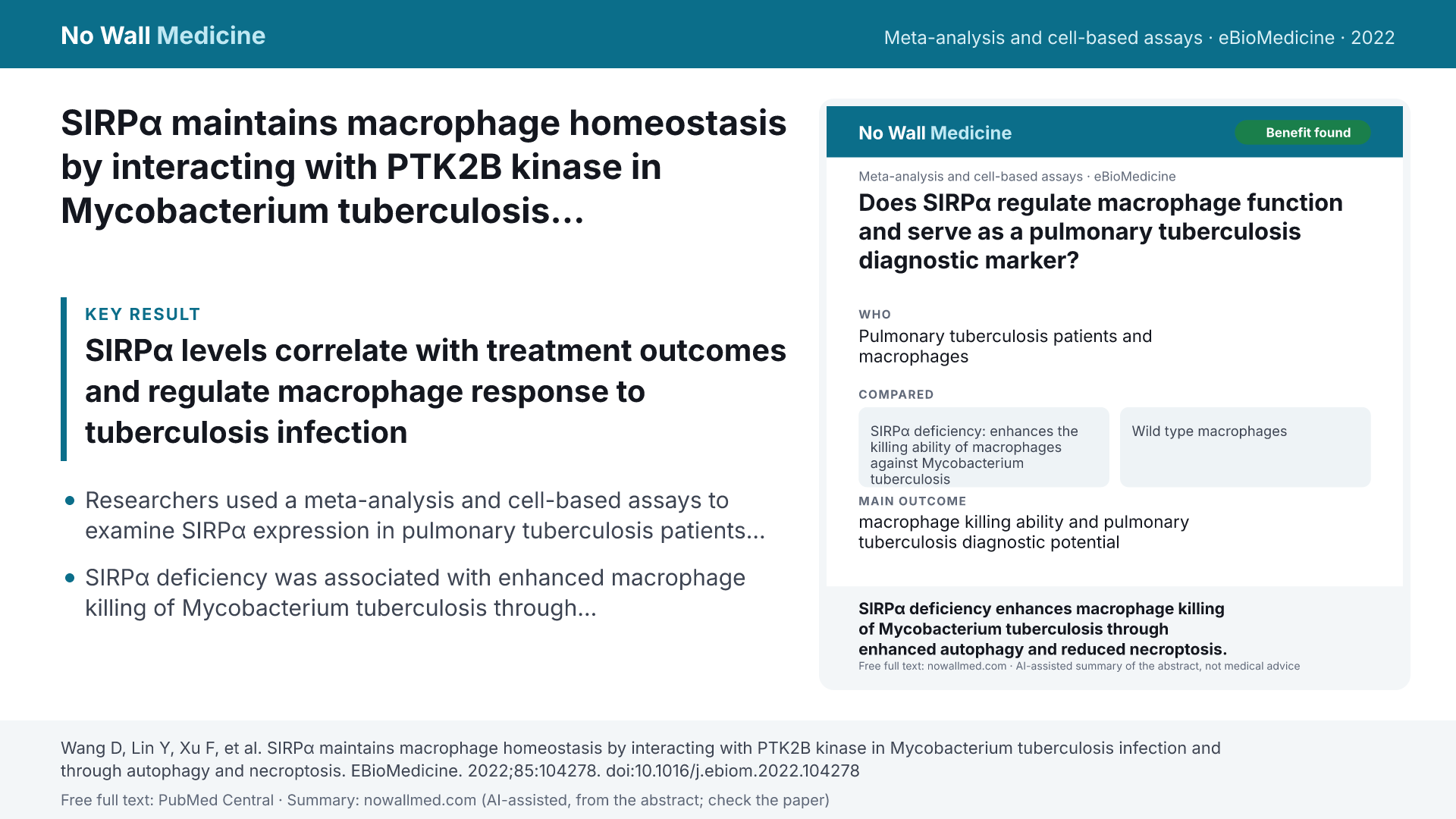
SIRPα levels correlate with treatment outcomes and regulate macrophage response to tuberculosis infection
SIRPα maintains macrophage homeostasis by interacting with PTK2B kinase in Mycobacterium tuberculosis infection and through autophagy and necroptosis
Meta-analysis and cell-based assaysBenefit found
Does SIRPα regulate macrophage function and serve as a pulmonary tuberculosis diagnostic marker?
Who
Pulmonary tuberculosis patients and macrophages
Compared
SIRPα deficiency: enhances the killing ability of macrophages against Mycobacterium tuberculosis
Wild type macrophages
Main outcome
macrophage killing ability and pulmonary tuberculosis diagnostic potential
Bottom line: SIRPα deficiency enhances macrophage killing of Mycobacterium tuberculosis through enhanced autophagy and reduced necroptosis.
Funded by: Chinese National Natural Science Foundation
eBioMedicine · 2022-10-03Download image
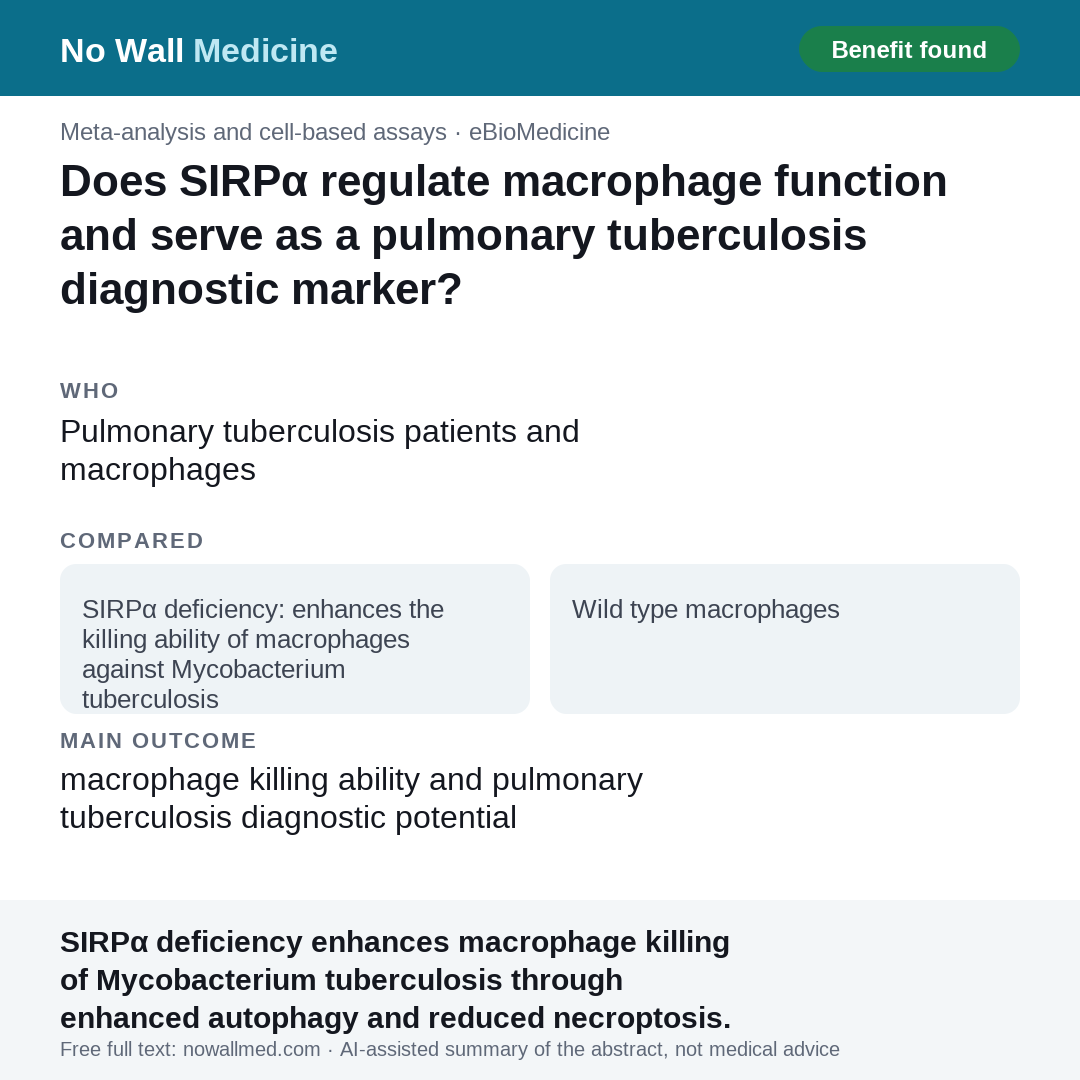
Clinical question: Does SIRPα regulate macrophage function and serve as a pulmonary tuberculosis diagnostic marker?
Why it matters: The molecular mechanisms by which SIRPα regulates macrophage homeostasis and its potential as a diagnostic marker for pulmonary tuberculosis were unknown.
Key points
- Researchers used a meta-analysis and cell-based assays to examine SIRPα expression in pulmonary tuberculosis patients and its role in macrophage function.
- SIRPα deficiency was associated with enhanced macrophage killing of Mycobacterium tuberculosis through increased autophagy and reduced necroptosis, a form of programmed cell death.
- In mice, transferring SIRPα-deficient macrophages was associated with a drop in lung bacterial load but an increase in inflammatory lung damage.
Headline and key points written with AI from the paper’s abstract, with every number checked against it. Read the paper before relying on them.
Was this summary helpful?
Subject terms
Cite this article
Wang D, Lin Y, Xu F, Zhang H, Zhu X, Liu Z. SIRPα maintains macrophage homeostasis by interacting with PTK2B kinase in Mycobacterium tuberculosis infection and through autophagy and necroptosis. eBioMedicine. 2022. doi:10.1016/j.ebiom.2022.104278
Spotted a mistake? Suggest a correction
Top studies every Monday
The week’s key trials and guidelines in your specialties, plus any topics you follow. By email, free.
Get the weekly digest