Digital cognitive behavioral therapy is associated with increased skill use and knowledge in depression and anxiety
Skill Enactment and Knowledge Acquisition in Digital Cognitive Behavioral Therapy for Depression and Anxiety: Systematic Review of Randomized Controlled Trials
Systematic review of randomized controlled trialsBenefit found
How do digital cognitive behavioral therapy interventions affect skill enactment and knowledge acquisition?
Who
43
Adolescents or adults aged 12 years or older with anxiety or depression
Compared
Digital cognitive behavioral therapy
Comparison group
Main outcome
Skill enactment and knowledge acquisition
Bottom line: Digital cognitive behavioral therapy improves skill enactment and knowledge acquisition, but only skill enactment is associated with mental health outcomes.
Limitation: Additional research is needed to understand which types and levels of enactment and knowledge are most relevant.
J Med Internet Res · 2023-05-31Download image
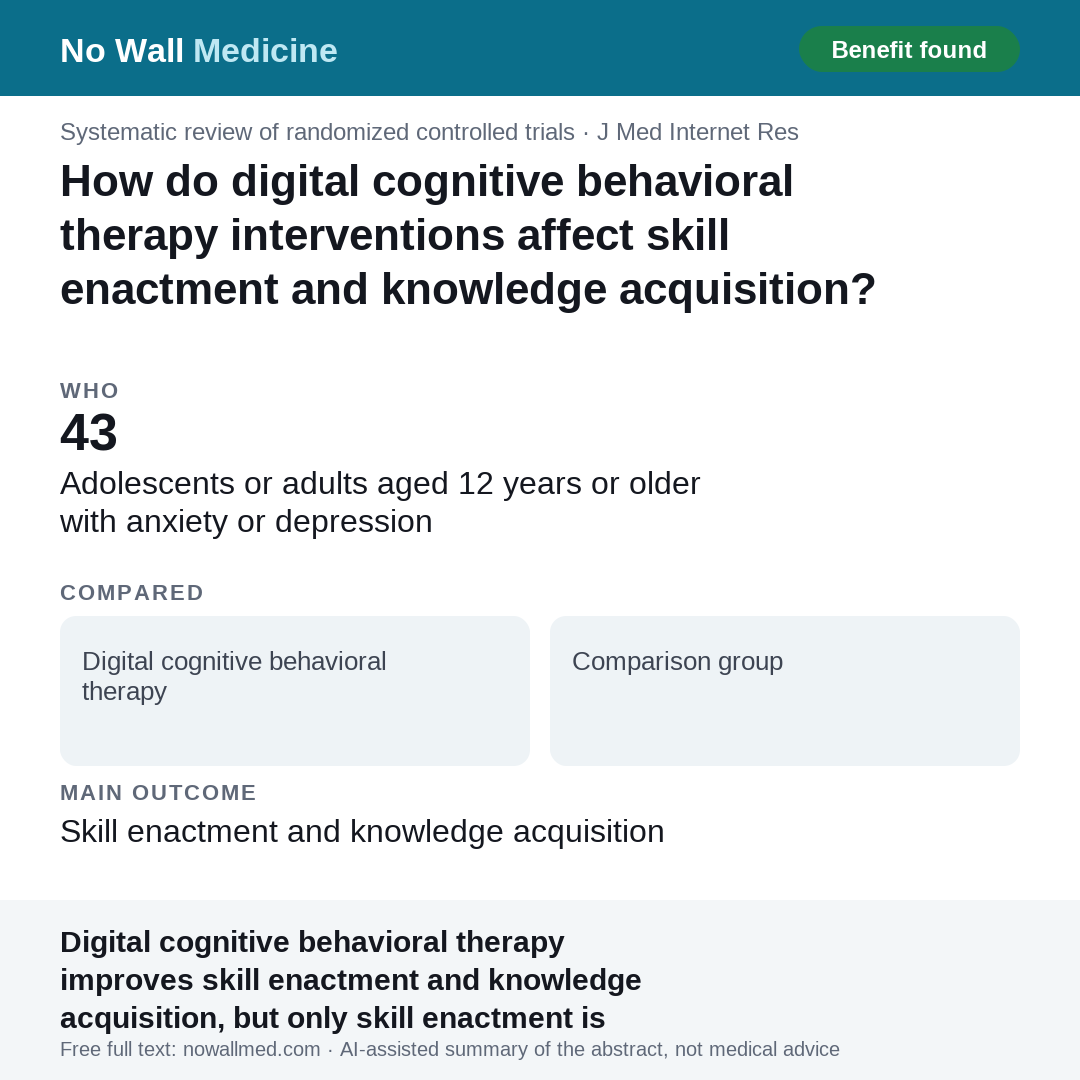
Clinical question: How do digital cognitive behavioral therapy interventions affect skill enactment and knowledge acquisition?
Why it matters: It is unknown how users acquire knowledge and enact skills during digital cognitive behavioral therapy and if these factors relate to mental health improvements.
Key points
- Researchers reviewed 43 randomized controlled trials involving adolescents and adults using digital cognitive behavioral therapy for depression or anxiety.
- Most studies showed significant postintervention changes in skill enactment (75%), cognitive behavioral therapy knowledge (100%), and mental health literacy (80%).
- Skill enactment was associated with mental health outcomes in most studies, but knowledge acquisition was not linked to primary mental health outcomes.
Headline and key points written with AI from the paper’s abstract, with every number checked against it. Read the paper before relying on them.
Was this summary helpful?
Subject terms
Cite this article
Jackson HM, Calear AL, Batterham PJ, Ohan JL, Farmer GM, Farrer LM. Skill Enactment and Knowledge Acquisition in Digital Cognitive Behavioral Therapy for Depression and Anxiety: Systematic Review of Randomized Controlled Trials. J Med Internet Res. 2023. doi:10.2196/44673
Spotted a mistake? Suggest a correction
Top studies every Monday
The week’s key trials and guidelines in your specialties, plus any topics you follow. By email, free.
Get the weekly digest