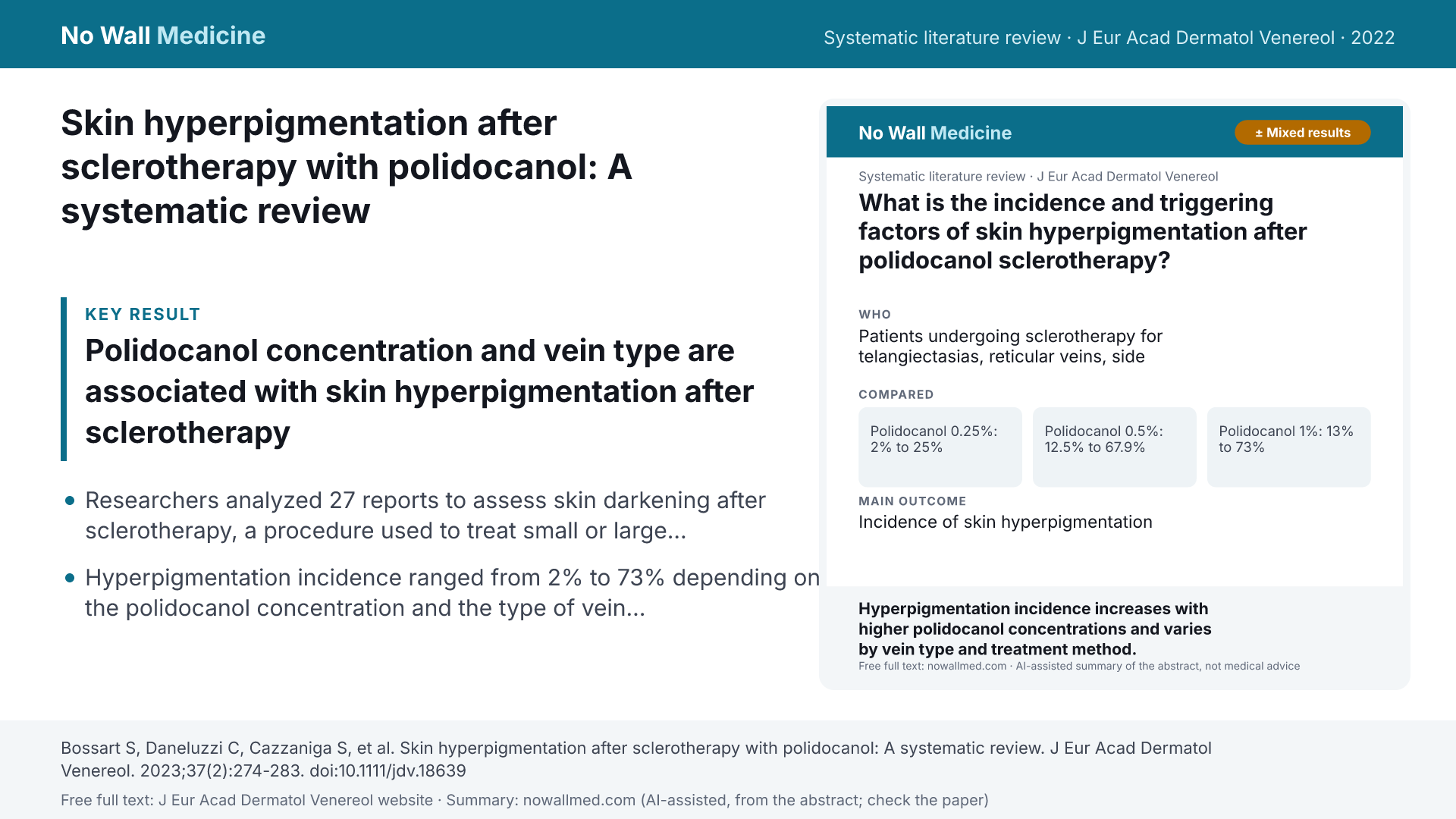
Polidocanol concentration and vein type are associated with skin hyperpigmentation after sclerotherapy
Skin hyperpigmentation after sclerotherapy with polidocanol: A systematic review
Systematic literature reviewMixed results
What is the incidence and triggering factors of skin hyperpigmentation after polidocanol sclerotherapy?
Who
27
Patients undergoing sclerotherapy for telangiectasias, reticular veins, side branches, and truncal varices
Compared
Polidocanol 0.25%: 2% to 25%
Polidocanol 0.5%: 12.5% to 67.9%
Polidocanol 1%: 13% to 73%
Main outcome
Incidence of skin hyperpigmentation
Bottom line: Hyperpigmentation incidence increases with higher polidocanol concentrations and varies by vein type and treatment method.
J Eur Acad Dermatol Venereol · 2022-10-17Download image
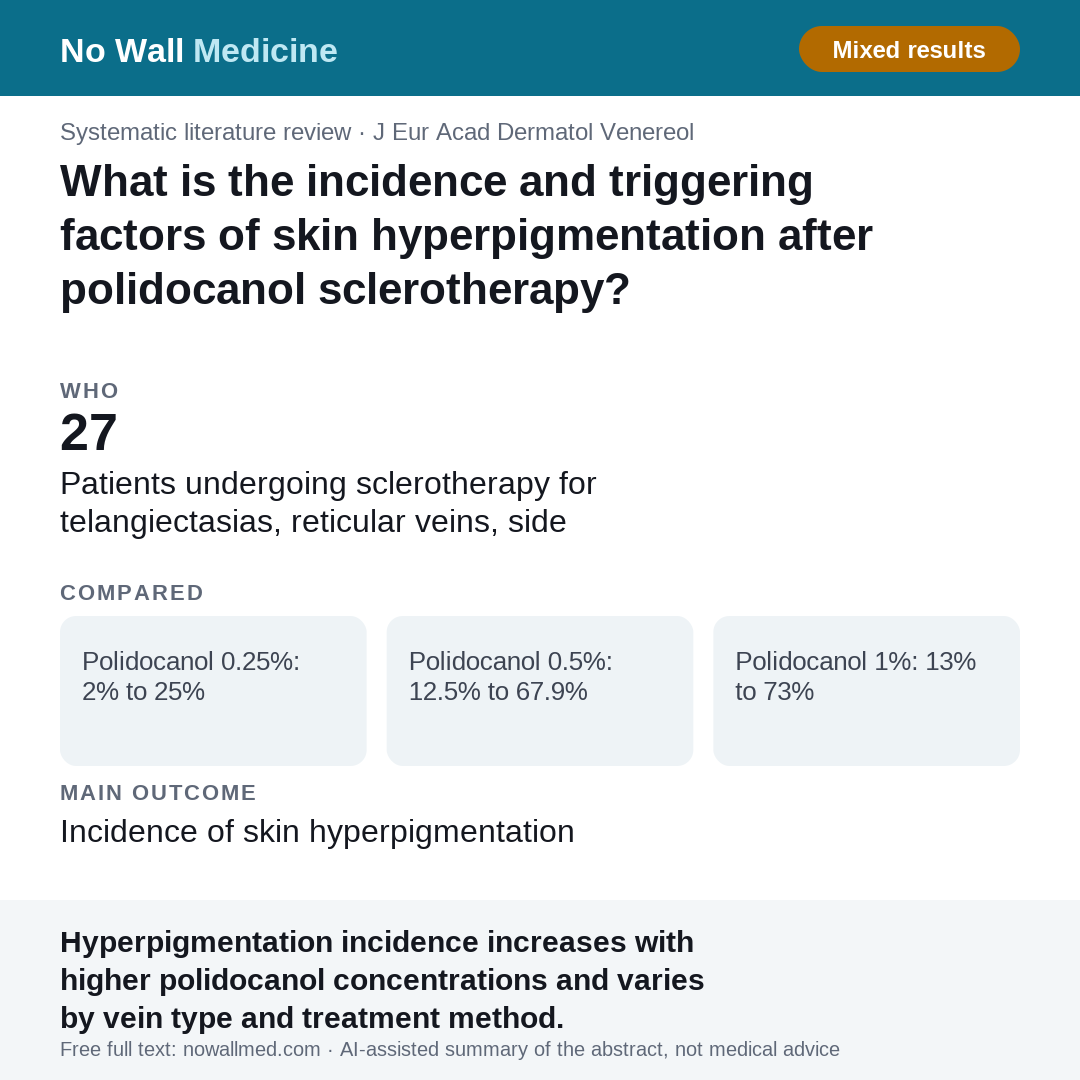
Clinical question: What is the incidence and triggering factors of skin hyperpigmentation after polidocanol sclerotherapy?
Why it matters: The specific factors that trigger skin hyperpigmentation after sclerotherapy with polidocanol-containing sclerosants are not fully understood.
Key points
- Researchers analyzed 27 reports to assess skin darkening after sclerotherapy, a procedure used to treat small or large veins with polidocanol.
- Hyperpigmentation incidence ranged from 2% to 73% depending on the polidocanol concentration and the type of vein being treated.
- Hyperpigmentation lasting more than 1 year after foam polidocanol 1%-3% treatment for truncal veins was reported in 8.1% to 17.5% of cases.
Headline and key points written with AI from the paper’s abstract, with every number checked against it. Read the paper before relying on them.
Was this summary helpful?
Subject terms
Cite this article
Bossart S, Daneluzzi C, Cazzaniga S, Ramelet AA, Uthoff H, Seyed Jafari SM. Skin hyperpigmentation after sclerotherapy with polidocanol: A systematic review. J Eur Acad Dermatol Venereol. 2022. doi:10.1111/jdv.18639
Spotted a mistake? Suggest a correction