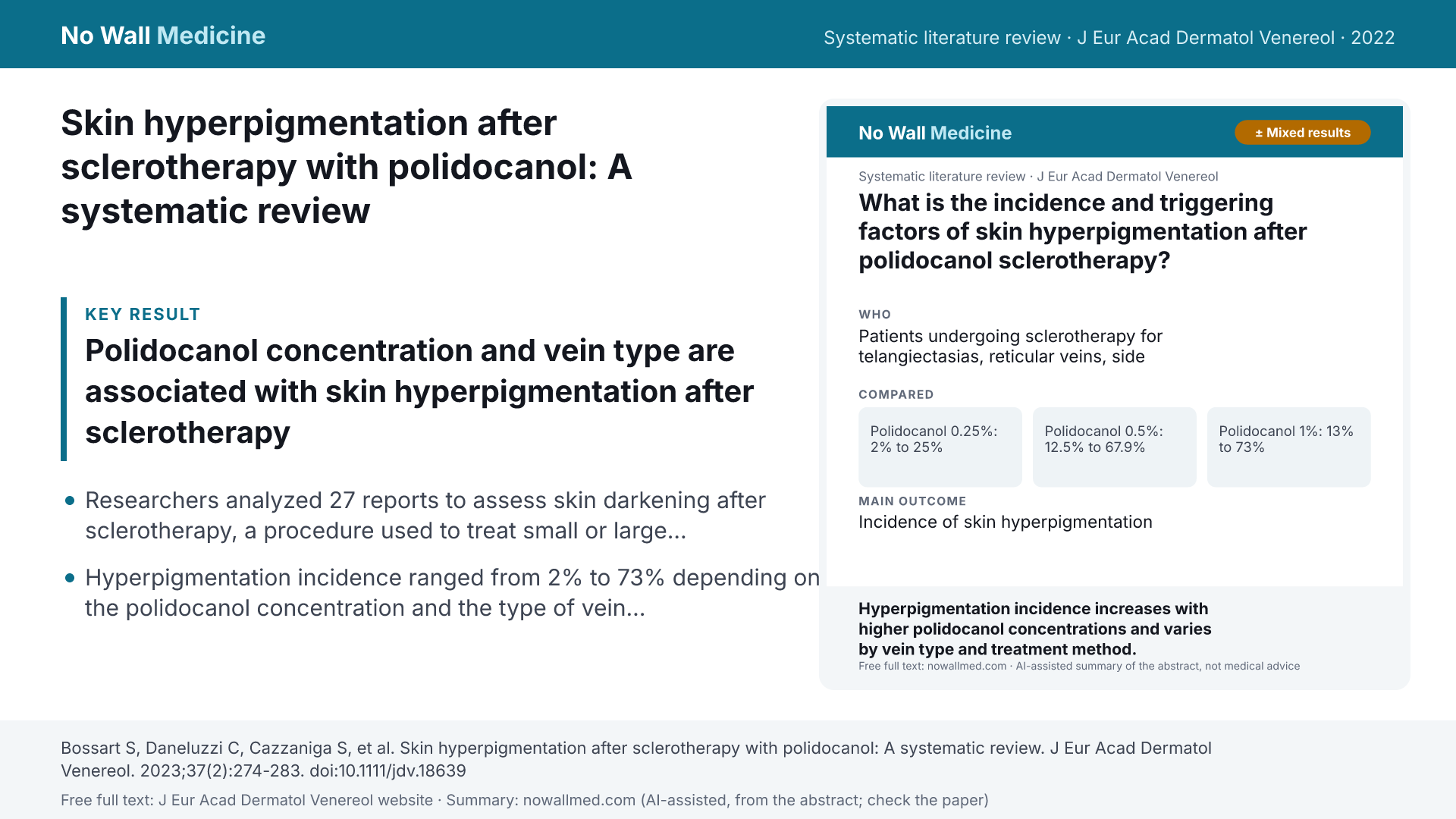
Skin hyperpigmentation after sclerotherapy with polidocanol: A systematic review
Key result: Polidocanol concentration and vein type are associated with skin hyperpigmentation after sclerotherapy
Systematic literature reviewMixed results
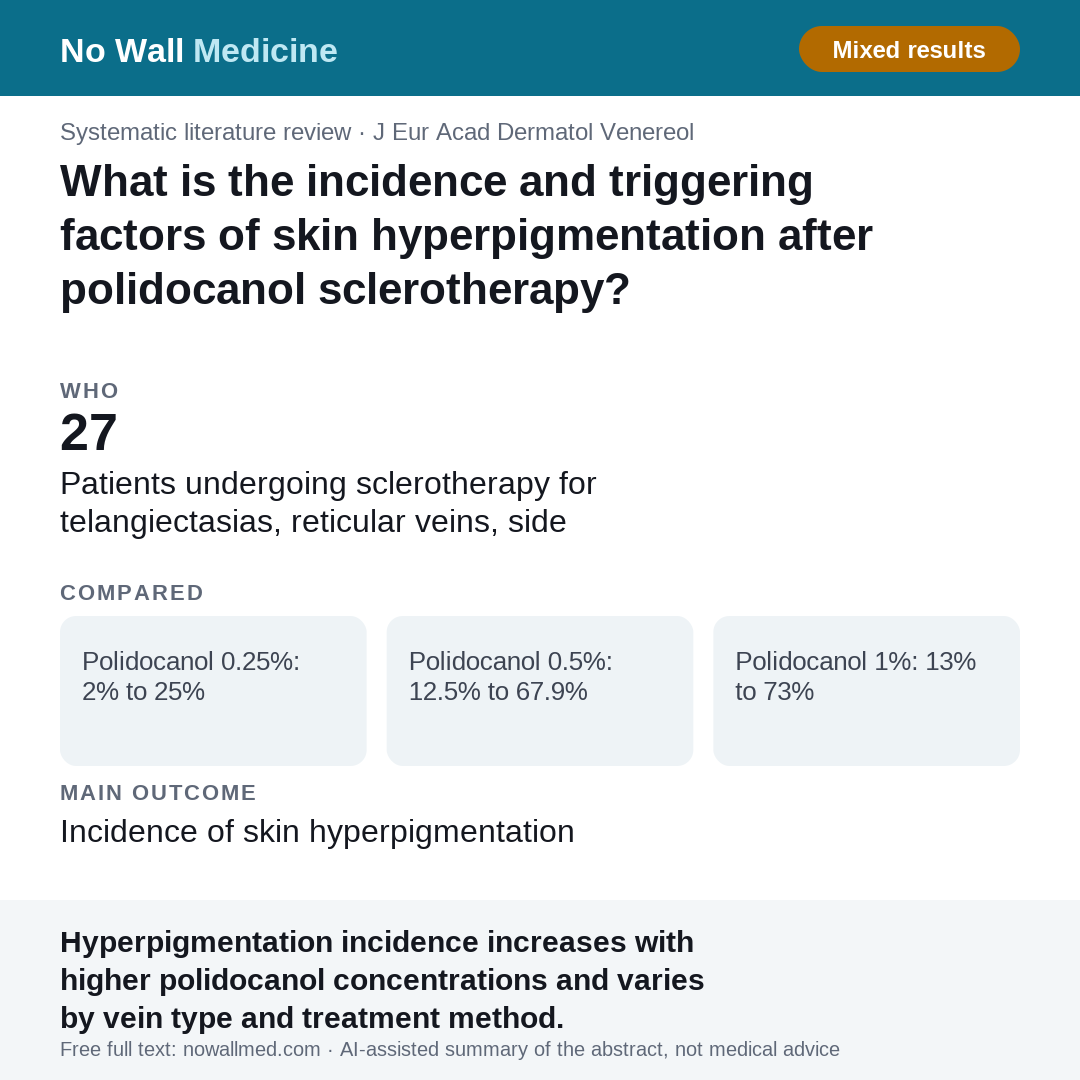
What is the incidence and triggering factors of skin hyperpigmentation after polidocanol sclerotherapy?
Who
Patients undergoing sclerotherapy for telangiectasias, reticular veins, side branches, and truncal varices
Compared
Polidocanol 0.25%: 2% to 25%
Polidocanol 0.5%: 12.5% to 67.9%
Polidocanol 1%: 13% to 73%
Main outcome
Incidence of skin hyperpigmentation
Bottom line: Hyperpigmentation incidence increases with higher polidocanol concentrations and varies by vein type and treatment method.
J Eur Acad Dermatol Venereol · 2022-10-17Download image
Key points
- Researchers analyzed 27 reports to assess skin darkening after sclerotherapy, a procedure used to treat small or large veins with polidocanol.
- Hyperpigmentation incidence ranged from 2% to 73% depending on the polidocanol concentration and the type of vein being treated.
- Hyperpigmentation lasting more than 1 year after foam polidocanol 1%-3% treatment for truncal veins was reported in 8.1% to 17.5% of cases.
Discussion prompts
- Would these patients look like yours? Who was left out?
- Is the main outcome one that matters to patients?
- Is the difference large enough to change what you do?
Cite: Bossart S, Daneluzzi C, Cazzaniga S, et al. Skin hyperpigmentation after sclerotherapy with polidocanol: A systematic review. J Eur Acad Dermatol Venereol. 2022. doi:10.1111/jdv.18639
Free full text: J Eur Acad Dermatol Venereol website · Summary and visual abstract: nowallmed.com/a/skin-hyperpigmentation-after-sclerotherapy-with-polidocanol-a-1gjakyu/ (AI-assisted from the abstract; check the paper before relying on it).