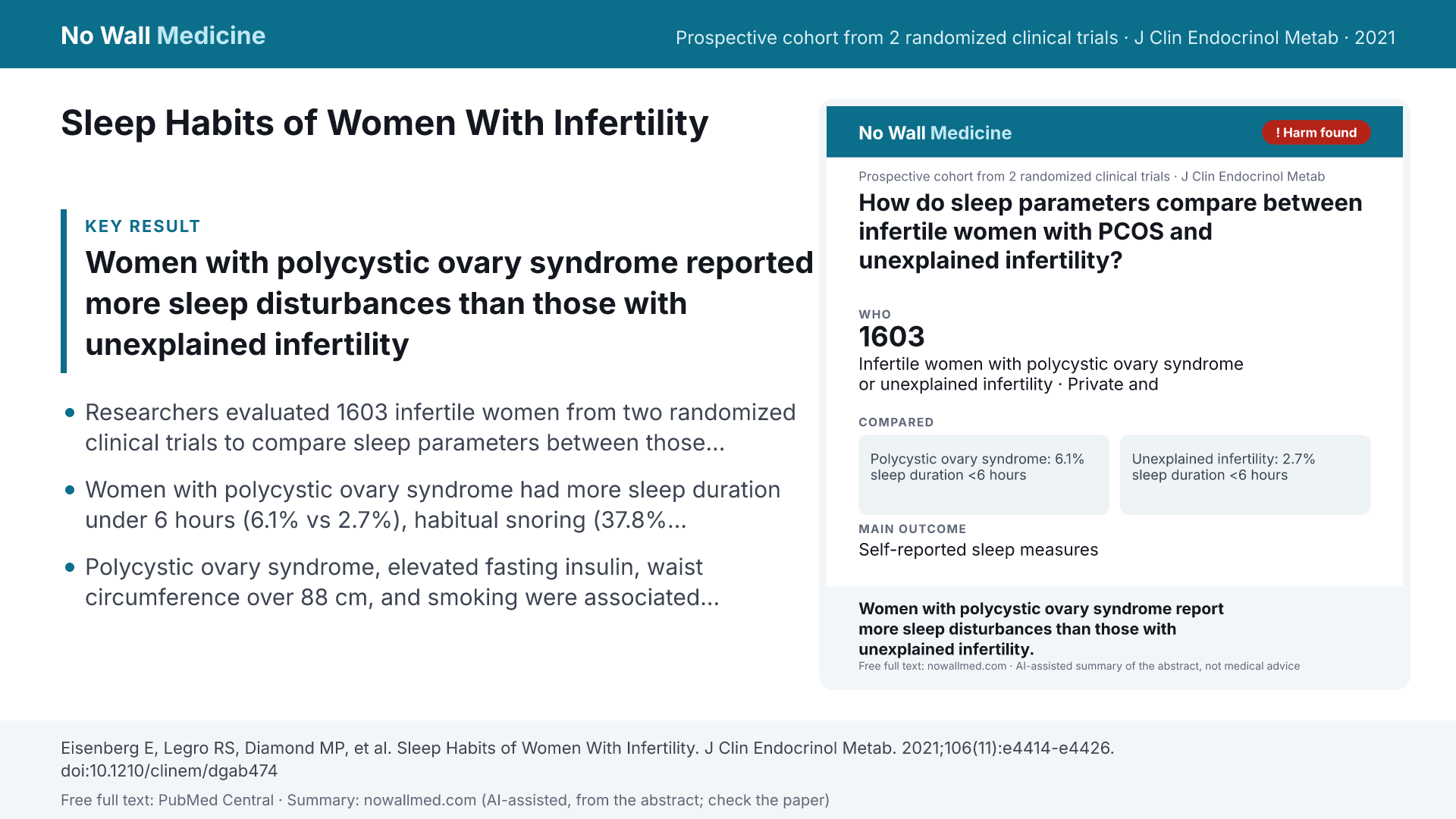
Women with polycystic ovary syndrome reported more sleep disturbances than those with unexplained infertility
Sleep Habits of Women With Infertility
Prospective cohort from 2 randomized clinical trialsHarm found
How do sleep parameters compare between infertile women with PCOS and unexplained infertility?
Who
1603
Infertile women with polycystic ovary syndrome or unexplained infertility · Private and academic ambulatory gynecology and infertility practices
Compared
Polycystic ovary syndrome: 6.1% sleep duration <6 hours
Unexplained infertility: 2.7% sleep duration <6 hours
Main outcome
Self-reported sleep measures
Bottom line: Women with polycystic ovary syndrome report more sleep disturbances than those with unexplained infertility.
J Clin Endocrinol Metab · 2021-06-29 · Save PNG
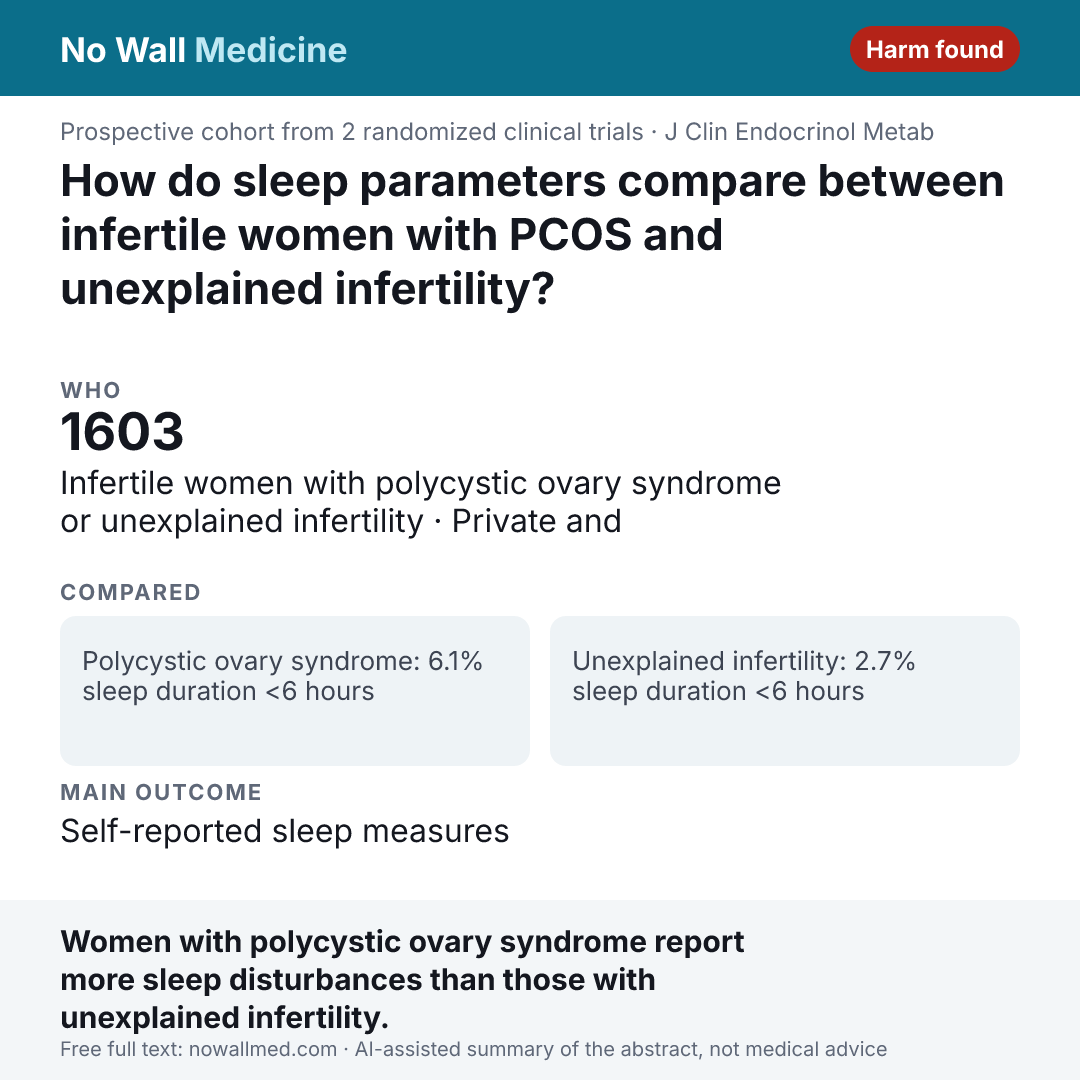
Clinical question: How do sleep parameters compare between infertile women with PCOS and unexplained infertility?
Key points
- Researchers evaluated 1603 infertile women from two randomized clinical trials to compare sleep parameters between those with polycystic ovary syndrome and those with unexplained infertility.
- Women with polycystic ovary syndrome had more sleep duration under 6 hours (6.1% vs 2.7%), habitual snoring (37.8% vs 19.0%), and clinical sleepiness (12.0% vs 8.6%).
- Polycystic ovary syndrome, elevated fasting insulin, waist circumference over 88 cm, and smoking were associated with sleep issues, but sleep duration and obstructive sleep apnea symptoms were not associated with conception or live birth rates.
Headline and key points written with AI from the paper’s abstract, with every number checked against it. Read the paper before relying on them.
Was this summary helpful?
Subject terms
Headline, design, result, key points, caveat and citation as plain text.
Cite this article
Eisenberg E, Legro RS, Diamond MP, et al. Sleep Habits of Women With Infertility. J Clin Endocrinol Metab. 2021;106(11):e4414-e4426. doi:10.1210/clinem/dgab474
Spotted a mistake? Suggest a correction