Smartphone-based speech therapy improved speech intelligibility and quality of life in poststroke patients
Smartphone-Based Speech Therapy for Poststroke Dysarthria: Pilot Randomized Controlled Trial Evaluating Efficacy and Feasibility
Randomized, evaluator-blinded trialBenefit found
Does smartphone-based speech therapy improve speech intelligibility in poststroke dysarthria patients?
Who
40
Patients with acute and early subacute poststroke dysarthria
Compared
Smartphone-based speech therapy app: significant improvements in speech intelligibility
Standard guideline-based stroke care
Main outcome
Speech intelligibility
Bottom line: Smartphone-based speech therapy significantly improved speech intelligibility, articulation, and quality of life in patients with poststroke dysarthria.
J Med Internet Res · 2024-04-25Download image
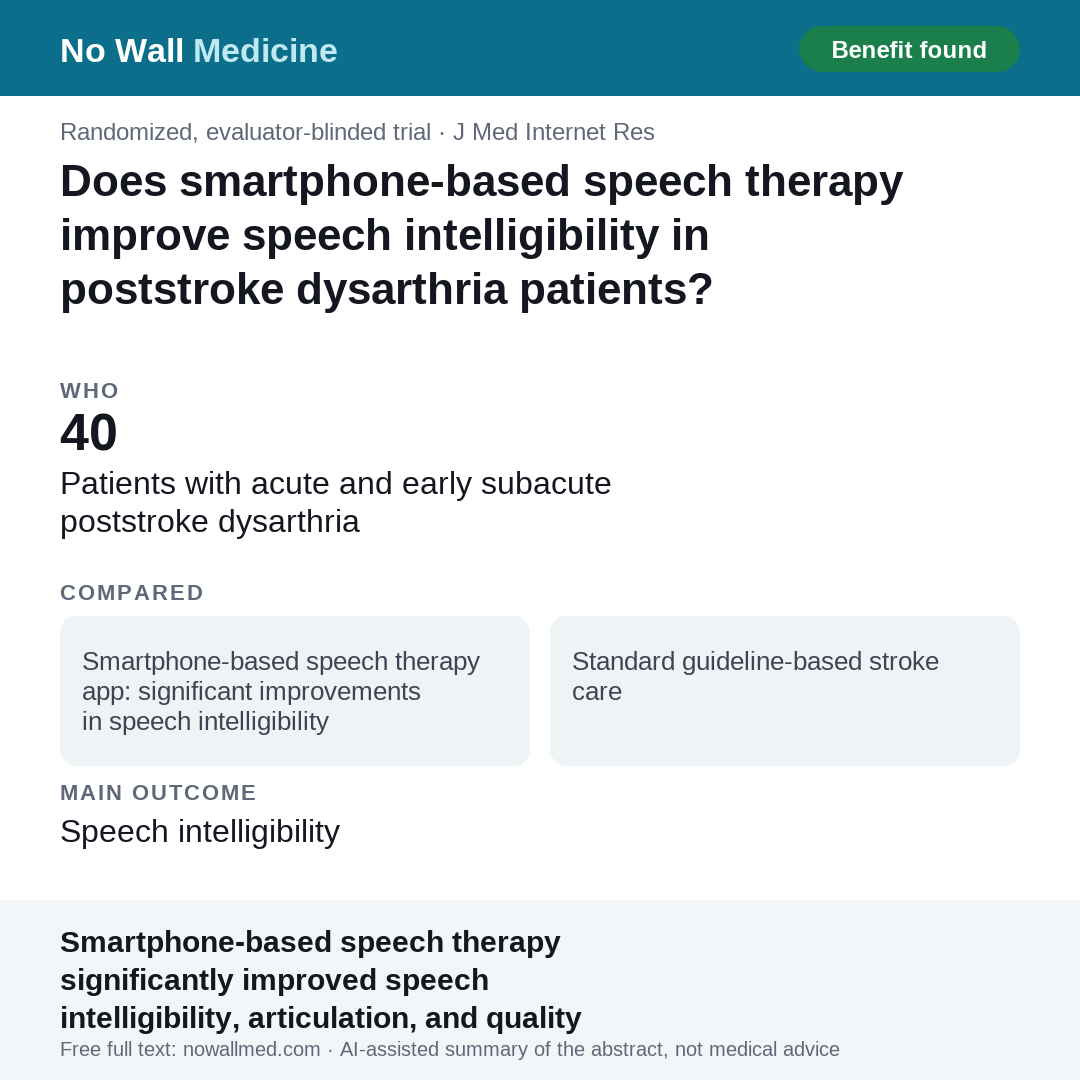
Clinical question: Does smartphone-based speech therapy improve speech intelligibility in poststroke dysarthria patients?
Why it matters: Traditional speech therapy for poststroke dysarthria can be difficult to access and may face challenges with patient adherence.
Key points
- Researchers conducted a randomized trial with 40 patients with poststroke dysarthria, a speech disorder, comparing a smartphone app to standard stroke care.
- The intervention group showed significant improvements in speech intelligibility, the percentage of correct consonants, and the severity of dysarthria compared to the control group.
- Participants using the app reported higher quality of life and a system usability score of 80.78, with an adherence rate of 64%.
Headline and key points written with AI from the paper’s abstract, with every number checked against it. Read the paper before relying on them.
Topics
Cite this article
Kim Y, Kim M, Kim J, Song TJ. Smartphone-Based Speech Therapy for Poststroke Dysarthria: Pilot Randomized Controlled Trial Evaluating Efficacy and Feasibility. J Med Internet Res. 2024. doi:10.2196/56417
Spotted a mistake? Suggest a correction
Top studies every Monday
The week’s key trials and guidelines in your specialties, plus any topics you follow. By email, free.
Get the weekly digest