Socioeconomic status is associated with differences in gut bacteria diversity and composition globally
Socioeconomic position and the gut microbiota: a narrative synthesis of the association and recommendations
Narrative systematic reviewMixed results
Does socioeconomic position associate with gut microbiota diversity, composition, or function?
Who
26
Participants of any age, ethnicity, or location · Global
Compared
High-income countries: greater alpha diversity in advantaged groups
Low- and middle-income countries: greater alpha diversity in disadvantaged groups
Main outcome
Gut microbiota diversity, composition, and function
Bottom line: Socioeconomic-related differences in the gut microbiota are evident globally, though patterns vary by country income level.
Gut Microbes · 2026-01-31Download image
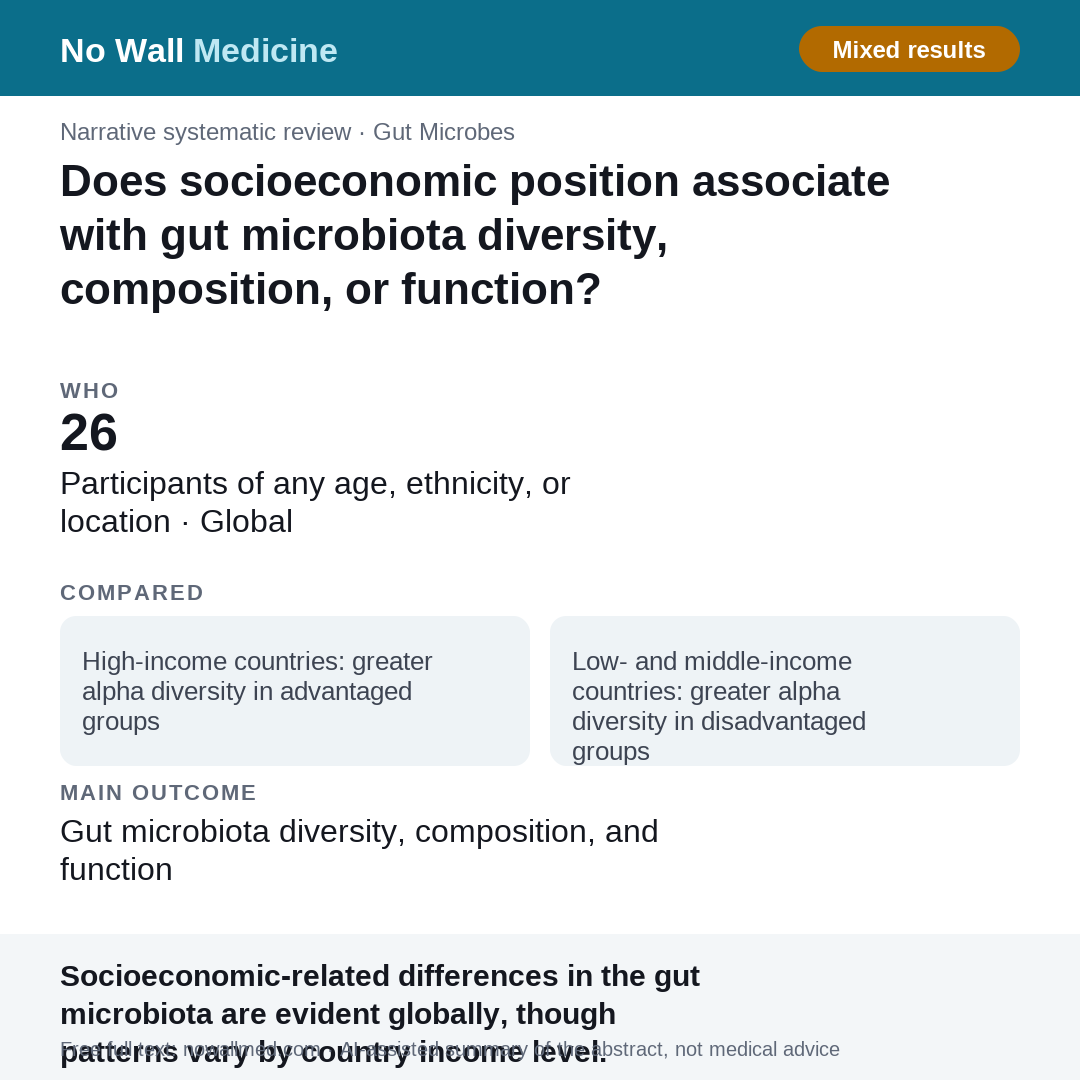
Clinical question: Does socioeconomic position associate with gut microbiota diversity, composition, or function?
Why it matters: No systematic review had previously examined the association between socioeconomic position and the gut microbiota to understand how social factors might drive health inequalities.
Key points
- Researchers conducted a narrative systematic review of 26 observational studies to examine how socioeconomic position affects the gut microbiota, which refers to the community of microorganisms in the digestive tract.
- The review found that socioeconomic patterns in alpha diversity, a measure of microbial variety, differed by context, showing greater diversity in advantaged groups in high-income countries but in disadvantaged groups in low- and middle-income countries.
- Differences in beta diversity, which measures how much microbial communities differ between groups, suggest that advantaged and disadvantaged groups have distinct microbial profiles.
Limitation the authors note: The authors noted considerable heterogeneity across studies, particularly regarding sampling, sequencing, and analytical methods.
Headline and key points written with AI from the paper’s abstract, with every number checked against it. Read the paper before relying on them.
Topics
Cite this article
Ratcliff JS, Kumari M, Varga-Weisz P, O'Gorman R. Socioeconomic position and the gut microbiota: a narrative synthesis of the association and recommendations. Gut Microbes. 2026. doi:10.1080/19490976.2026.2623356
Spotted a mistake? Suggest a correction