Genetic data link SGLT-2 inhibition to lower heart failure risk via inflammation
Sodium-glucose cotransporter 2 inhibitors, inflammation, and heart failure: a two-sample Mendelian randomization study
Two-sample, two-step Mendelian Randomization studyBenefit found
Does SGLT-2 inhibition reduce heart failure risk via inflammatory pathways?
Who
Individuals of European ancestry from various genome-wide association studies
Compared
Genetically predicted SGLT-2 inhibition: OR 0.42 [95% CI 0.30-0.59]
Control
Main outcome
Risk of heart failure
Result: OR 0.42 (95% CI 0.30-0.59)
Bottom line: SGLT-2 inhibition is genetically associated with reduced heart failure risk, partially mediated by the inflammatory cytokine CXCL10.
Cardiovasc Diabetol · 2024-04-02 · Save PNG
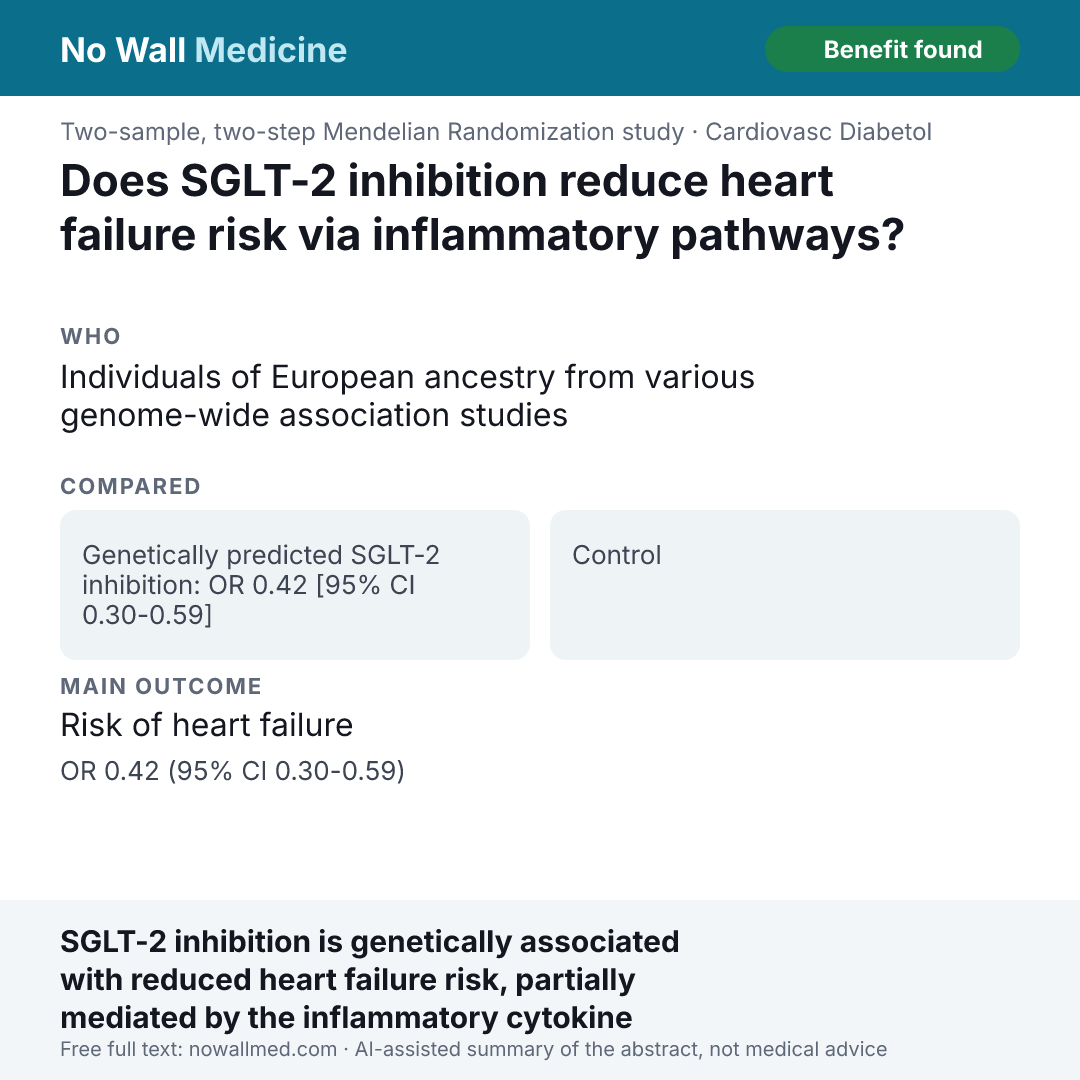
Clinical question: Does SGLT-2 inhibition reduce heart failure risk via inflammatory pathways?
Why it matters: Applies to understanding mechanisms of SGLT-2 inhibitors; suggests CXCL10 is a potential mediator of their anti-inflammatory effects on heart failure risk.
Key points
- Two-sample Mendelian randomization used genetic variants to assess links between SGLT-2 inhibition, 92 inflammatory biomarkers, and heart failure.
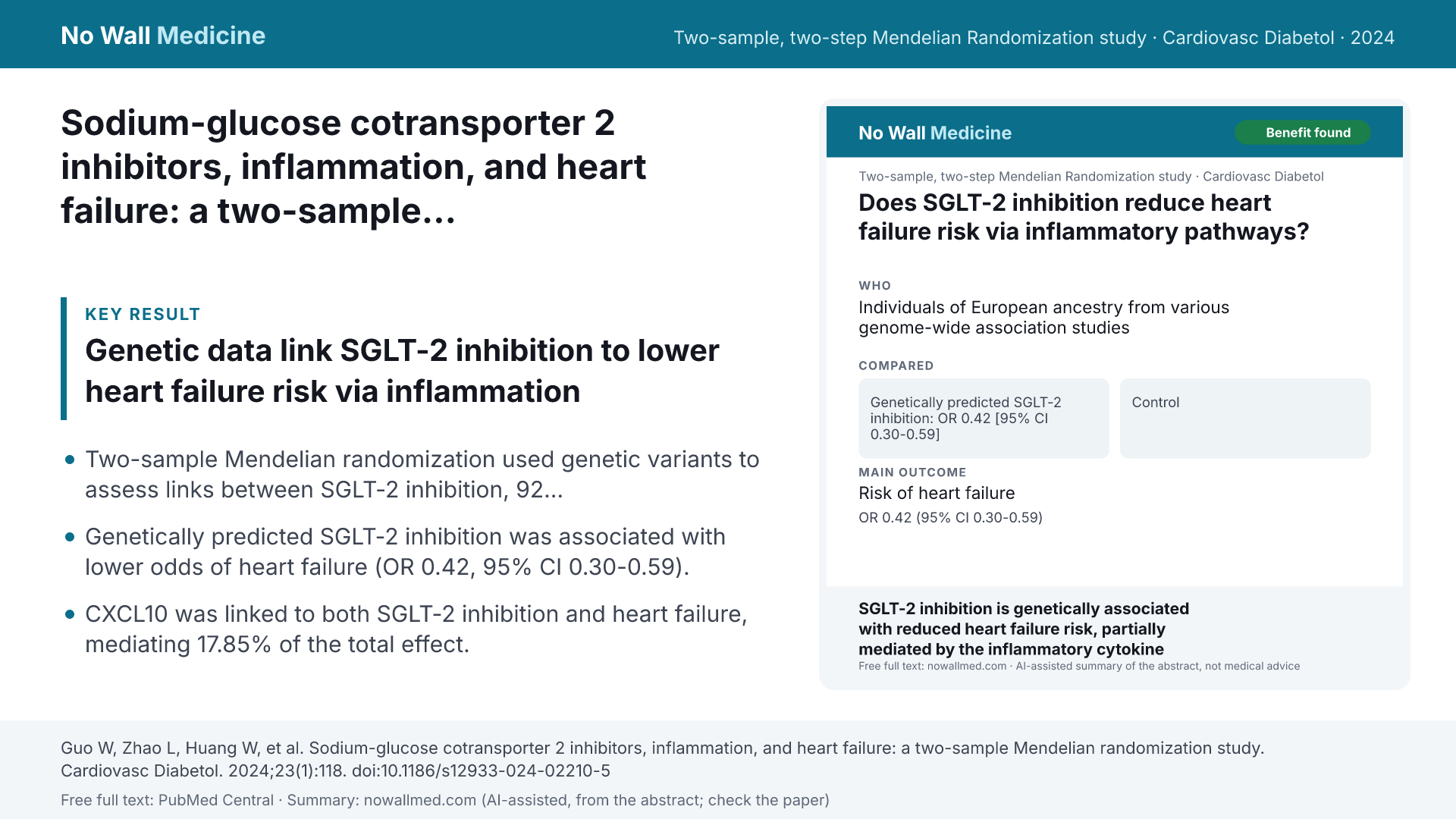
- Genetically predicted SGLT-2 inhibition was associated with lower odds of heart failure (OR 0.42, 95% CI 0.30-0.59).
- CXCL10 was linked to both SGLT-2 inhibition and heart failure, mediating 17.85% of the total effect.
Limitation the authors note: The study relies on genetic instruments and observational data frameworks to infer potential causal relationships.
Headline and key points written with AI from the paper’s abstract, with every number checked against it. Read the paper before relying on them.
Was this summary helpful?
Subject terms
Headline, design, result, key points, caveat and citation as plain text.
Cite this article
Guo W, Zhao L, Huang W, et al. Sodium-glucose cotransporter 2 inhibitors, inflammation, and heart failure: a two-sample Mendelian randomization study. Cardiovasc Diabetol. 2024;23(1):118. doi:10.1186/s12933-024-02210-5
Spotted a mistake? Suggest a correction