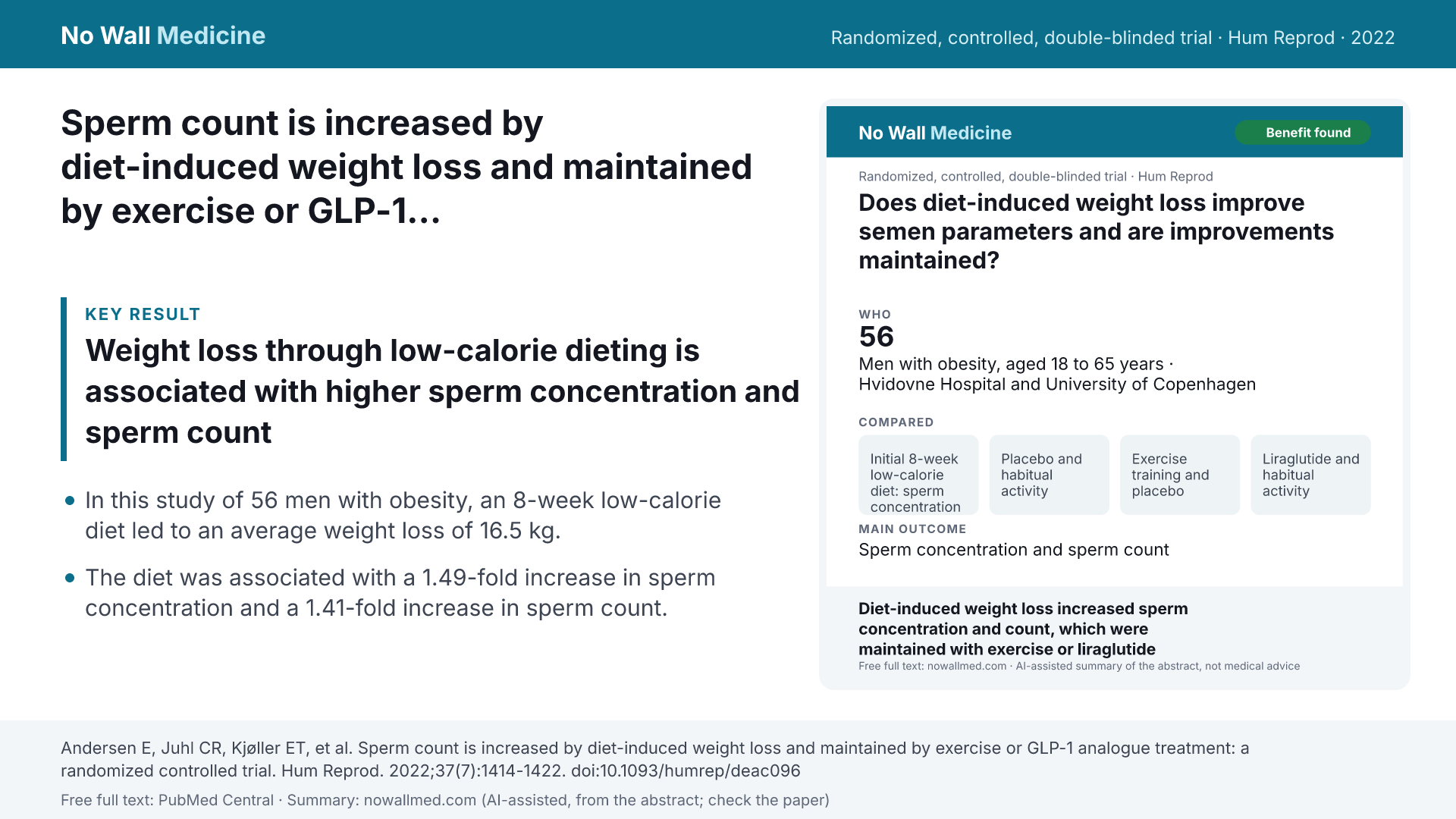
Sperm count is increased by diet-induced weight loss and maintained by exercise or GLP-1 analogue treatment: a randomized controlled trial
Key result: Weight loss through low-calorie dieting is associated with higher sperm concentration and sperm count
Key points
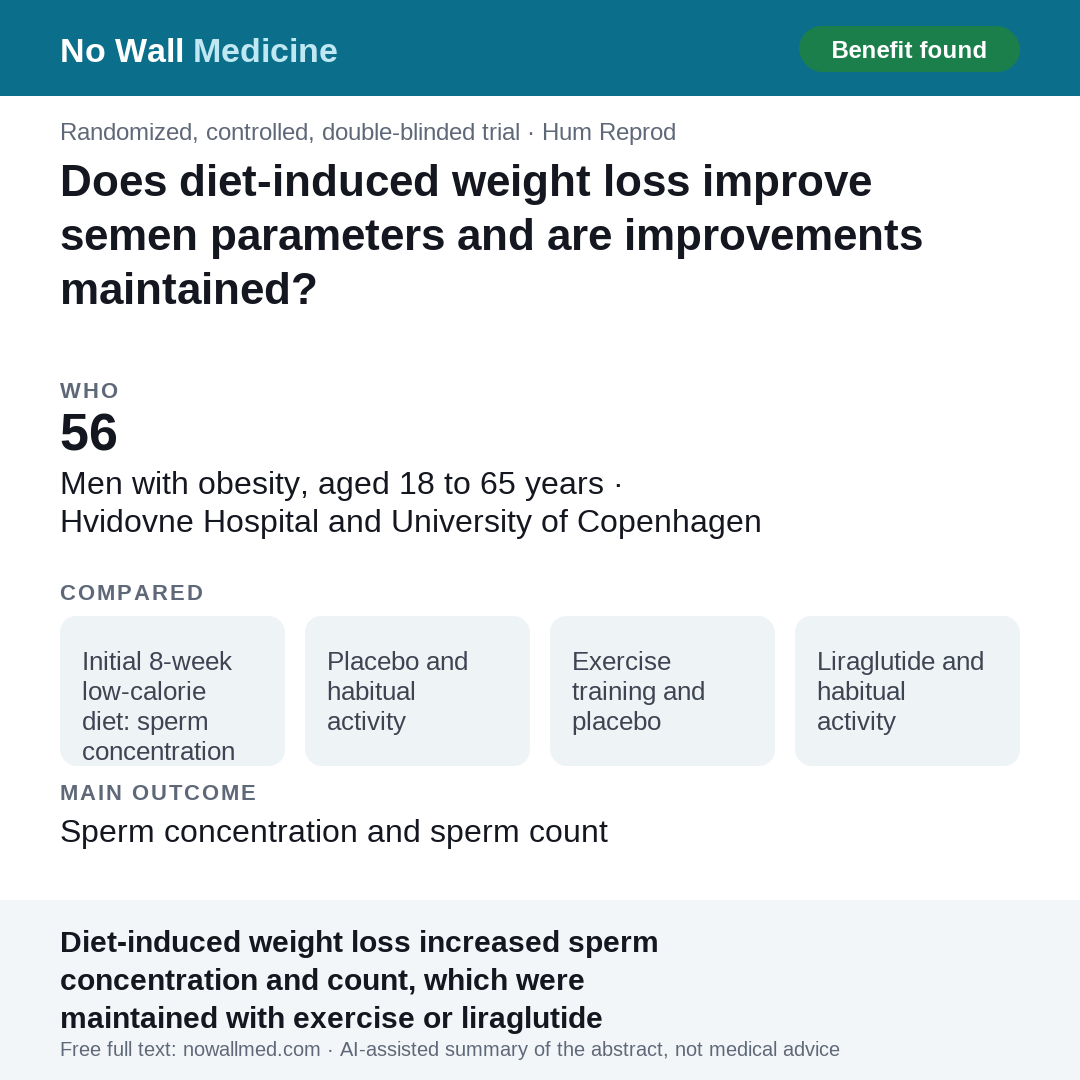
- In this study of 56 men with obesity, an 8-week low-calorie diet led to an average weight loss of 16.5 kg.
- The diet was associated with a 1.49-fold increase in sperm concentration and a 1.41-fold increase in sperm count.
- These improvements were maintained for 52 weeks in men who maintained weight loss, but not in those who regained weight.
Why it matters: The acute and long-term effects of weight loss on semen parameters in men with obesity were unknown.
Limitation the authors note: The authors state that while the analysis of semen was preregistered, definite inferences cannot be made.
Discussion prompts
- Would these patients look like yours? Who was left out?
- Is the main outcome one that matters to patients?
- Is the difference large enough to change what you do?
Cite: Andersen E, Juhl CR, Kjøller ET, et al. Sperm count is increased by diet-induced weight loss and maintained by exercise or GLP-1 analogue treatment: a randomized controlled trial. Hum Reprod. 2022. doi:10.1093/humrep/deac096
Free full text: PubMed Central · Summary and visual abstract: nowallmed.com/a/sperm-count-is-increased-by-diet-induced-weight-loss-and-maintained-woinrc/ (AI-assisted from the abstract; check the paper before relying on it).