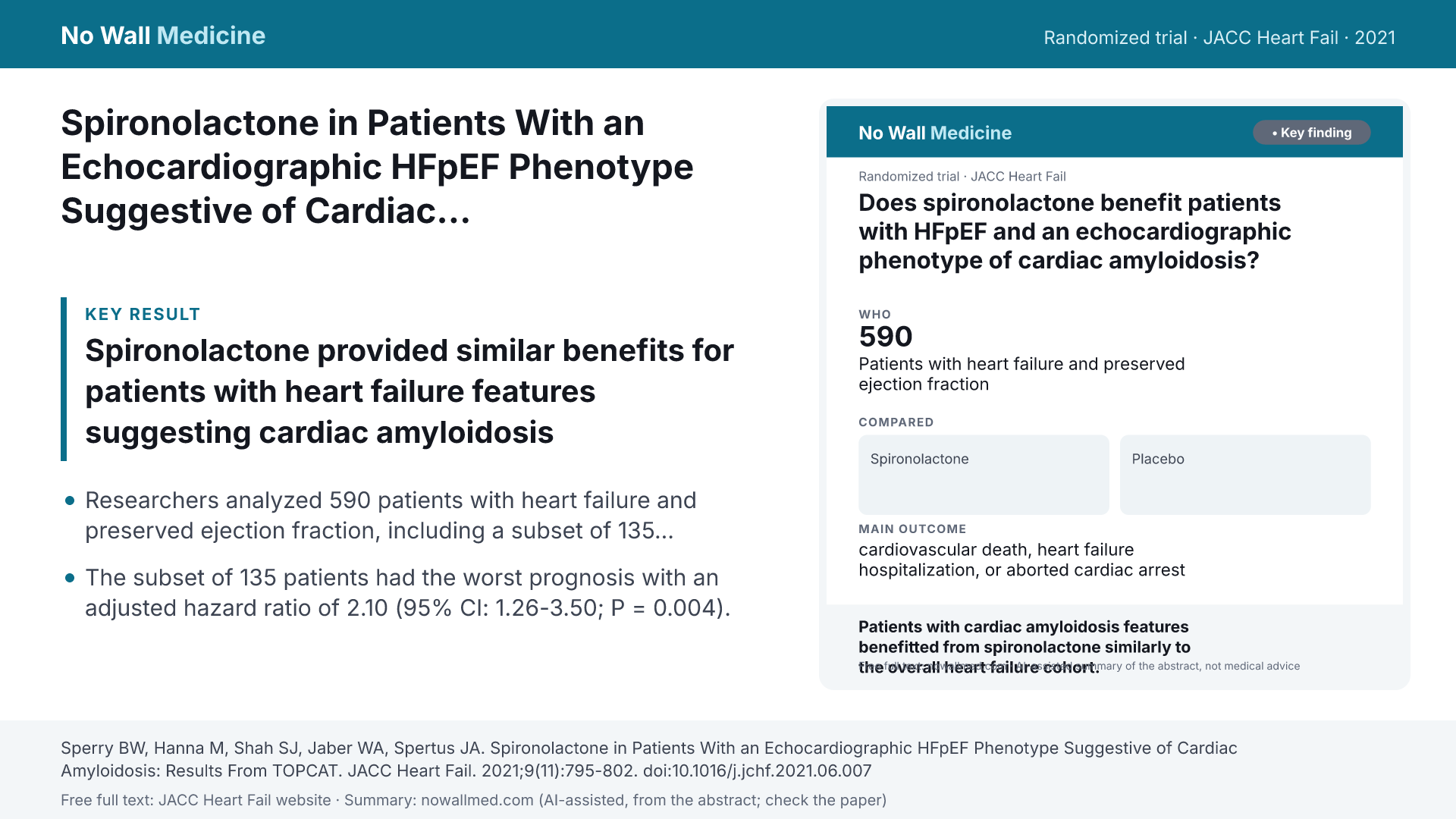
Spironolactone provided similar benefits for patients with heart failure features suggesting cardiac amyloidosis
Spironolactone in Patients With an Echocardiographic HFpEF Phenotype Suggestive of Cardiac Amyloidosis: Results From TOPCAT
Randomized trialKey finding
Does spironolactone benefit patients with HFpEF and an echocardiographic phenotype of cardiac amyloidosis?
Who
590
Patients with heart failure and preserved ejection fraction
Compared
Spironolactone
Placebo
Main outcome
cardiovascular death, heart failure hospitalization, or aborted cardiac arrest
Bottom line: Patients with cardiac amyloidosis features benefitted from spironolactone similarly to the overall heart failure cohort.
JACC Heart Fail · 2021-09-08 · Save PNG
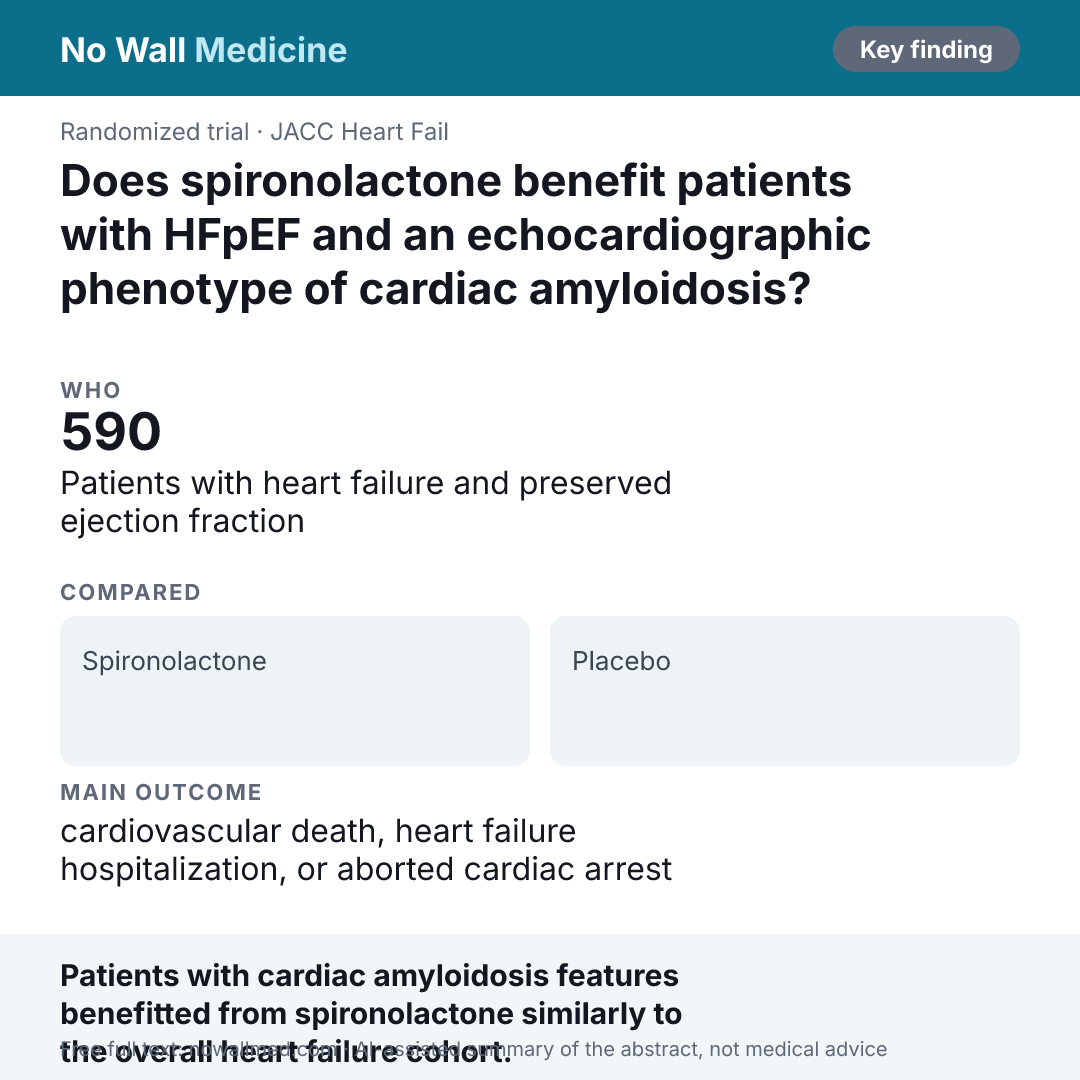
Clinical question: Does spironolactone benefit patients with HFpEF and an echocardiographic phenotype of cardiac amyloidosis?
Why it matters: Clinical trials of neurohormonal blockade are missing in patients with heart failure and features suggestive of cardiac amyloidosis.
Key points
- Researchers analyzed 590 patients with heart failure and preserved ejection fraction, including a subset of 135 patients with features suggestive of cardiac amyloidosis.
- The subset of 135 patients had the worst prognosis with an adjusted hazard ratio of 2.10 (95% CI: 1.26-3.50; P = 0.004).
- Spironolactone was associated with improved outcomes in the overall cohort (P = 0.024) and the benefit in the amyloidosis-suggestive group was similar to other groups (P = 0.382).
Headline and key points written with AI from the paper’s abstract, with every number checked against it. Read the paper before relying on them.
Was this summary helpful?
Subject terms
Headline, design, result, key points, caveat and citation as plain text.
Cite this article
Sperry BW, Hanna M, Shah SJ, Jaber WA, Spertus JA. Spironolactone in Patients With an Echocardiographic HFpEF Phenotype Suggestive of Cardiac Amyloidosis: Results From TOPCAT. JACC Heart Fail. 2021;9(11):795-802. doi:10.1016/j.jchf.2021.06.007
Spotted a mistake? Suggest a correction