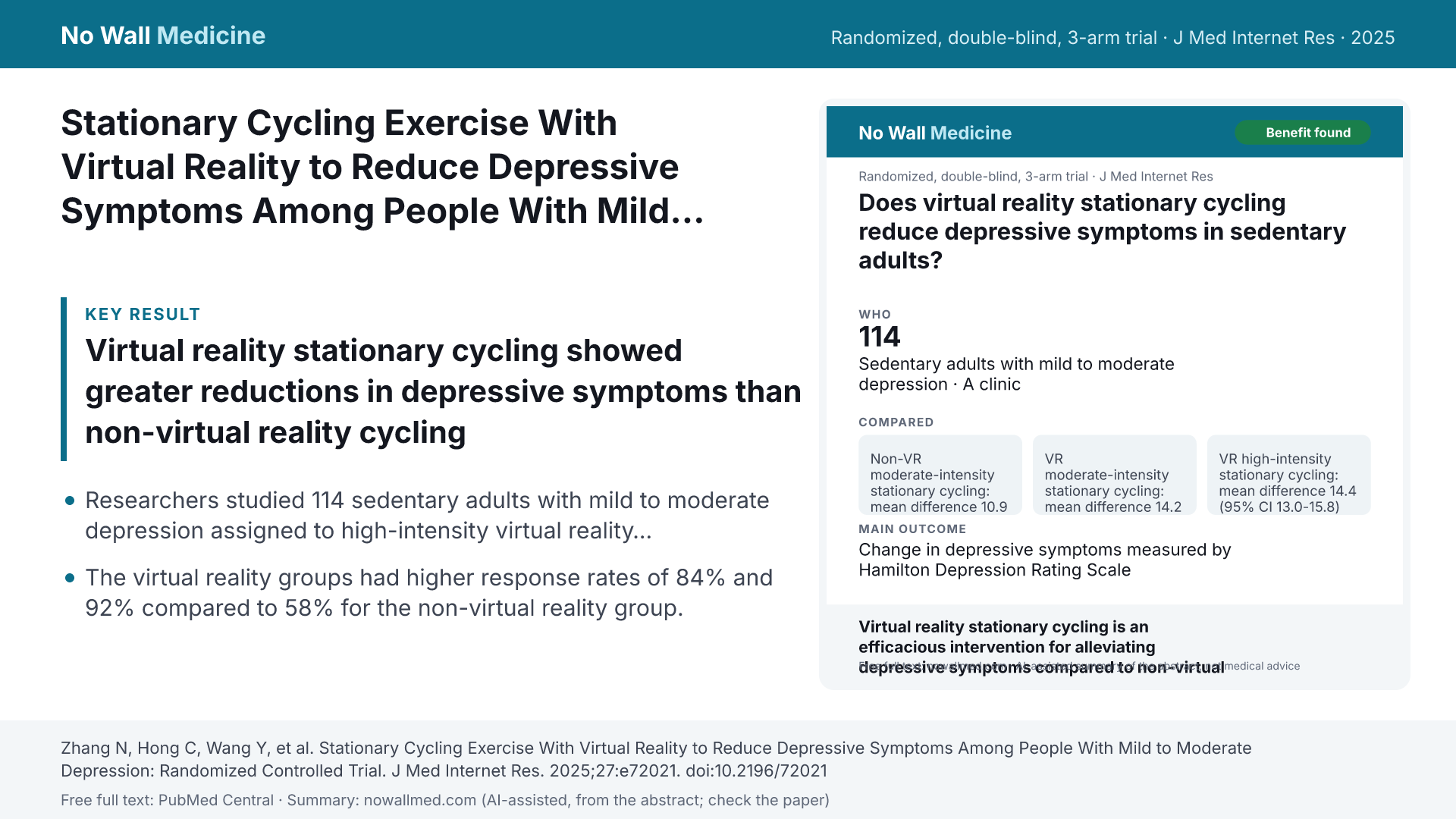
Stationary Cycling Exercise With Virtual Reality to Reduce Depressive Symptoms Among People With Mild to Moderate Depression: Randomized Controlled Trial
Key result: Virtual reality stationary cycling showed greater reductions in depressive symptoms than non-virtual reality cycling
Key points
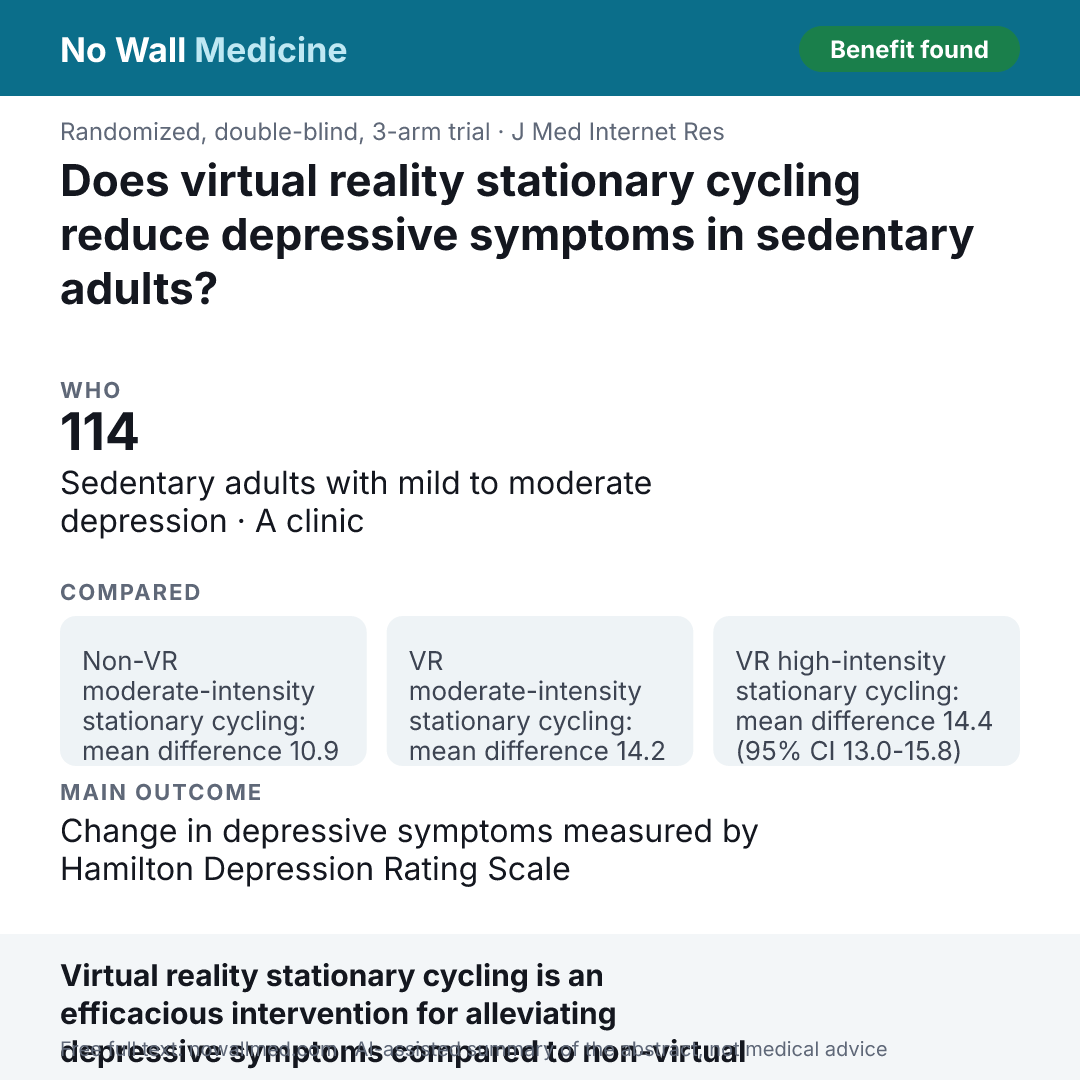
- Researchers studied 114 sedentary adults with mild to moderate depression assigned to high-intensity virtual reality cycling, moderate-intensity virtual reality cycling, or moderate-intensity non-virtual reality cycling.
- The virtual reality groups had higher response rates of 84% and 92% compared to 58% for the non-virtual reality group.
- All groups showed improvements in Hamilton Depression Rating Scale scores, but no significant difference in symptom improvement was found between the two virtual reality groups.
Why it matters: High-quality evidence is needed to support whether virtual reality stationary cycling can improve adherence and reduce depressive symptoms in clinical practice.
Discussion prompts
- Would these patients look like yours? Who was left out?
- Is the main outcome one that matters to patients?
- Is the difference large enough to change what you do?
Cite: Zhang N, Hong C, Wang Y, et al. Stationary Cycling Exercise With Virtual Reality to Reduce Depressive Symptoms Among People With Mild to Moderate Depression: Randomized Controlled Trial. J Med Internet Res. 2025;27:e72021. doi:10.2196/72021
Free full text: PubMed Central · Summary and visual abstract: nowallmed.com/a/stationary-cycling-exercise-with-virtual-reality-to-reduce-depressive-xez21p/ (AI-assisted from the abstract; check the paper before relying on it).