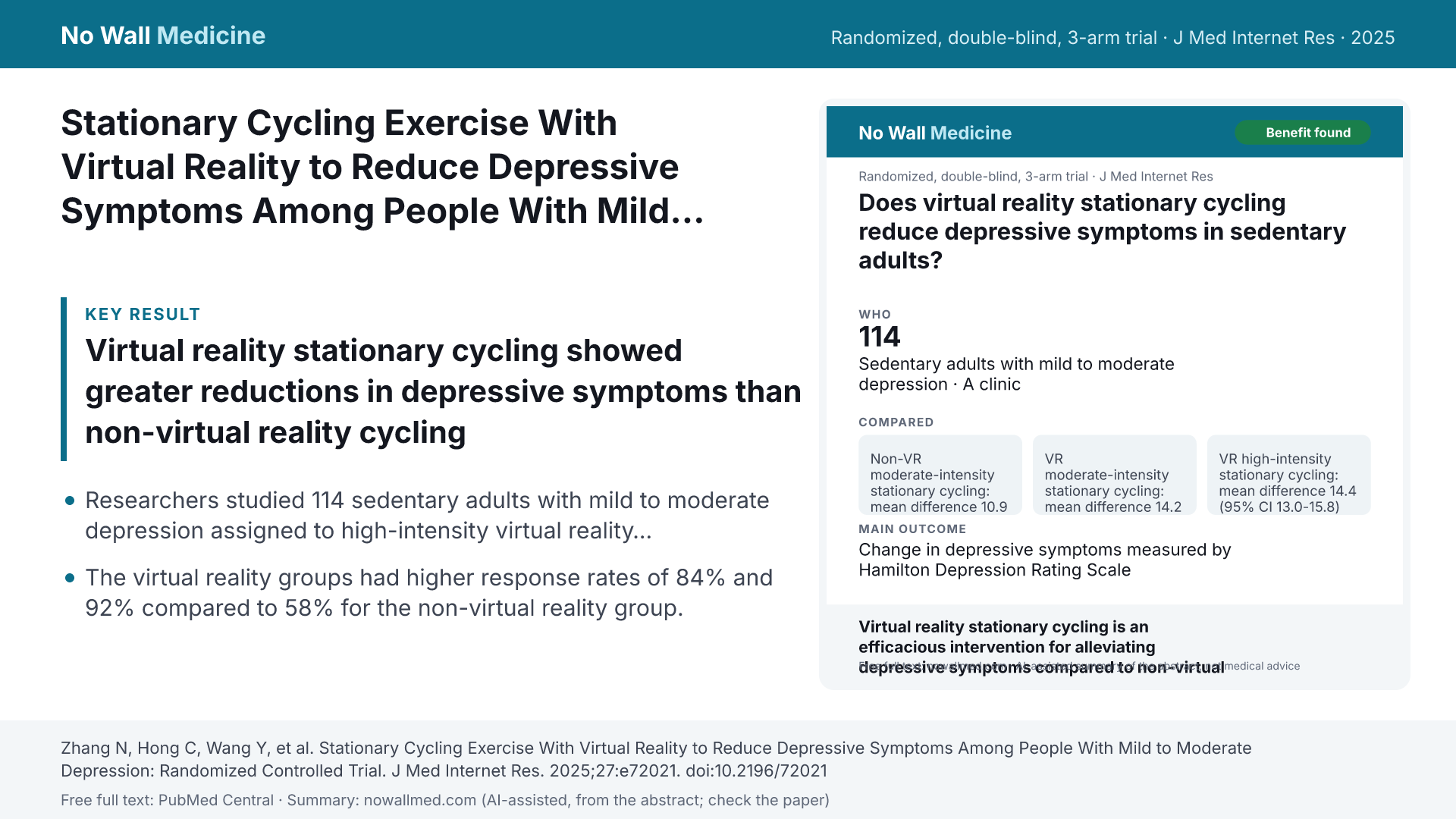
Virtual reality stationary cycling showed greater reductions in depressive symptoms than non-virtual reality cycling
Stationary Cycling Exercise With Virtual Reality to Reduce Depressive Symptoms Among People With Mild to Moderate Depression: Randomized Controlled Trial
Randomized, double-blind, 3-arm trialBenefit found
Does virtual reality stationary cycling reduce depressive symptoms in sedentary adults?
Who
114
Sedentary adults with mild to moderate depression · A clinic
Compared
Non-VR moderate-intensity stationary cycling: mean difference 10.9 (95% CI 9.3-12.5)
VR moderate-intensity stationary cycling: mean difference 14.2 (95% CI 12.7-15.8)
VR high-intensity stationary cycling: mean difference 14.4 (95% CI 13.0-15.8)
Main outcome
Change in depressive symptoms measured by Hamilton Depression Rating Scale
Result: mean difference between groups: 3.3 (95% CI 1.9-4.9) and 3.9 (95% CI 2.5-5.2)
Bottom line: Virtual reality stationary cycling is an efficacious intervention for alleviating depressive symptoms compared to non-virtual reality cycling.
J Med Internet Res · 2025-07-15Download image
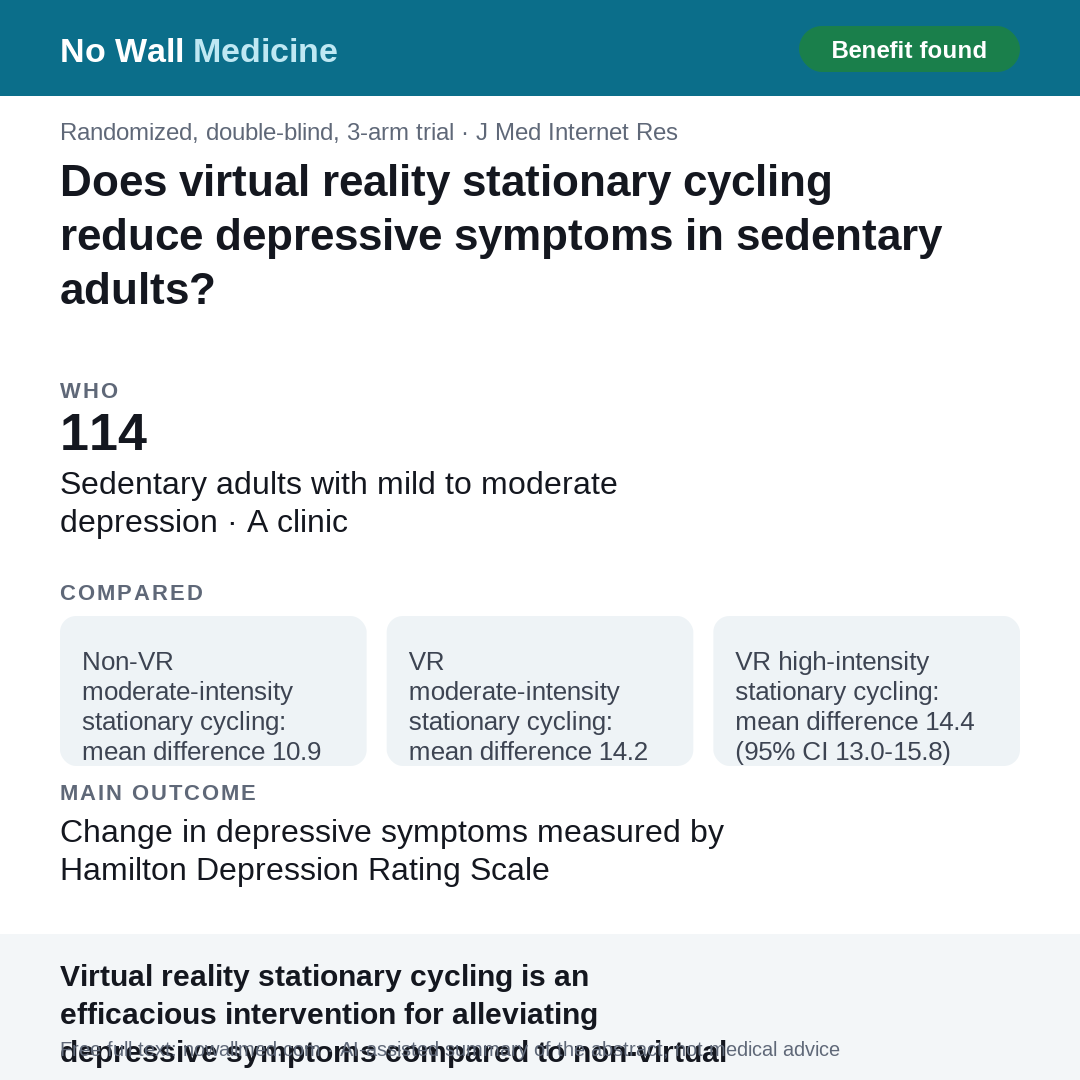
Clinical question: Does virtual reality stationary cycling reduce depressive symptoms in sedentary adults?
Why it matters: High-quality evidence is needed to support whether virtual reality stationary cycling can improve adherence and reduce depressive symptoms in clinical practice.
Key points
- Researchers studied 114 sedentary adults with mild to moderate depression assigned to high-intensity virtual reality cycling, moderate-intensity virtual reality cycling, or moderate-intensity non-virtual reality cycling.
- The virtual reality groups had higher response rates of 84% and 92% compared to 58% for the non-virtual reality group.
- All groups showed improvements in Hamilton Depression Rating Scale scores, but no significant difference in symptom improvement was found between the two virtual reality groups.
Headline and key points written with AI from the paper’s abstract, with every number checked against it. Read the paper before relying on them.
Was this summary helpful?
Subject terms
Cite this article
Zhang N, Hong C, Wang Y, Chen H, Zhu Y, Da M. Stationary Cycling Exercise With Virtual Reality to Reduce Depressive Symptoms Among People With Mild to Moderate Depression: Randomized Controlled Trial. J Med Internet Res. 2025. doi:10.2196/72021
Spotted a mistake? Suggest a correction
Top studies every Monday
The week’s key trials and guidelines in your specialties, plus any topics you follow. By email, free.
Get the weekly digest