Conventional radiotherapy was associated with better pain relief than stereotactic radiosurgery for spine metastases
Stereotactic Radiosurgery vs Conventional Radiotherapy for Localized Vertebral Metastases of the Spine: Phase 3 Results of NRG Oncology/RTOG 0631 Randomized Clinical Trial
Randomized clinical trialNo clear difference
Is patient-reported pain relief improved with stereotactic radiosurgery compared with conventional external beam radiotherapy?
Who
339
Patients with 1 to 3 sites of vertebral metastases · Multi-institutional enrollment within NRG Oncology
Compared
41.3%Stereotactic radiosurgery
60.5%Conventional external beam radiotherapy
Main outcome
Patient-reported pain response at 3 months
Result: difference, -19 percentage points; 95% CI, -32.9 to -5.5
Bottom line: Stereotactic radiosurgery did not show superiority over conventional external beam radiotherapy for patient-reported pain response at 3 months.
JAMA Oncol · 2023-04-20Download image
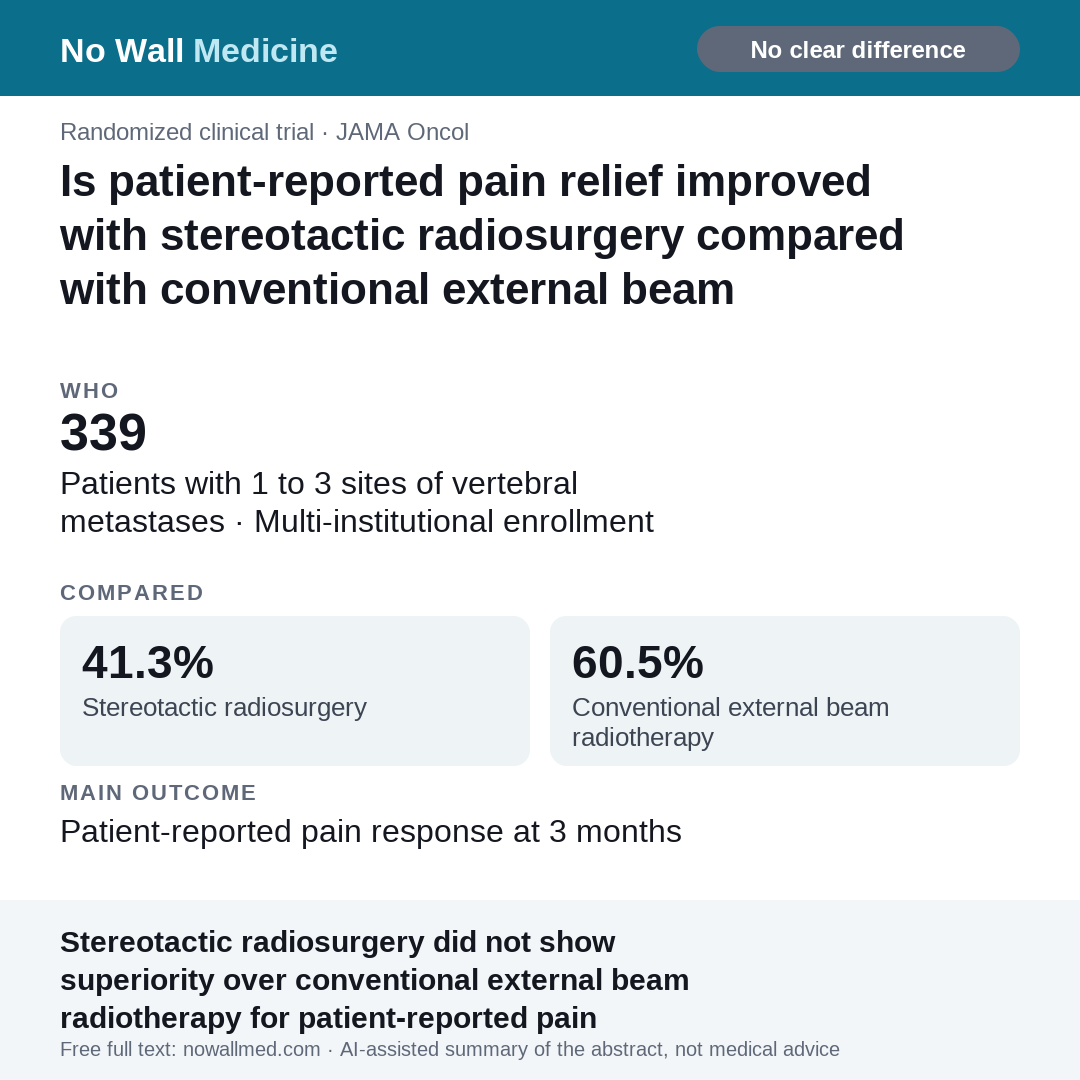
Clinical question: Is patient-reported pain relief improved with stereotactic radiosurgery compared with conventional external beam radiotherapy?
Why it matters: It was unknown if stereotactic radiosurgery, which uses highly focused radiation, provides better patient-reported pain relief than conventional external beam radiotherapy for patients with limited spine metastases.
Key points
- Researchers studied 339 patients with 1 to 3 sites of vertebral metastases, comparing single-dose stereotactic radiosurgery to conventional external beam radiotherapy.
- At 3 months, the rate of patient-reported pain response was 41.3% for stereotactic radiosurgery compared to 60.5% for conventional external beam radiotherapy.
- There were no differences in acute or late adverse effects, and vertebral compression fracture rates at 24 months were 19.5% for stereotactic radiosurgery and 21.6% for conventional radiotherapy.
Headline and key points written with AI from the paper’s abstract, with every number checked against it. Read the paper before relying on them.
Was this summary helpful?
Subject terms
Cite this article
Ryu S, Deshmukh S, Timmerman RD, Movsas B, Gerszten P, Yin FF. Stereotactic Radiosurgery vs Conventional Radiotherapy for Localized Vertebral Metastases of the Spine: Phase 3 Results of NRG Oncology/RTOG 0631 Randomized Clinical Trial. JAMA Oncol. 2023. doi:10.1001/jamaoncol.2023.0356
Spotted a mistake? Suggest a correction
Top studies every Monday
The week’s key trials and guidelines in your specialties, plus any topics you follow. By email, free.
Get the weekly digest