Stereotactic radiotherapy for neovascular age-related macular degeneration (STAR): a pivotal, randomised, double-masked, sham-controlled device trial
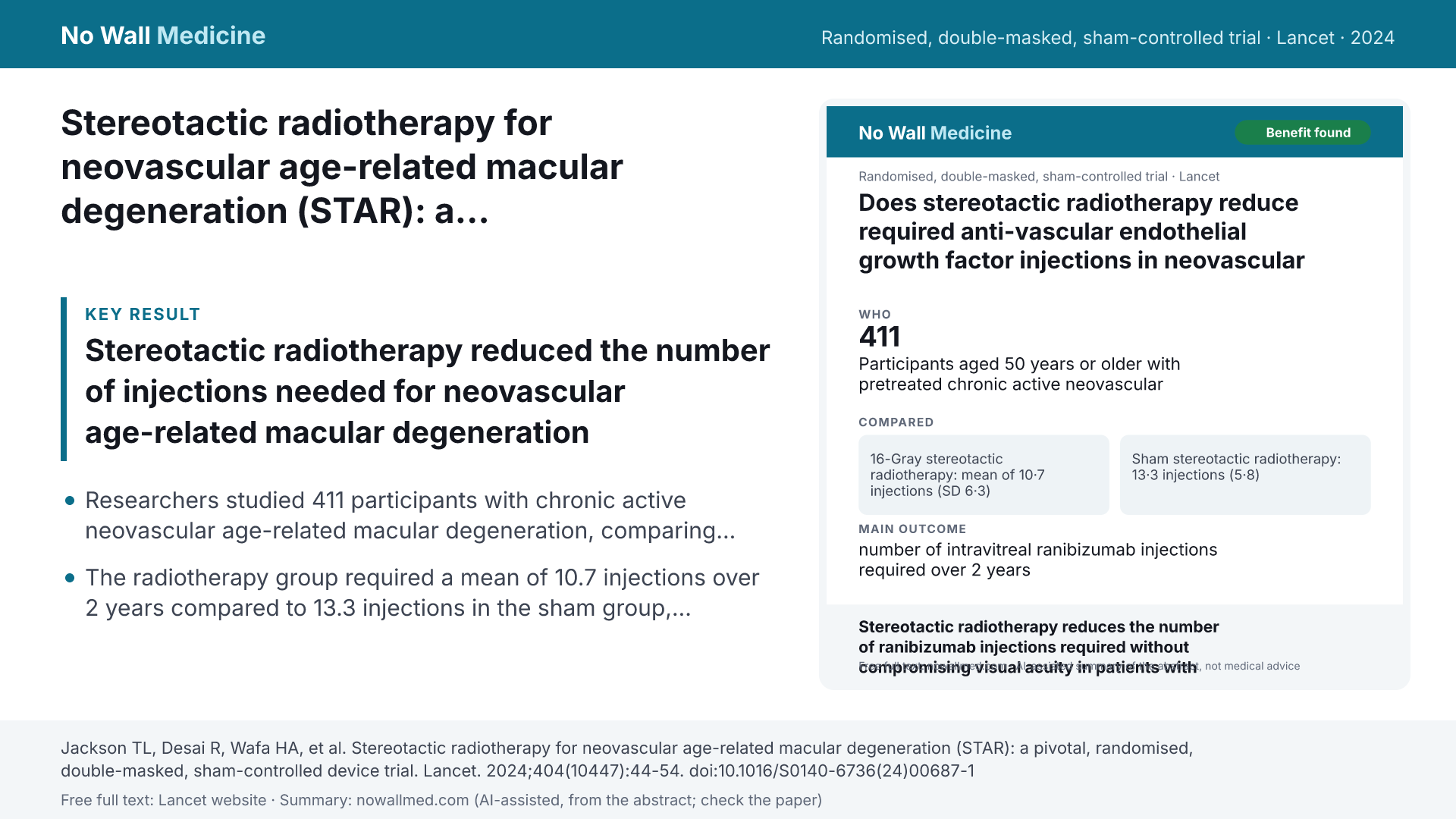
Key result: Stereotactic radiotherapy reduced the number of injections needed for neovascular age-related macular degeneration
Key points
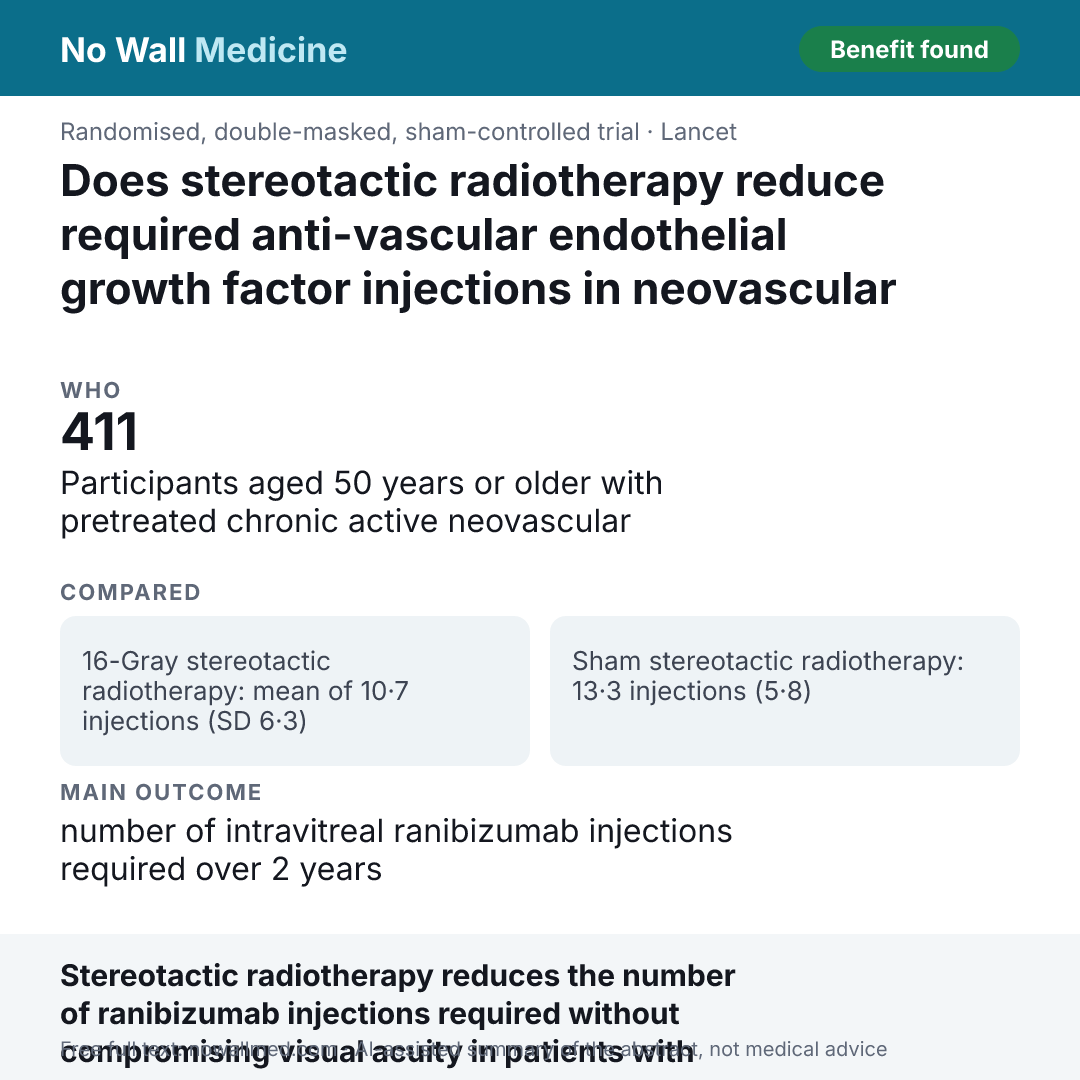
- Researchers studied 411 participants with chronic active neovascular age-related macular degeneration, comparing 16-Gray stereotactic radiotherapy to a sham treatment.
- The radiotherapy group required a mean of 10.7 injections over 2 years compared to 13.3 injections in the sham group, an adjusted reduction of 2.9 injections.
- Visual acuity changes were non-inferior between groups, though microvascular abnormalities occurred in 35% of radiotherapy eyes compared to 12% of sham eyes.
Why it matters: Current first-line therapy for neovascular age-related macular degeneration requires frequent injections, and researchers wanted to see if radiotherapy could reduce this treatment burden without losing vision.
Discussion prompts
- Would these patients look like yours? Who was left out?
- Is the main outcome one that matters to patients?
- Is the difference large enough to change what you do?
Cite: Jackson TL, Desai R, Wafa HA, et al. Stereotactic radiotherapy for neovascular age-related macular degeneration (STAR): a pivotal, randomised, double-masked, sham-controlled device trial. Lancet. 2024;404(10447):44-54. doi:10.1016/S0140-6736(24)00687-1
Free full text: Lancet website · Summary and visual abstract: nowallmed.com/a/stereotactic-radiotherapy-for-neovascular-age-related-macular-1iptkng/ (AI-assisted from the abstract; check the paper before relying on it).