Review of 39 interventions shows various strategies to increase professional interpreting in medical settings
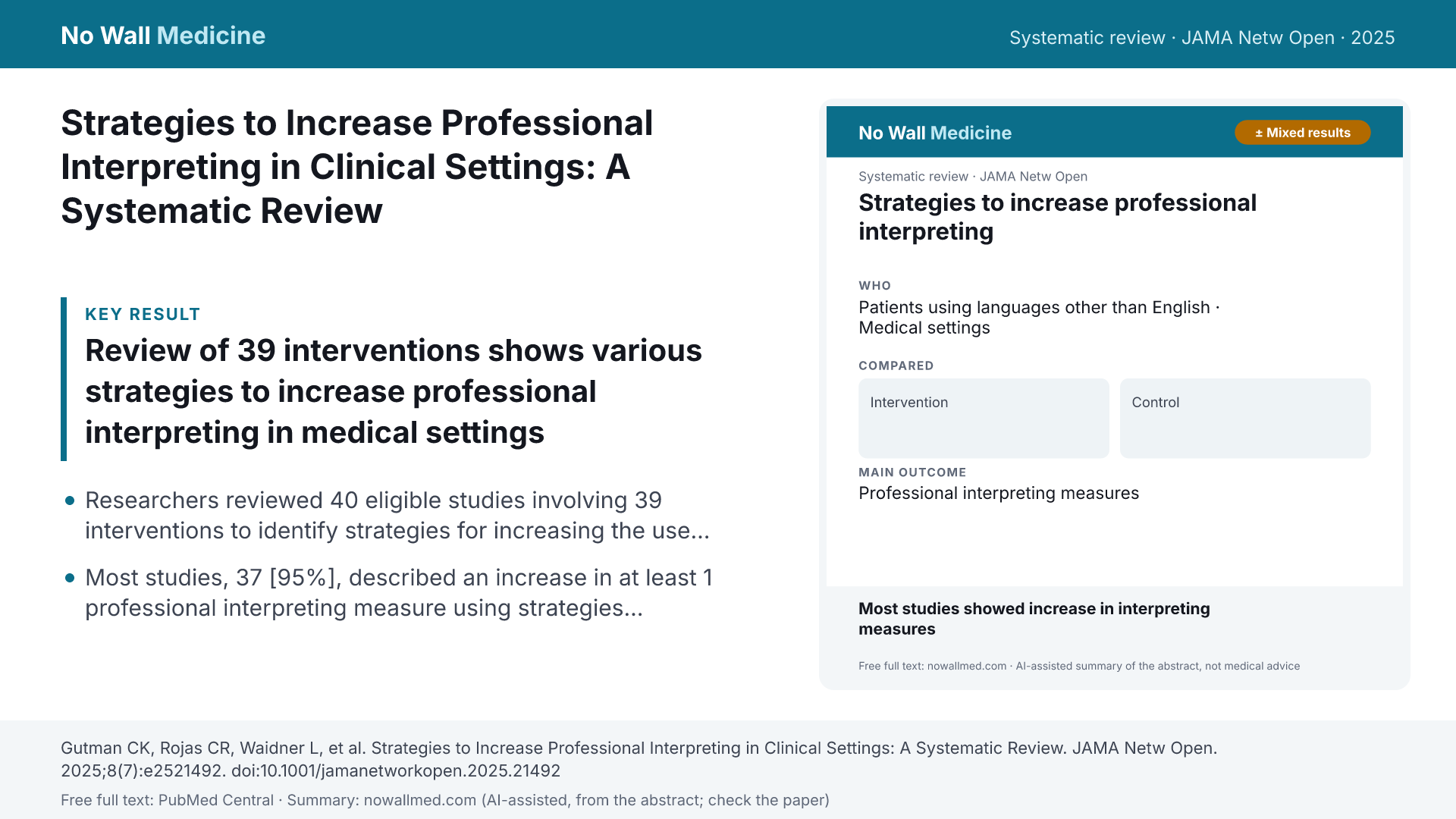
Strategies to Increase Professional Interpreting in Clinical Settings: A Systematic Review
Systematic reviewMixed results
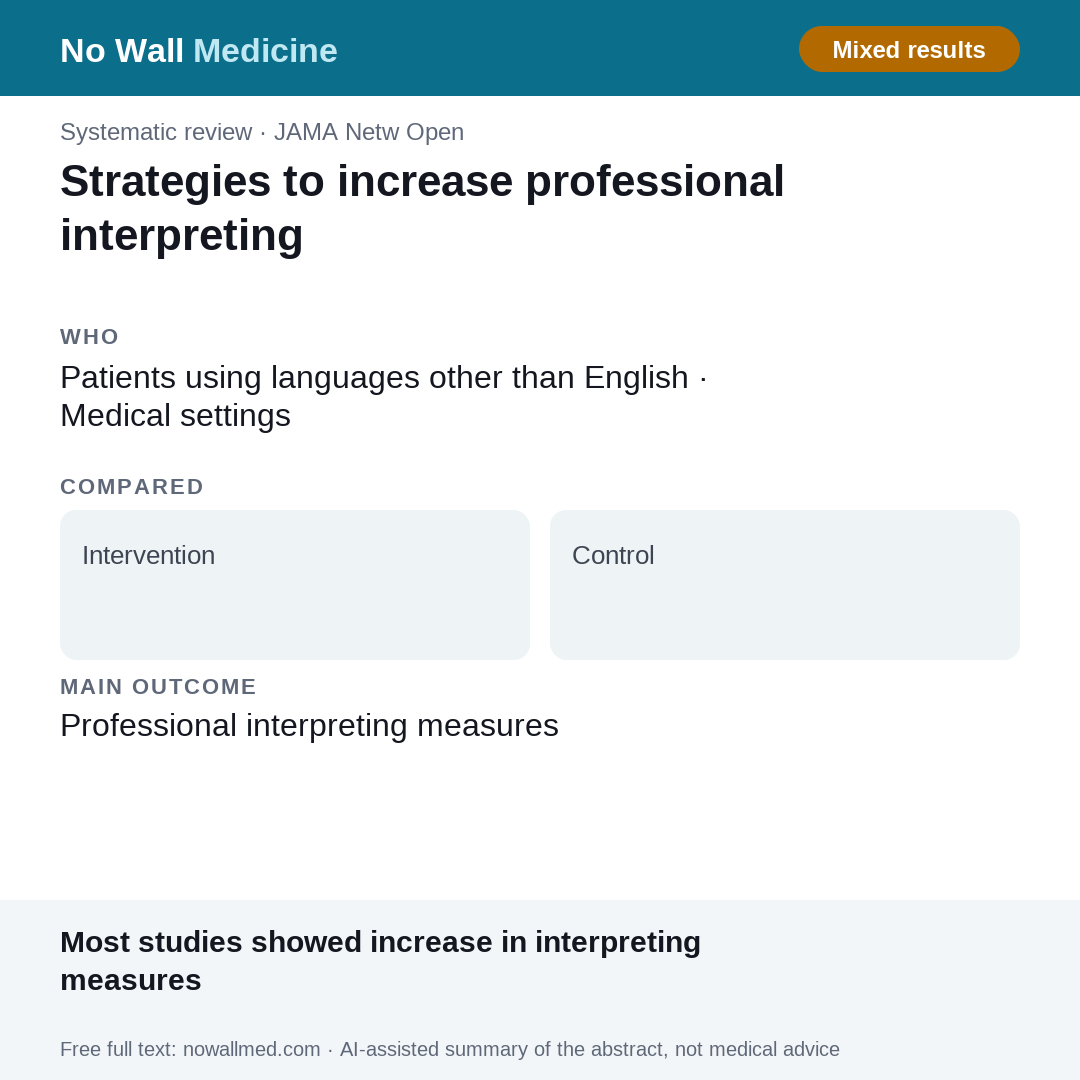
Strategies to increase professional interpreting
Who
Patients using languages other than English · Medical settings
Compared
Intervention
Control
Main outcome
Professional interpreting measures
Bottom line: Most studies showed increase in interpreting measures
Limitation: Heterogeneity and risk of bias
JAMA Netw Open · 2025-07-01Download image
Why it matters: Clinicians often communicate without professional interpreters despite evidence that such partnering improves health outcomes, creating a need to understand which specific strategies increase their use.
Key points
- Researchers reviewed 40 eligible studies involving 39 interventions to identify strategies for increasing the use of professional interpreters in clinical care.
- Most studies, 37 [95%], described an increase in at least 1 professional interpreting measure using strategies like clinician education or electronic health record modifications.
- Implementation strategies frequently targeted clinician capability, opportunity, and motivation, with 82% targeting capability, 72% targeting opportunity, and 56% targeting motivation.
Limitation the authors note: Heterogeneity in implementation strategies and outcome ascertainment precluded meta-analysis, and most studies had risk of bias due to unmeasured confounding.
Headline and key points written with AI from the paper’s abstract, with every number checked against it. Read the paper before relying on them.
Was this summary helpful?
Subject terms
Cite this article
Gutman CK, Rojas CR, Waidner L, Zamor RL, Hartford EA, Yeboah D. Strategies to Increase Professional Interpreting in Clinical Settings: A Systematic Review. JAMA Netw Open. 2025. doi:10.1001/jamanetworkopen.2025.21492
Spotted a mistake? Suggest a correction
Top studies every Monday
The week’s key trials and guidelines in your specialties, plus any topics you follow. By email, free.
Get the weekly digest