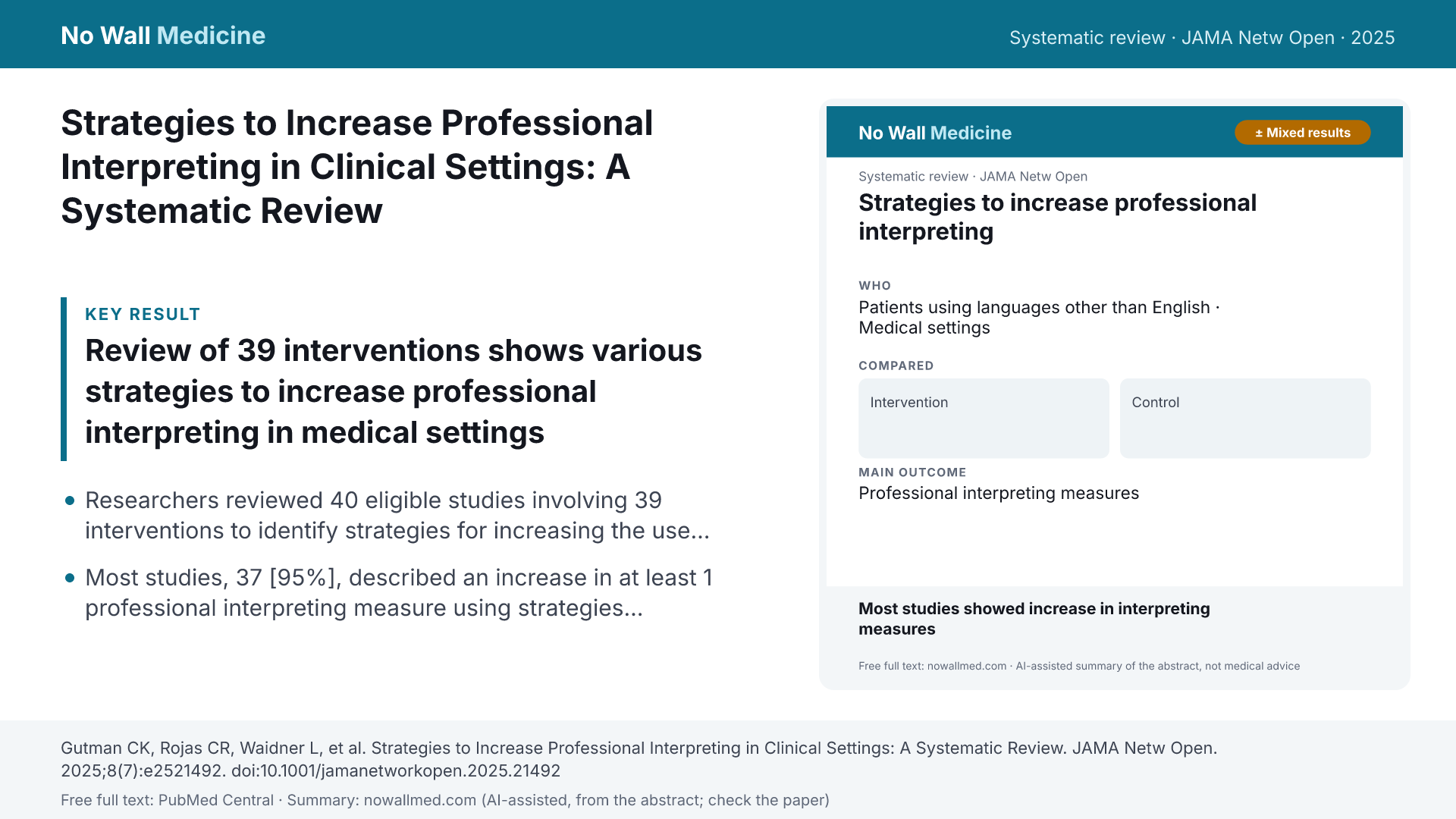
Strategies to Increase Professional Interpreting in Clinical Settings: A Systematic Review
Key result: Review of 39 interventions shows various strategies to increase professional interpreting in medical settings
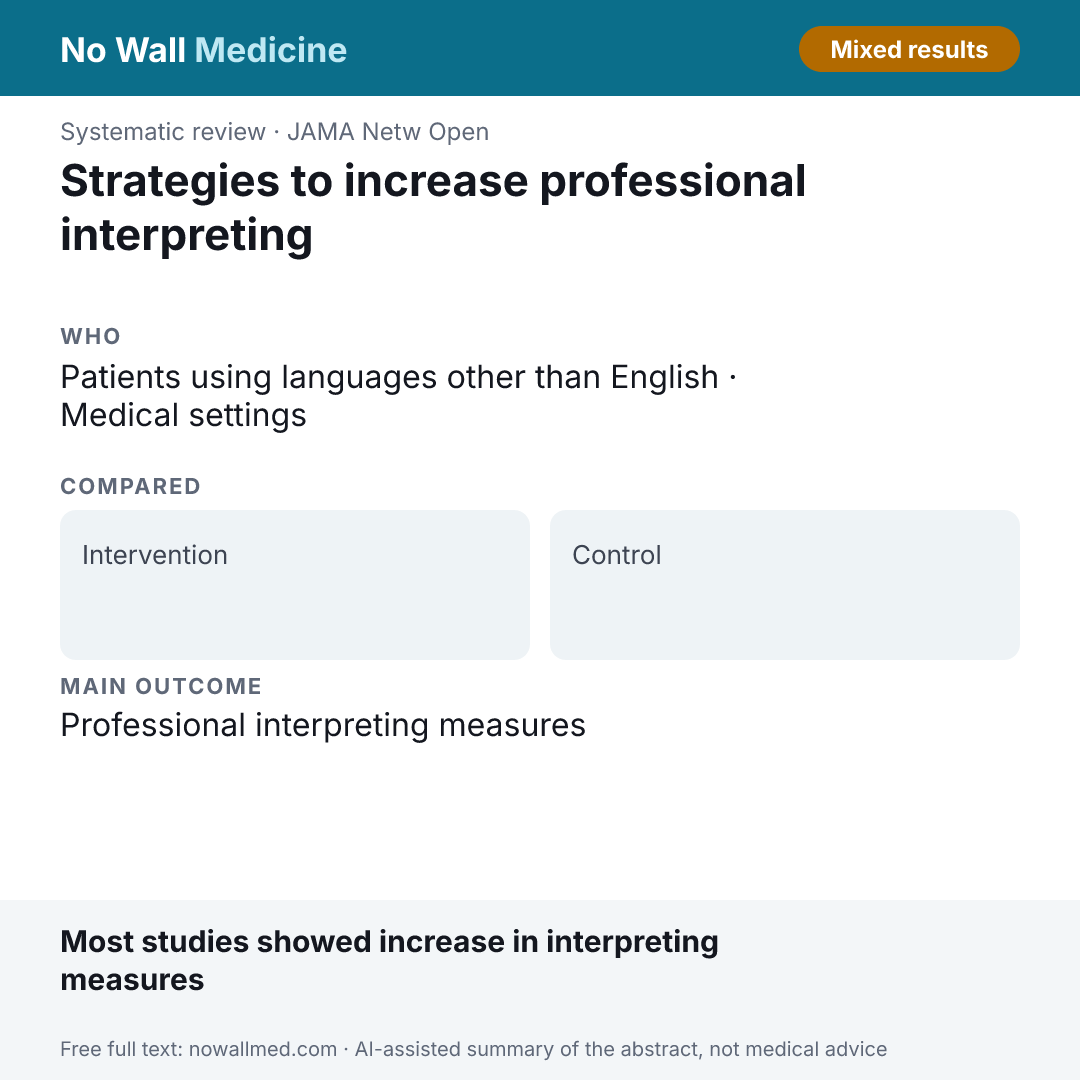
Key points
- Researchers reviewed 40 eligible studies involving 39 interventions to identify strategies for increasing the use of professional interpreters in clinical care.
- Most studies, 37 [95%], described an increase in at least 1 professional interpreting measure using strategies like clinician education or electronic health record modifications.
- Implementation strategies frequently targeted clinician capability, opportunity, and motivation, with 82% targeting capability, 72% targeting opportunity, and 56% targeting motivation.
Why it matters: Clinicians often communicate without professional interpreters despite evidence that such partnering improves health outcomes, creating a need to understand which specific strategies increase their use.
Limitation the authors note: Heterogeneity in implementation strategies and outcome ascertainment precluded meta-analysis, and most studies had risk of bias due to unmeasured confounding.
Discussion prompts
- Would these patients look like yours? Who was left out?
- Is the main outcome one that matters to patients?
- Is the difference large enough to change what you do?
Cite: Gutman CK, Rojas CR, Waidner L, et al. Strategies to Increase Professional Interpreting in Clinical Settings: A Systematic Review. JAMA Netw Open. 2025;8(7):e2521492. doi:10.1001/jamanetworkopen.2025.21492
Free full text: PubMed Central · Summary and visual abstract: nowallmed.com/a/strategies-to-increase-professional-interpreting-in-clinical-settings-svkk4b/ (AI-assisted from the abstract; check the paper before relying on it).