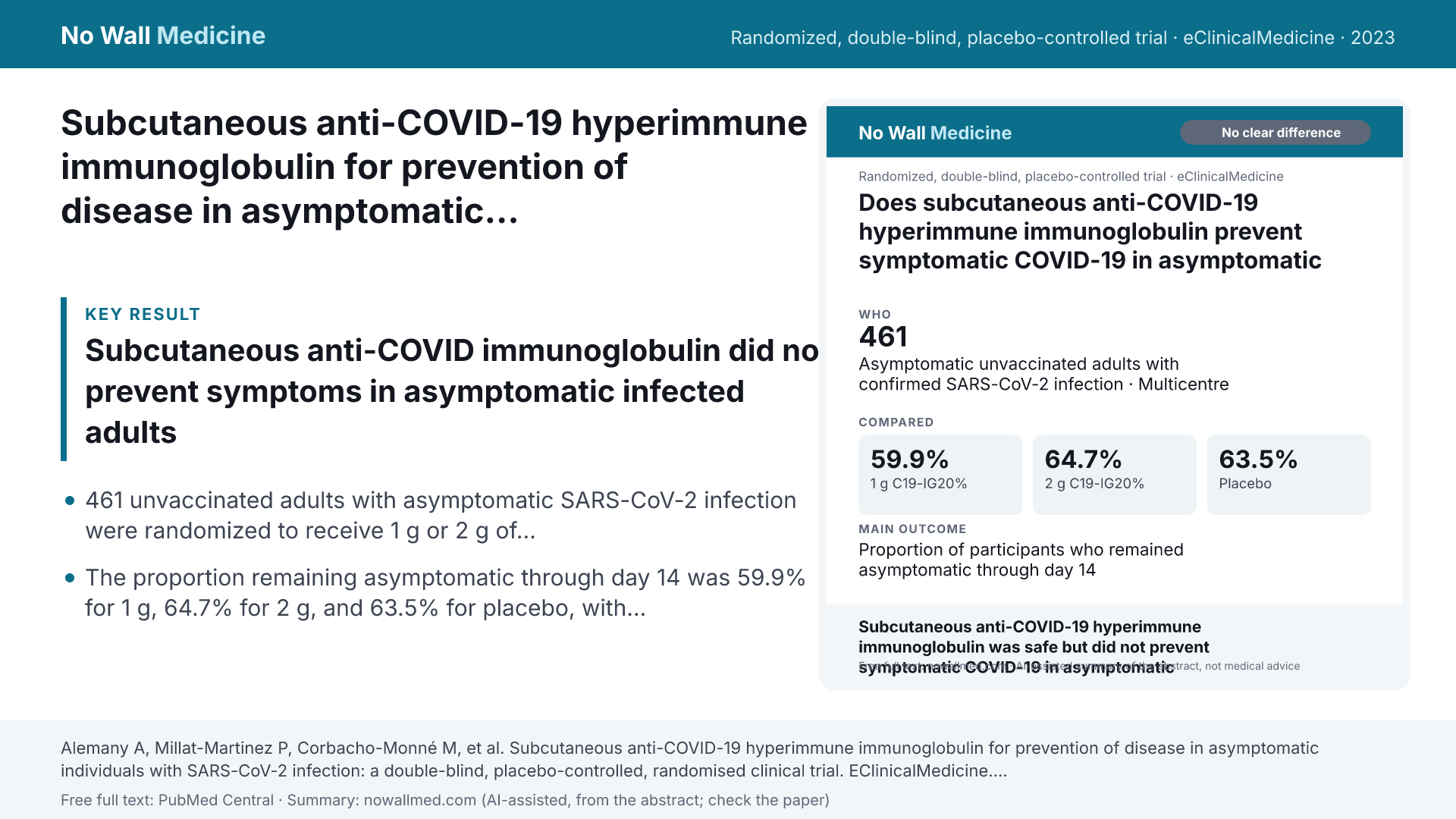
Subcutaneous hyperimmune immunoglobulin did not prevent symptomatic COVID-19 in asymptomatic infected adults
Subcutaneous anti-COVID-19 hyperimmune immunoglobulin for prevention of disease in asymptomatic individuals with SARS-CoV-2 infection: a double-blind, placebo-controlled, randomised clinical trial
Randomized, double-blind, placebo-controlled trialNo clear difference
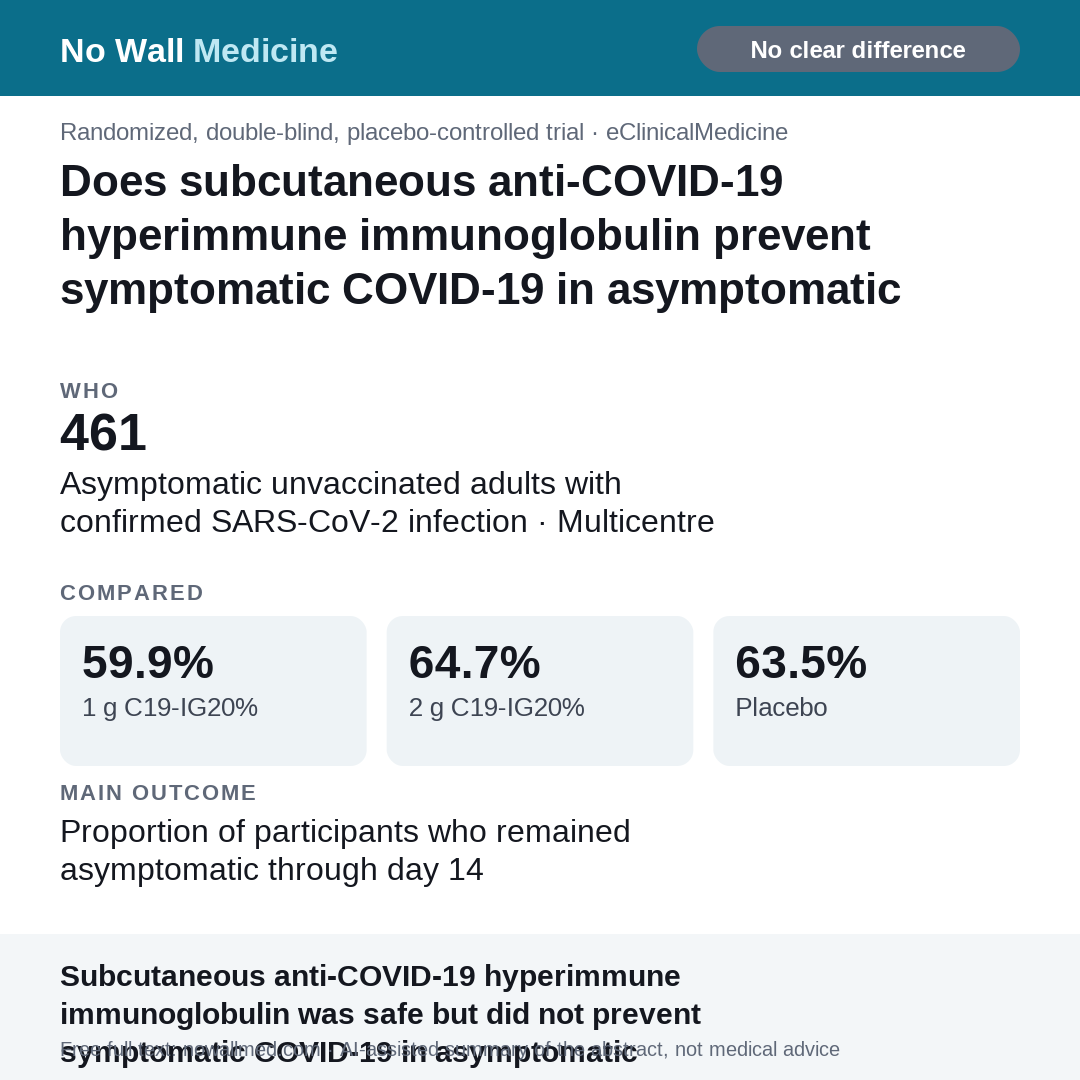
Does subcutaneous anti-COVID-19 hyperimmune immunoglobulin prevent symptomatic COVID-19 in asymptomatic individuals?
Who
461
Asymptomatic unvaccinated adults with confirmed SARS-CoV-2 infection · Multicentre
Compared
59.9%1 g C19-IG20% (91/152)
64.7%2 g C19-IG20% (99/153)
63.5%Placebo (99/156)
Main outcome
Proportion of participants who remained asymptomatic through day 14
Result: difference in proportions 1 g vs placebo, -3.6%; 95% CI -14.6% to 7.3%
Bottom line: Subcutaneous anti-COVID-19 hyperimmune immunoglobulin was safe but did not prevent symptomatic COVID-19 in asymptomatic individuals.
Funded by: Grifols
eClinicalMedicine · 2023-03-10Download image
Clinical question: Does subcutaneous anti-COVID-19 hyperimmune immunoglobulin prevent symptomatic COVID-19 in asymptomatic individuals?
Why it matters: It was unknown if subcutaneous anti-COVID-19 hyperimmune immunoglobulin could prevent the development of symptoms in individuals who are currently infected but showing no signs of illness.
Key points
- Researchers randomized 461 asymptomatic, unvaccinated adults with SARS-CoV-2 infection to receive 1 g or 2 g of hyperimmune immunoglobulin or a placebo.
- The proportion of participants remaining asymptomatic through day 14 was 59.9% for the 1 g dose, 64.7% for the 2 g dose, and 63.5% for the placebo.
- No significant differences were found in secondary outcomes like hospitalization, oxygen use, or viral clearance, and adverse event rates were similar between groups.
Headline and key points written with AI from the paper’s abstract, with every number checked against it. Read the paper before relying on them.
Was this summary helpful?
Cite this article
Alemany A, Millat-Martinez P, Corbacho-Monné M, Suñer C, Galvan-Casas C, Carrera C. Subcutaneous anti-COVID-19 hyperimmune immunoglobulin for prevention of disease in asymptomatic individuals with SARS-CoV-2 infection: a double-blind, placebo-controlled, randomised clinical trial. eClinicalMedicine. 2023. doi:10.1016/j.eclinm.2023.101898
Spotted a mistake? Suggest a correction
Top studies every Monday
The week’s key trials and guidelines in your specialties, plus any topics you follow. By email, free.
Get the weekly digest