Subcutaneous anti-COVID-19 hyperimmune immunoglobulin for prevention of disease in asymptomatic individuals with SARS-CoV-2 infection: a double-blind, placebo-controlled, randomised clinical trial
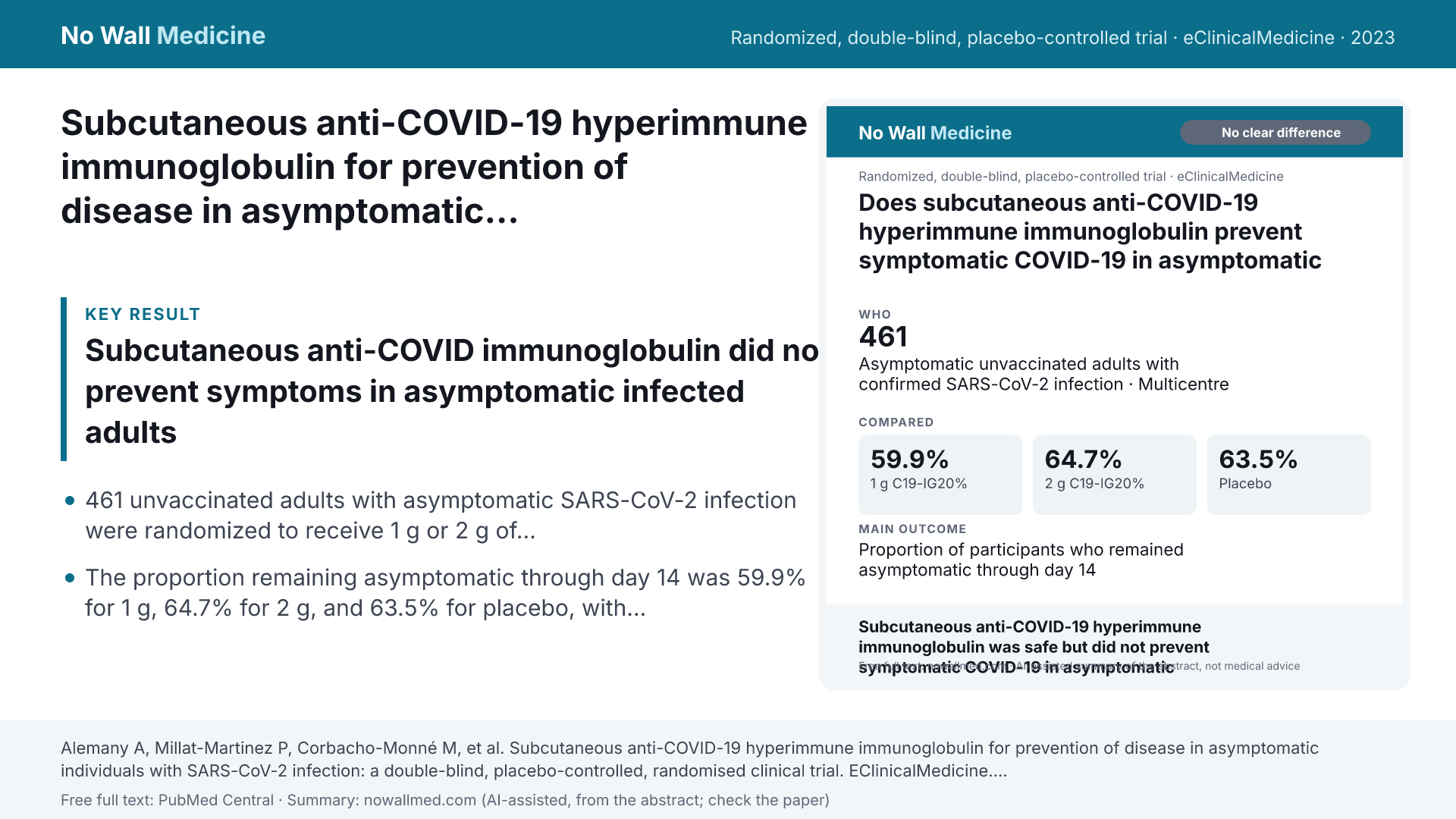
Key result: Subcutaneous anti-COVID immunoglobulin did not prevent symptoms in asymptomatic infected adults
Key points
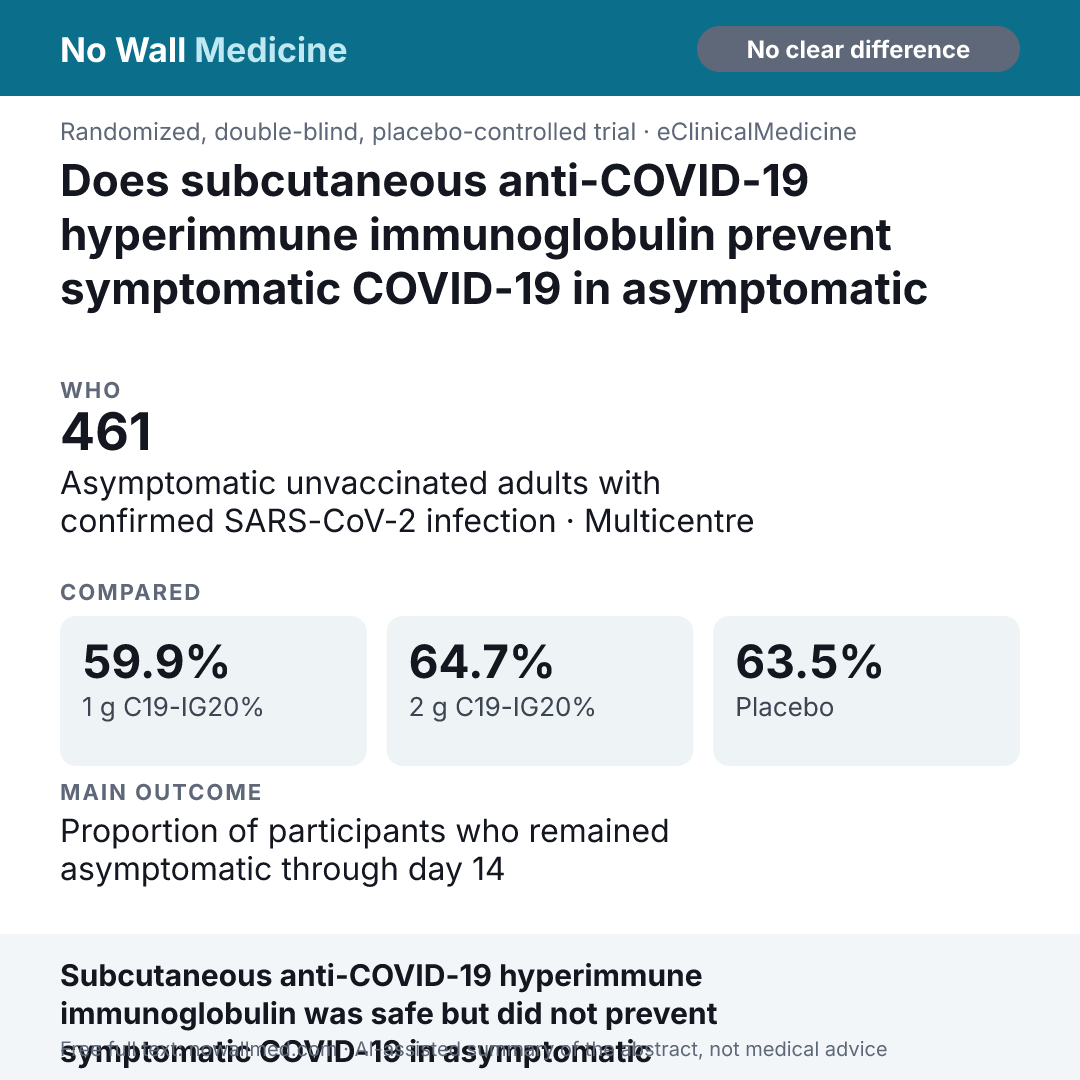
- 461 unvaccinated adults with asymptomatic SARS-CoV-2 infection were randomized to receive 1 g or 2 g of subcutaneous immunoglobulin or saline placebo.
- The proportion remaining asymptomatic through day 14 was 59.9% for 1 g, 64.7% for 2 g, and 63.5% for placebo, with no significant differences.
- No secondary clinical or virological endpoints differed significantly between groups, and adverse event rates were similar across all arms.
Why it matters: Data from controlled clinical trials using hyperimmune immunoglobulin for the prevention or treatment of COVID-19 outpatients had not been reported.
Discussion prompts
- Would these patients look like yours? Who was left out?
- Is the main outcome one that matters to patients?
- Is the difference large enough to change what you do?
Cite: Alemany A, Millat-Martinez P, Corbacho-Monné M, et al. Subcutaneous anti-COVID-19 hyperimmune immunoglobulin for prevention of disease in asymptomatic individuals with SARS-CoV-2 infection: a double-blind, placebo-controlled, randomised clinical trial. EClinicalMedicine. 2023;57:101898. doi:10.1016/j.eclinm.2023.101898
Free full text: PubMed Central · Summary and visual abstract: nowallmed.com/a/subcutaneous-anti-covid-19-hyperimmune-immunoglobulin-for-prevention-1jxsm0d/ (AI-assisted from the abstract; check the paper before relying on it).