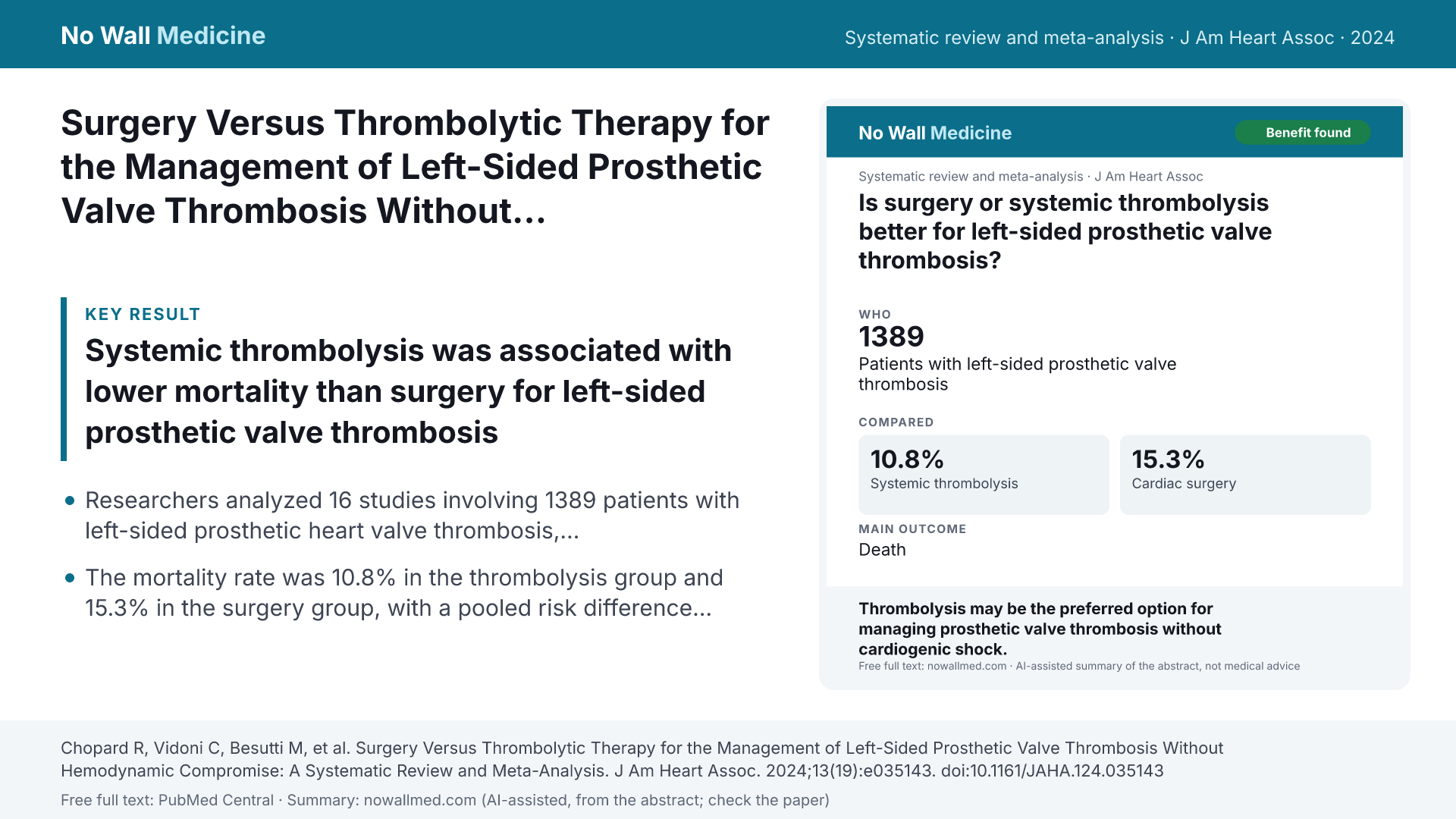
Systemic thrombolysis was associated with lower mortality than surgery for left-sided prosthetic valve thrombosis
Surgery Versus Thrombolytic Therapy for the Management of Left-Sided Prosthetic Valve Thrombosis Without Hemodynamic Compromise: A Systematic Review and Meta-Analysis
Systematic review and meta-analysisBenefit found
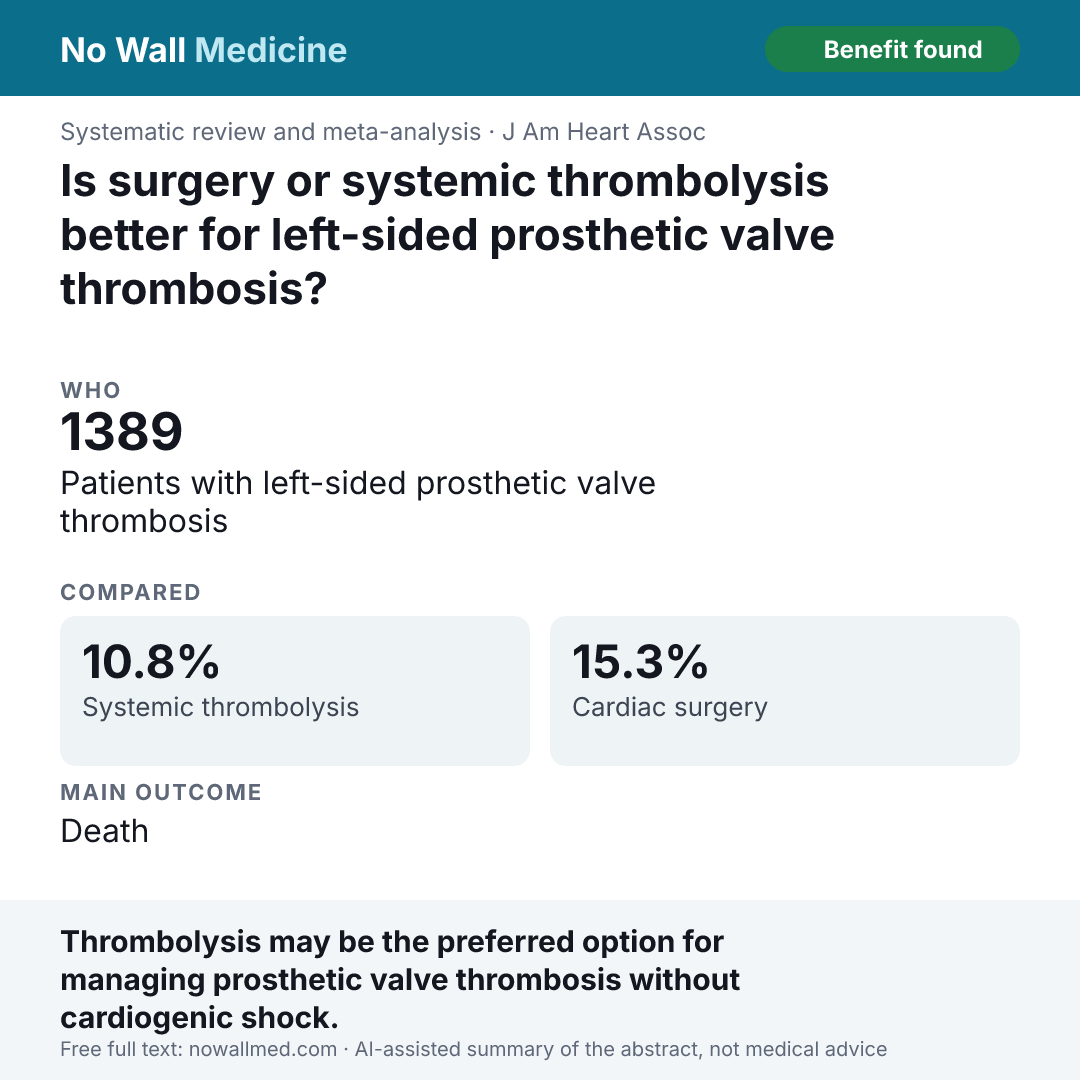
Is surgery or systemic thrombolysis better for left-sided prosthetic valve thrombosis?
Who
1389
Patients with left-sided prosthetic valve thrombosis
Compared
10.8%Systemic thrombolysis
15.3%Cardiac surgery
Main outcome
Death
Result: risk difference 1.13 (exact CI, 0.74-1.79)
Bottom line: Thrombolysis may be the preferred option for managing prosthetic valve thrombosis without cardiogenic shock.
J Am Heart Assoc · 2024-09-18 · Save PNG
Clinical question: Is surgery or systemic thrombolysis better for left-sided prosthetic valve thrombosis?
Why it matters: The optimal treatment strategy for prosthetic heart valve thrombosis remains controversial because there are no randomized trials and observational data are conflicting.
Key points
- Researchers analyzed 16 studies involving 1389 patients with left-sided prosthetic heart valve thrombosis, comparing systemic thrombolysis (clot-dissolving medication) to cardiac surgery.
- The mortality rate was 10.8% in the thrombolysis group and 15.3% in the surgery group, with a pooled risk difference for death of 1.13.
- Rates of transient ischemic attack and non-central nervous system embolism were higher in the thrombolysis group, though treatment success, major bleeding, and stroke were similar.
Limitation the authors note: The authors note that future randomized controlled trials or larger observational studies are needed.
Headline and key points written with AI from the paper’s abstract, with every number checked against it. Read the paper before relying on them.
Was this summary helpful?
Subject terms
Headline, design, result, key points, caveat and citation as plain text.
Cite this article
Chopard R, Vidoni C, Besutti M, et al. Surgery Versus Thrombolytic Therapy for the Management of Left-Sided Prosthetic Valve Thrombosis Without Hemodynamic Compromise: A Systematic Review and Meta-Analysis. J Am Heart Assoc. 2024;13(19):e035143. doi:10.1161/JAHA.124.035143
Spotted a mistake? Suggest a correction