Compression therapy reduces the risk of recurrent leg cellulitis and hospitalisation in patients with chronic oedema
Sustained benefit of compression therapy for preventing recurrent leg cellulitis: extended follow-up of a randomised controlled trial
Open-label randomized controlled trialBenefit found
Does compression therapy prevent recurrent leg cellulitis in adults with chronic leg oedema?
Who
90
Australian adults with chronic leg oedema and recurrent cellulitis · Single-centre outpatient setting in Australia
Compared
20%Compression therapy plus education
47%Cellulitis prevention education
Main outcome
Time to cellulitis recurrence
Result: hazard ratio 0·23 (95% CI 0·10-0·52)
Bottom line: Compression therapy provides a durable reduction in recurrent leg cellulitis and related hospitalisation in patients with chronic oedema.
Funded by: Haddenham Healthcare
eClinicalMedicine · 2026-08-04Download image
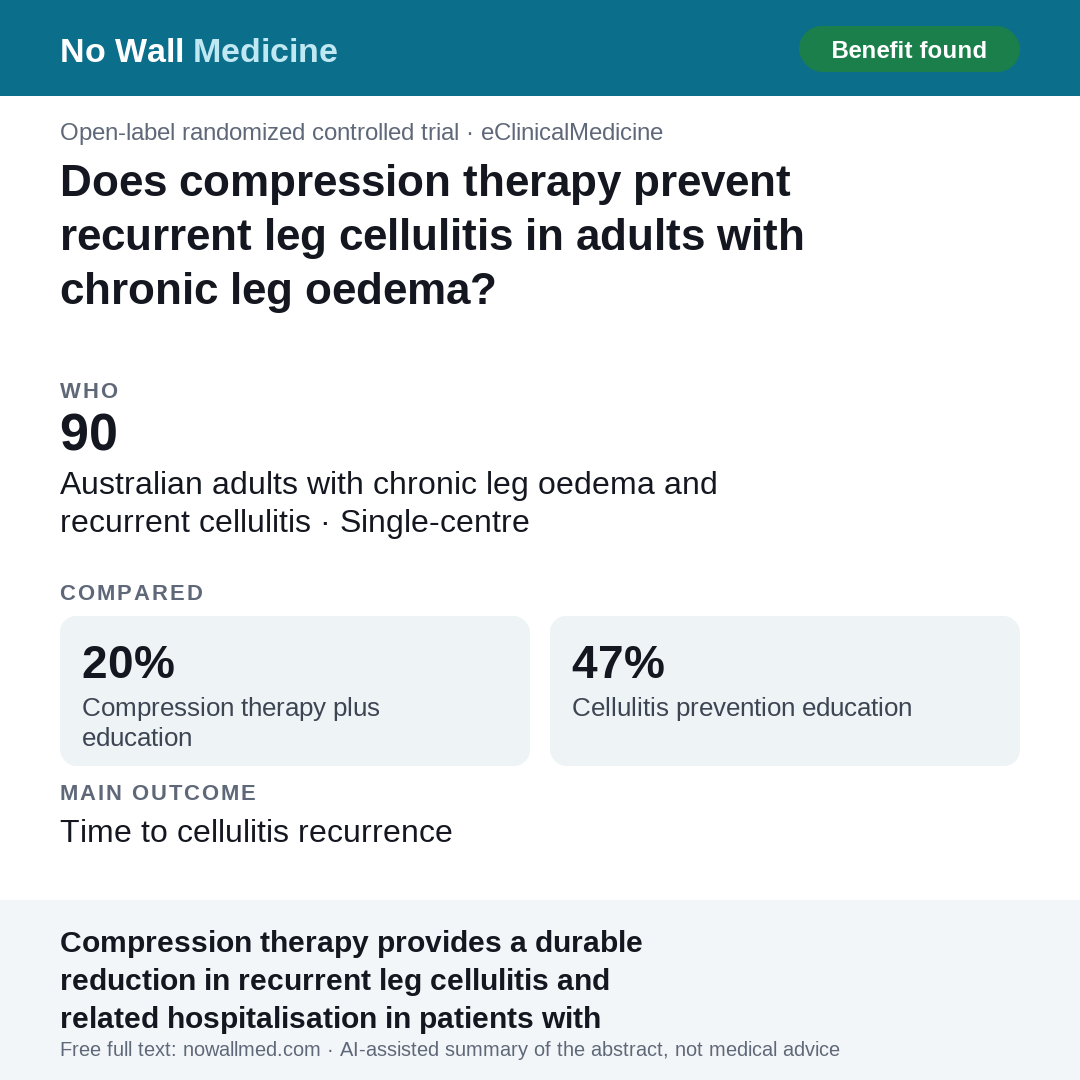
Clinical question: Does compression therapy prevent recurrent leg cellulitis in adults with chronic leg oedema?
Why it matters: Chronic oedema, or swelling, is a key risk factor for recurrent cellulitis, but preventive strategies targeting this swelling remain underused.
Key points
- Researchers followed 90 Australian adults with chronic leg swelling and recurrent skin infections, comparing education alone to education plus compression therapy.
- Cellulitis occurred in 20% of the compression group compared to 47% of the control group over a median follow-up of 18 months.
- Hospitalisation for recurrent cellulitis was lower in the compression group at 9% compared to 18% in the control group.
Headline and key points written with AI from the paper’s abstract, with every number checked against it. Read the paper before relying on them.
Spotted a mistake? Suggest a correction