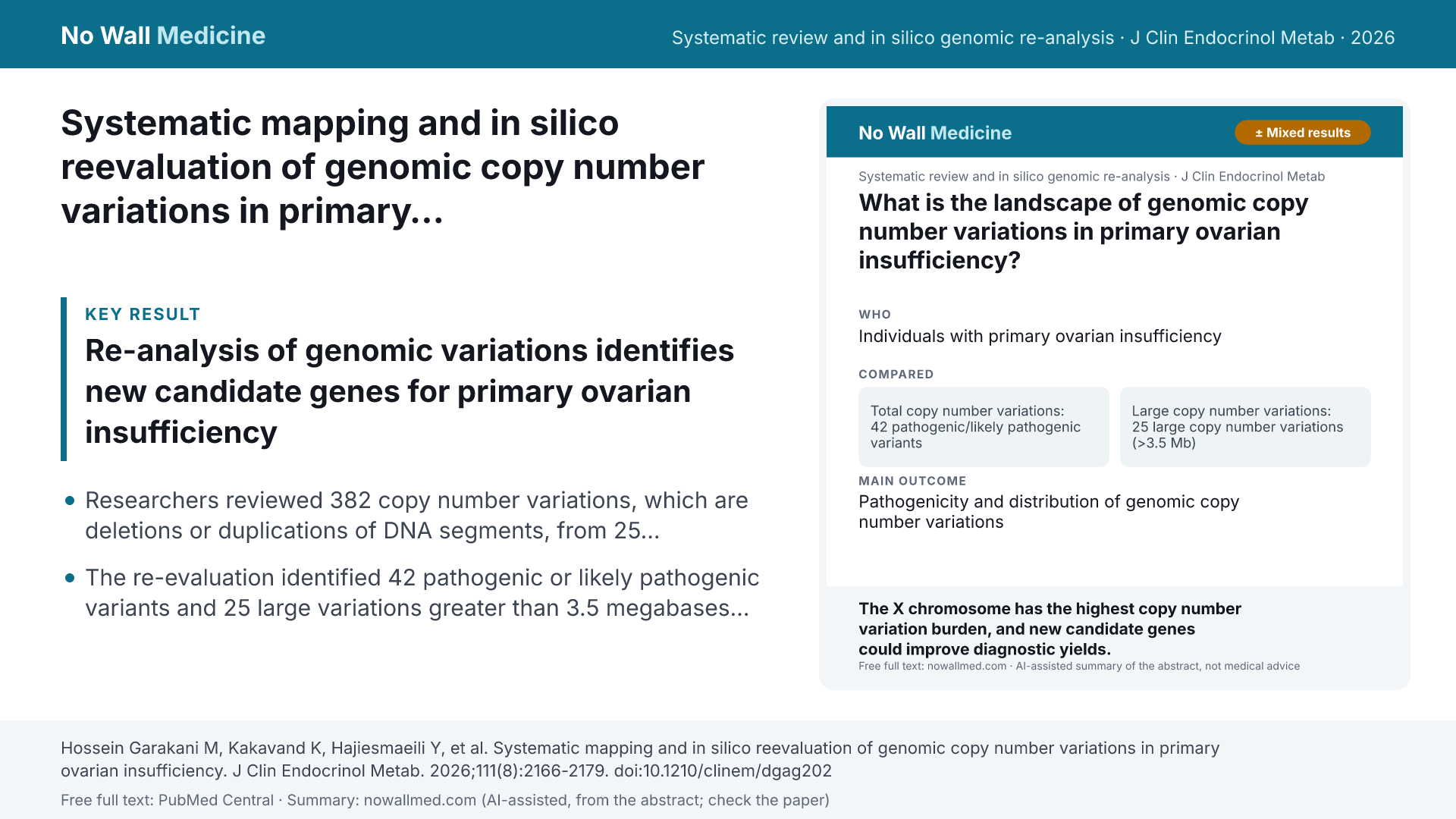
Re-analysis of genomic variations identifies new candidate genes for primary ovarian insufficiency
Systematic mapping and in silico reevaluation of genomic copy number variations in primary ovarian insufficiency
Systematic review and in silico genomic re-analysisMixed results
What is the landscape of genomic copy number variations in primary ovarian insufficiency?
Who
Individuals with primary ovarian insufficiency
Compared
Total copy number variations: 42 pathogenic/likely pathogenic variants
Large copy number variations: 25 large copy number variations (>3.5 Mb)
Main outcome
Pathogenicity and distribution of genomic copy number variations
Bottom line: The X chromosome has the highest copy number variation burden, and new candidate genes could improve diagnostic yields.
J Clin Endocrinol Metab · 2026-05-13 · Save PNG
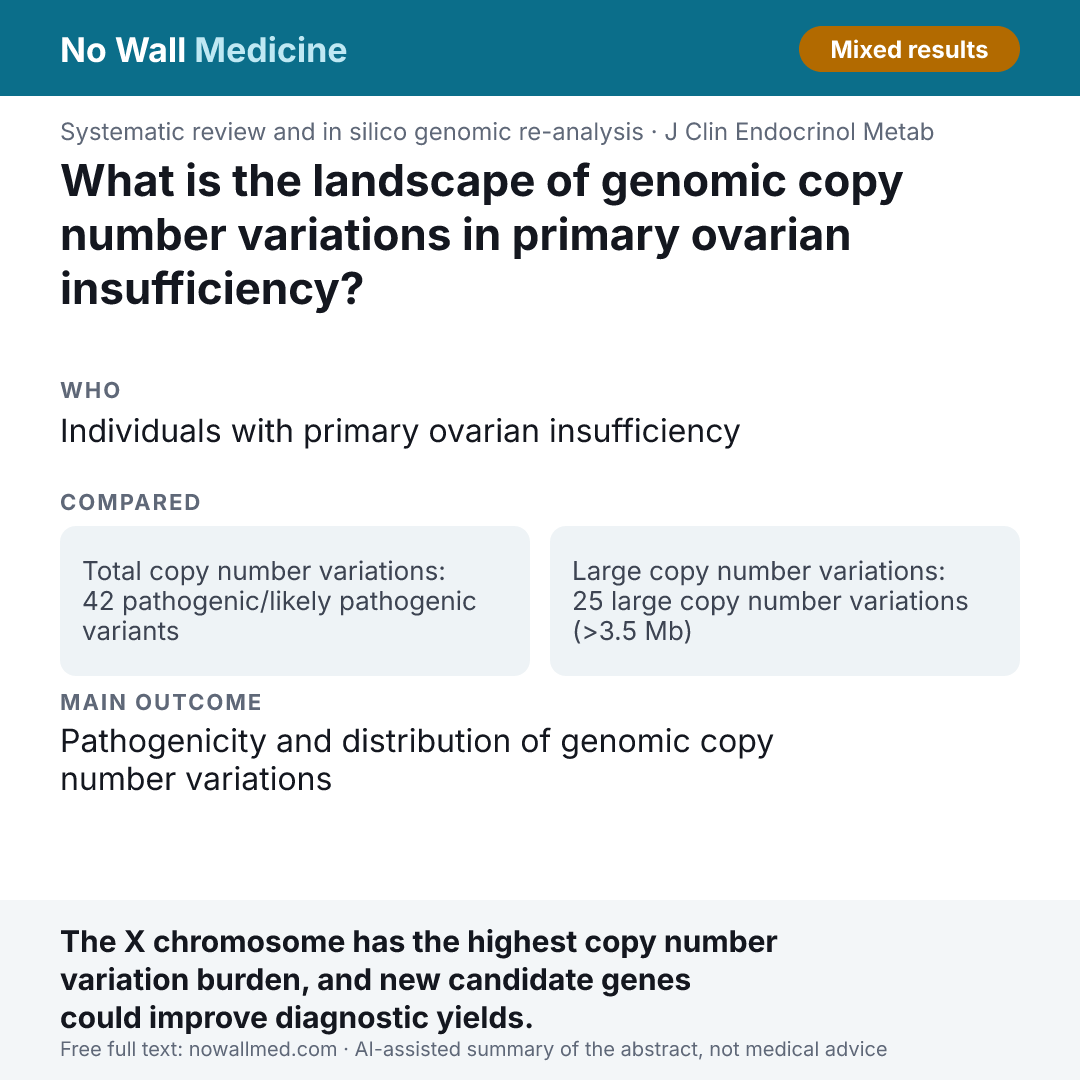
Clinical question: What is the landscape of genomic copy number variations in primary ovarian insufficiency?
Why it matters: The contribution of structural genomic variations to primary ovarian insufficiency remains incompletely mapped despite the known role of genetic factors.
Key points
- Researchers reviewed 382 copy number variations, which are deletions or duplications of DNA segments, from 25 studies involving individuals with primary ovarian insufficiency.
- The re-evaluation identified 42 pathogenic or likely pathogenic variants and 25 large variations greater than 3.5 megabases in size.
- The X chromosome showed the highest burden of these variations, and four candidate genes were identified that are highly expressed in the ovaries.
Headline and key points written with AI from the paper’s abstract, with every number checked against it. Read the paper before relying on them.
Was this summary helpful?
Subject terms
Headline, design, result, key points, caveat and citation as plain text.
Cite this article
Hossein Garakani M, Kakavand K, Hajiesmaeili Y, et al. Systematic mapping and in silico reevaluation of genomic copy number variations in primary ovarian insufficiency. J Clin Endocrinol Metab. 2026;111(8):2166-2179. doi:10.1210/clinem/dgag202
Spotted a mistake? Suggest a correction