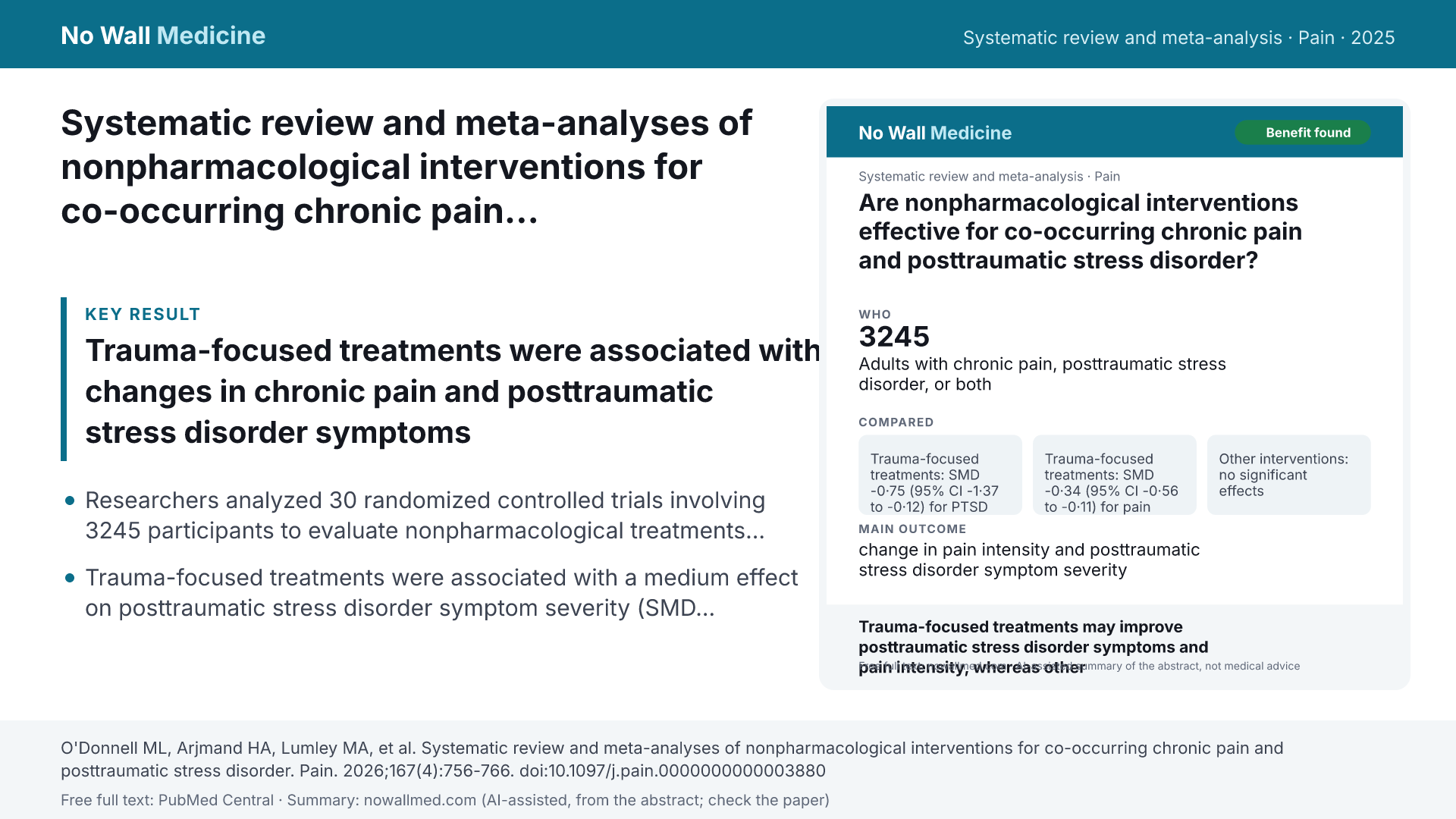
Trauma-focused treatments were associated with changes in chronic pain and posttraumatic stress disorder symptoms
Systematic review and meta-analyses of nonpharmacological interventions for co-occurring chronic pain and posttraumatic stress disorder
Systematic review and meta-analysisBenefit found
Are nonpharmacological interventions effective for co-occurring chronic pain and posttraumatic stress disorder?
Who
3245
Adults with chronic pain, posttraumatic stress disorder, or both
Compared
Trauma-focused treatments: SMD -0·75 (95% CI -1·37 to -0·12) for PTSD
Trauma-focused treatments: SMD -0·34 (95% CI -0·56 to -0·11) for pain
Other interventions: no significant effects
Main outcome
change in pain intensity and posttraumatic stress disorder symptom severity
Result: SMD -0·75 (95% CI -1·37 to -0·12) for PTSD; SMD -0·34 (95% CI -0·56 to -0·11) for pain
Bottom line: Trauma-focused treatments may improve posttraumatic stress disorder symptoms and pain intensity, whereas other nonpharmacological therapies showed no significant effects.
Limitation: Most studies were methodologically weak and evidence quality was low.
Pain · 2025-12-03 · Save PNG
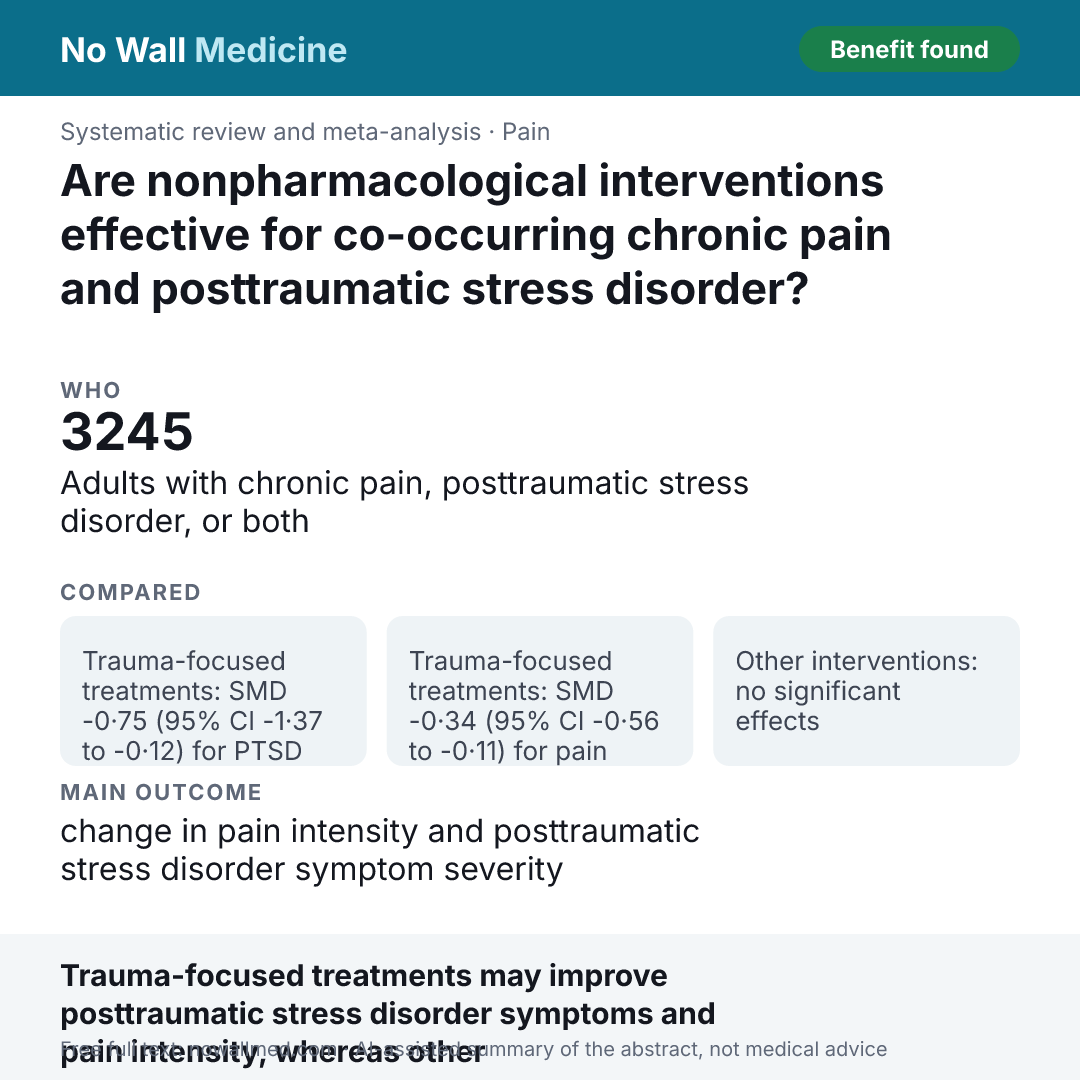
Clinical question: Are nonpharmacological interventions effective for co-occurring chronic pain and posttraumatic stress disorder?
Why it matters: Clinicians lack sufficient evidence regarding effective nonpharmacological treatments for patients experiencing both chronic pain and posttraumatic stress disorder.
Key points
- Researchers analyzed 30 randomized controlled trials involving 3245 participants to evaluate nonpharmacological treatments for chronic pain and posttraumatic stress disorder.
- Trauma-focused treatments were associated with a medium effect on posttraumatic stress disorder symptom severity (SMD -0·75, 95% CI -1·37 to -0·12) and a small effect on pain intensity (SMD -0·34, 95% CI -0·56 to -0·11).
- No significant effects were found for cognitive-behavioral therapies, mind-body therapies, or peripheral modulation interventions for either outcome.
Limitation the authors note: Most studies included in the review were methodologically weak.
Headline and key points written with AI from the paper’s abstract, with every number checked against it. Read the paper before relying on them.
Was this summary helpful?
Subject terms
Headline, design, result, key points, caveat and citation as plain text.
Cite this article
O'Donnell ML, Arjmand HA, Lumley MA, et al. Systematic review and meta-analyses of nonpharmacological interventions for co-occurring chronic pain and posttraumatic stress disorder. Pain. 2026;167(4):756-766. doi:10.1097/j.pain.0000000000003880
Spotted a mistake? Suggest a correction