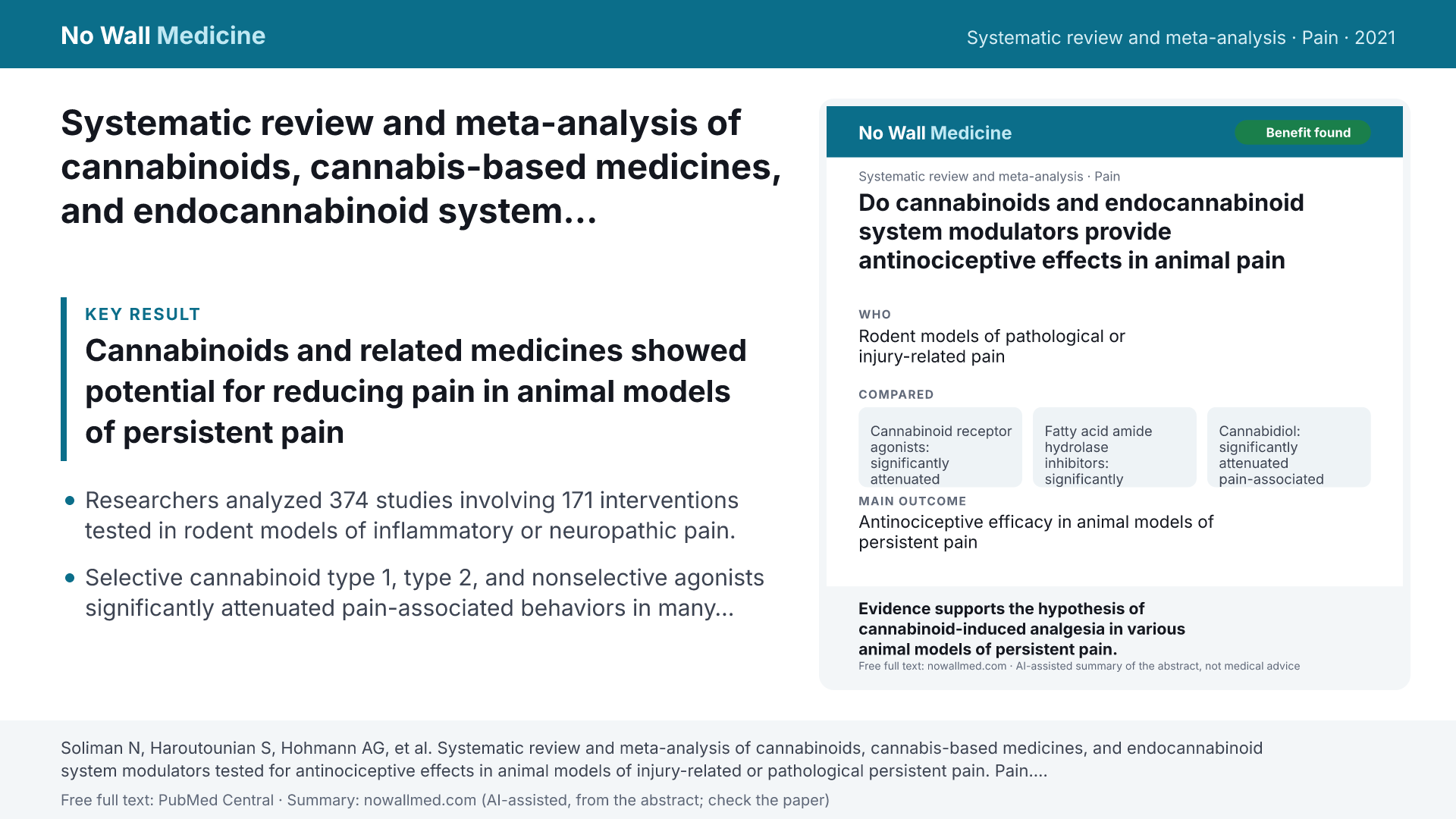
Systematic review and meta-analysis of cannabinoids, cannabis-based medicines, and endocannabinoid system modulators tested for antinociceptive effects in animal models of injury-related or pathological persistent pain
Key result: Cannabinoids and related medicines showed potential for reducing pain in animal models of persistent pain
Key points
- Researchers analyzed 374 studies involving 171 interventions tested in rodent models of inflammatory or neuropathic pain.
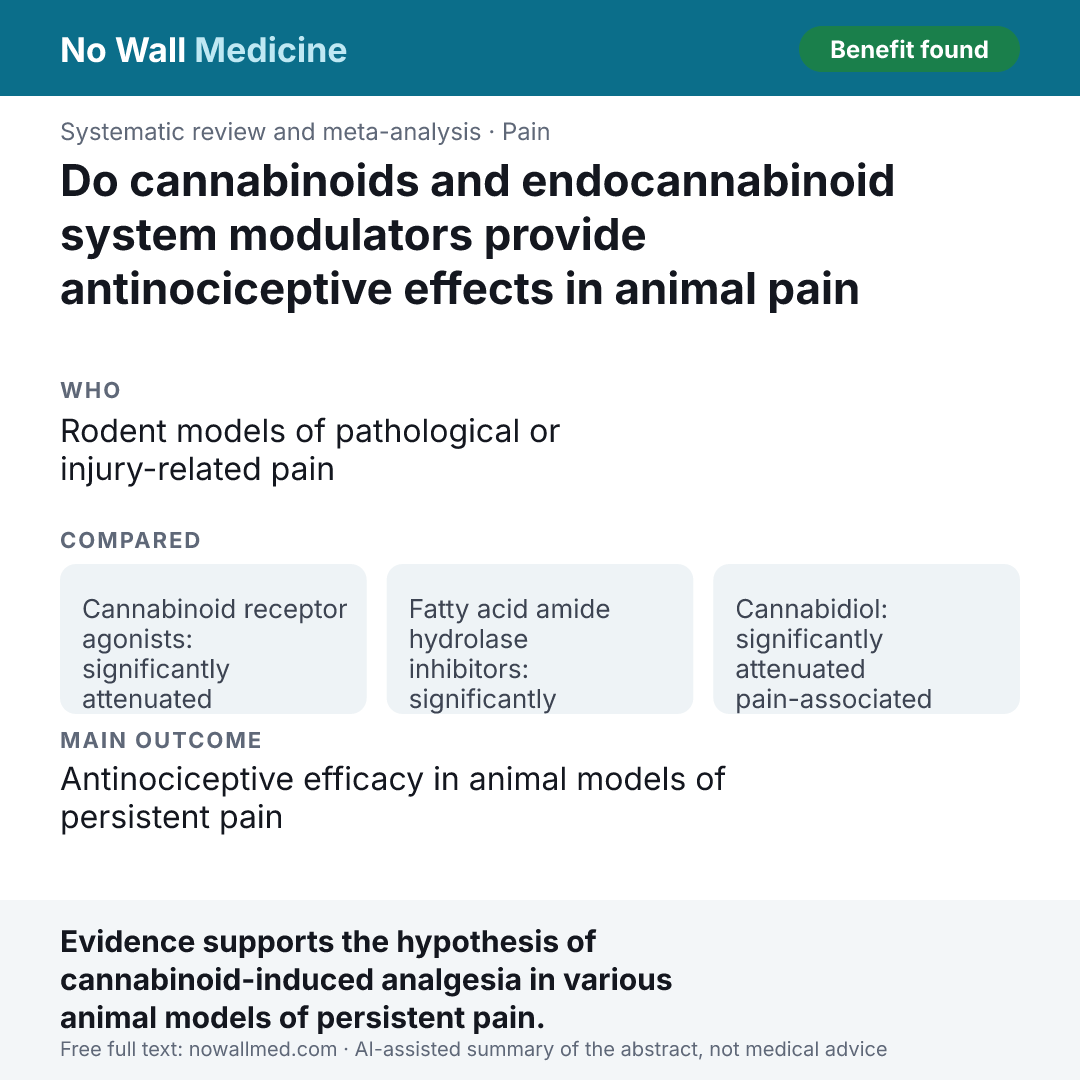
- Selective cannabinoid type 1, type 2, and nonselective agonists significantly attenuated pain-associated behaviors in many pain models.
- Fatty acid amide hydrolase inhibitors, monoacylglycerol lipase inhibitors, and cannabidiol significantly attenuated pain behaviors in neuropathic pain models.
Limitation the authors note: The studies had an unclear risk of bias because the reporting of criteria to reduce that risk was low.
Discussion prompts
- Would these patients look like yours? Who was left out?
- Is the main outcome one that matters to patients?
- Is the difference large enough to change what you do?
Cite: Soliman N, Haroutounian S, Hohmann AG, et al. Systematic review and meta-analysis of cannabinoids, cannabis-based medicines, and endocannabinoid system modulators tested for antinociceptive effects in animal models of injury-related or pathological persistent pain. Pain. 2021;162(Suppl 1):S26-S44. doi:10.1097/j.pain.0000000000002269
Free full text: PubMed Central · Summary and visual abstract: nowallmed.com/a/systematic-review-and-meta-analysis-of-cannabinoids-cannabis-based-hvumkr/ (AI-assisted from the abstract; check the paper before relying on it).