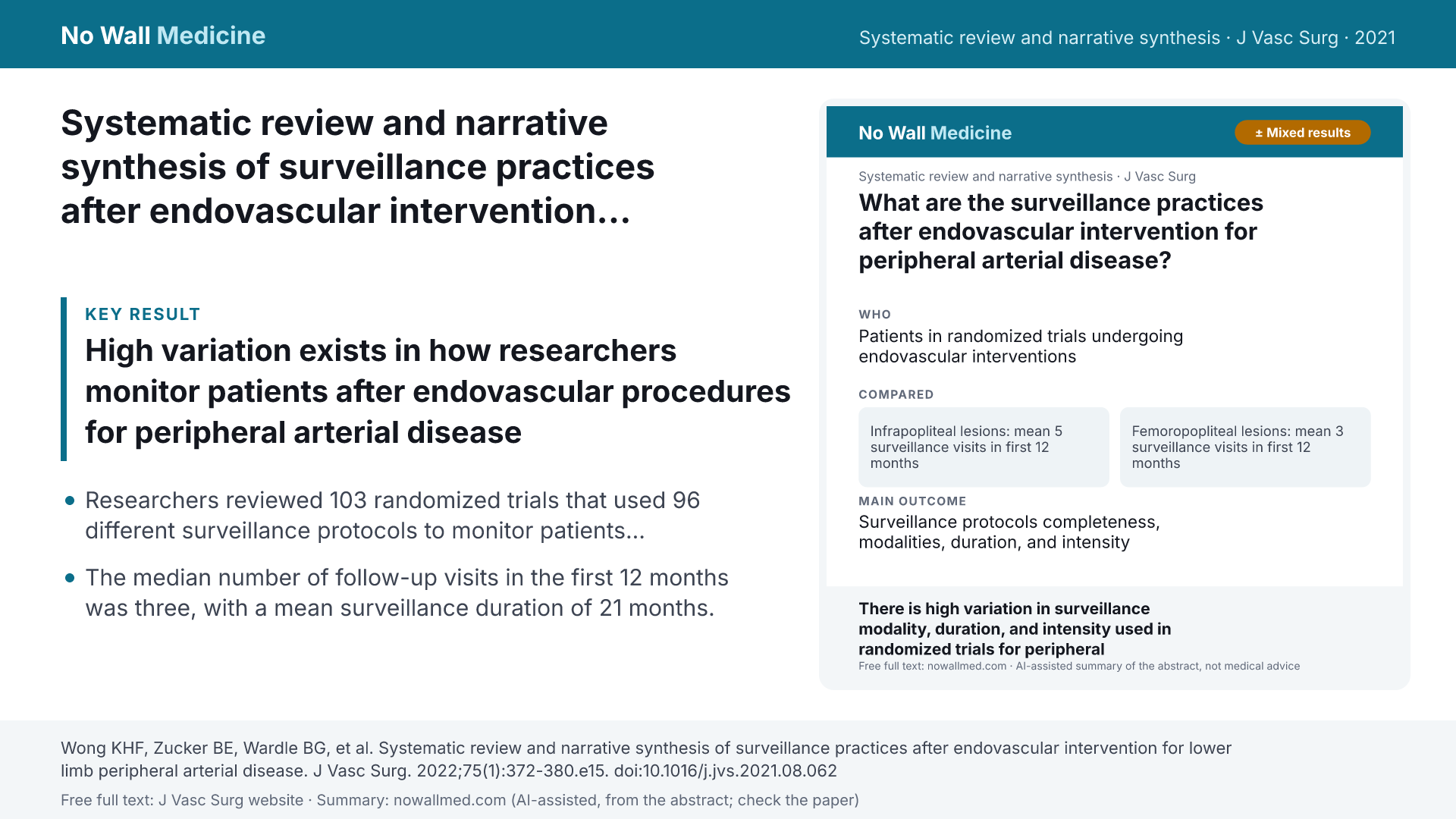
High variation exists in how researchers monitor patients after endovascular procedures for peripheral arterial disease
Systematic review and narrative synthesis of surveillance practices after endovascular intervention for lower limb peripheral arterial disease
Systematic review and narrative synthesisMixed results
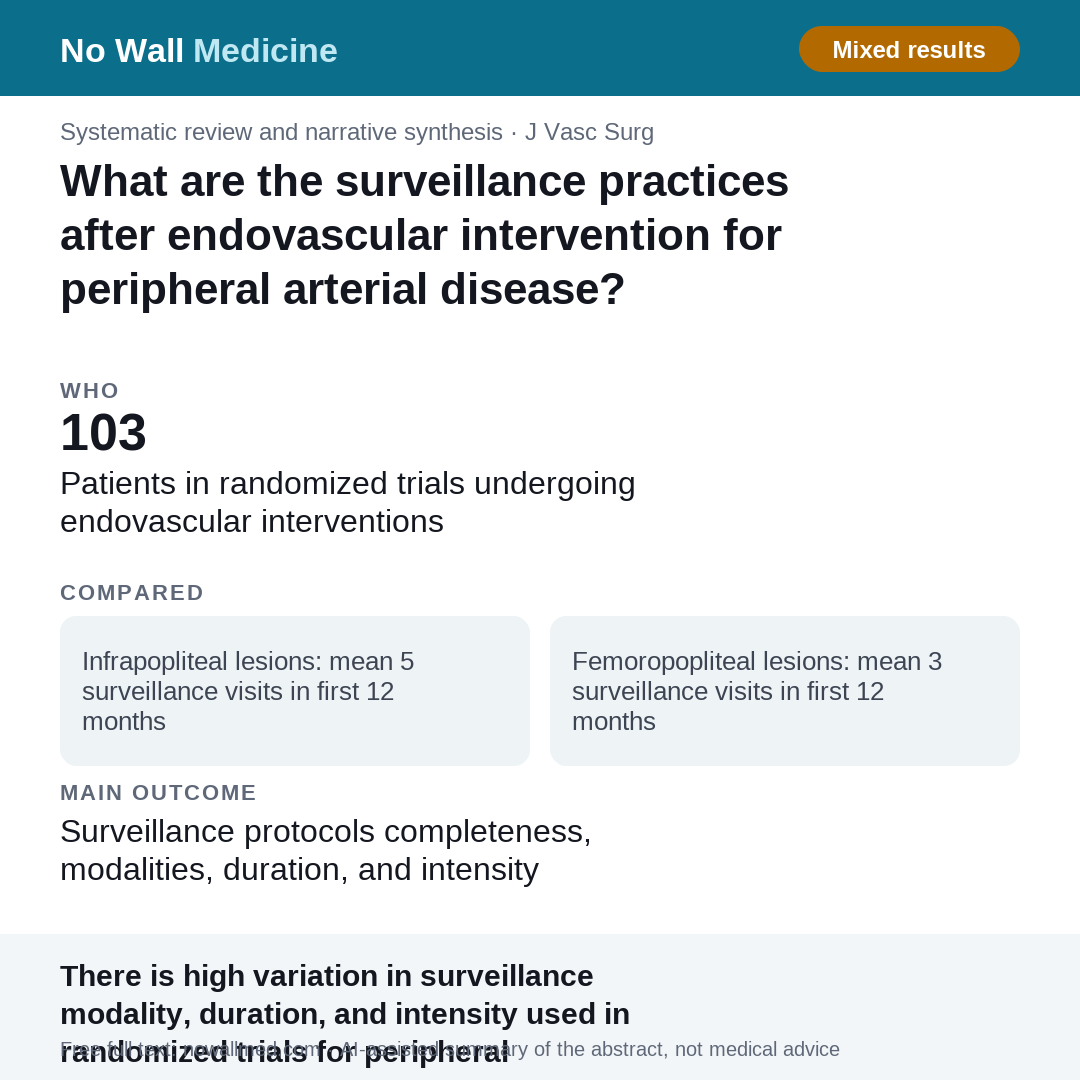
What are the surveillance practices after endovascular intervention for peripheral arterial disease?
Who
103
Patients in randomized trials undergoing endovascular interventions
Compared
Infrapopliteal lesions: mean 5 surveillance visits in first 12 months
Femoropopliteal lesions: mean 3 surveillance visits in first 12 months
Main outcome
Surveillance protocols completeness, modalities, duration, and intensity
Bottom line: There is high variation in surveillance modality, duration, and intensity used in randomized trials for peripheral endovascular intervention.
J Vasc Surg · 2021-11-24Download image
Clinical question: What are the surveillance practices after endovascular intervention for peripheral arterial disease?
Why it matters: The optimal timing and method for monitoring patients after endovascular intervention for peripheral arterial disease remains controversial.
Key points
- Researchers reviewed 103 randomized trials that used 96 different surveillance protocols to monitor patients after endovascular procedures for peripheral arterial disease.
- The median number of follow-up visits in the first 12 months was three, with a mean surveillance duration of 21 months.
- Protocol details were incomplete in 32% of trials, and most used a mean of 3.46 different monitoring methods, such as clinical exams and ultrasound.
Headline and key points written with AI from the paper’s abstract, with every number checked against it. Read the paper before relying on them.
Was this summary helpful?
Subject terms
Cite this article
Wong KHF, Zucker BE, Wardle BG, et al. Systematic review and narrative synthesis of surveillance practices after endovascular intervention for lower limb peripheral arterial disease. J Vasc Surg. 2021. doi:10.1016/j.jvs.2021.08.062
Spotted a mistake? Suggest a correction