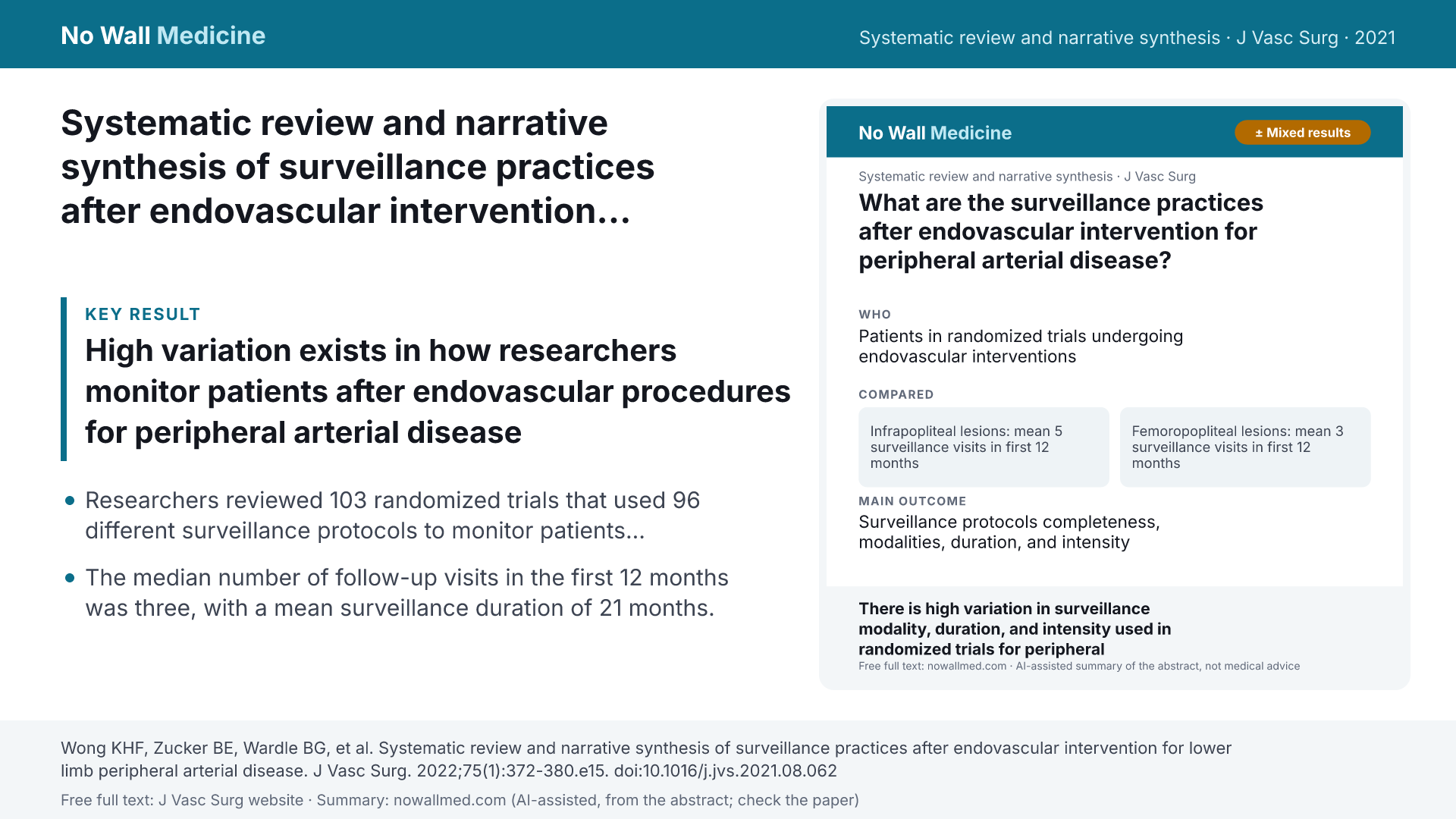
Systematic review and narrative synthesis of surveillance practices after endovascular intervention for lower limb peripheral arterial disease
Key result: High variation exists in how researchers monitor patients after endovascular procedures for peripheral arterial disease
Key points
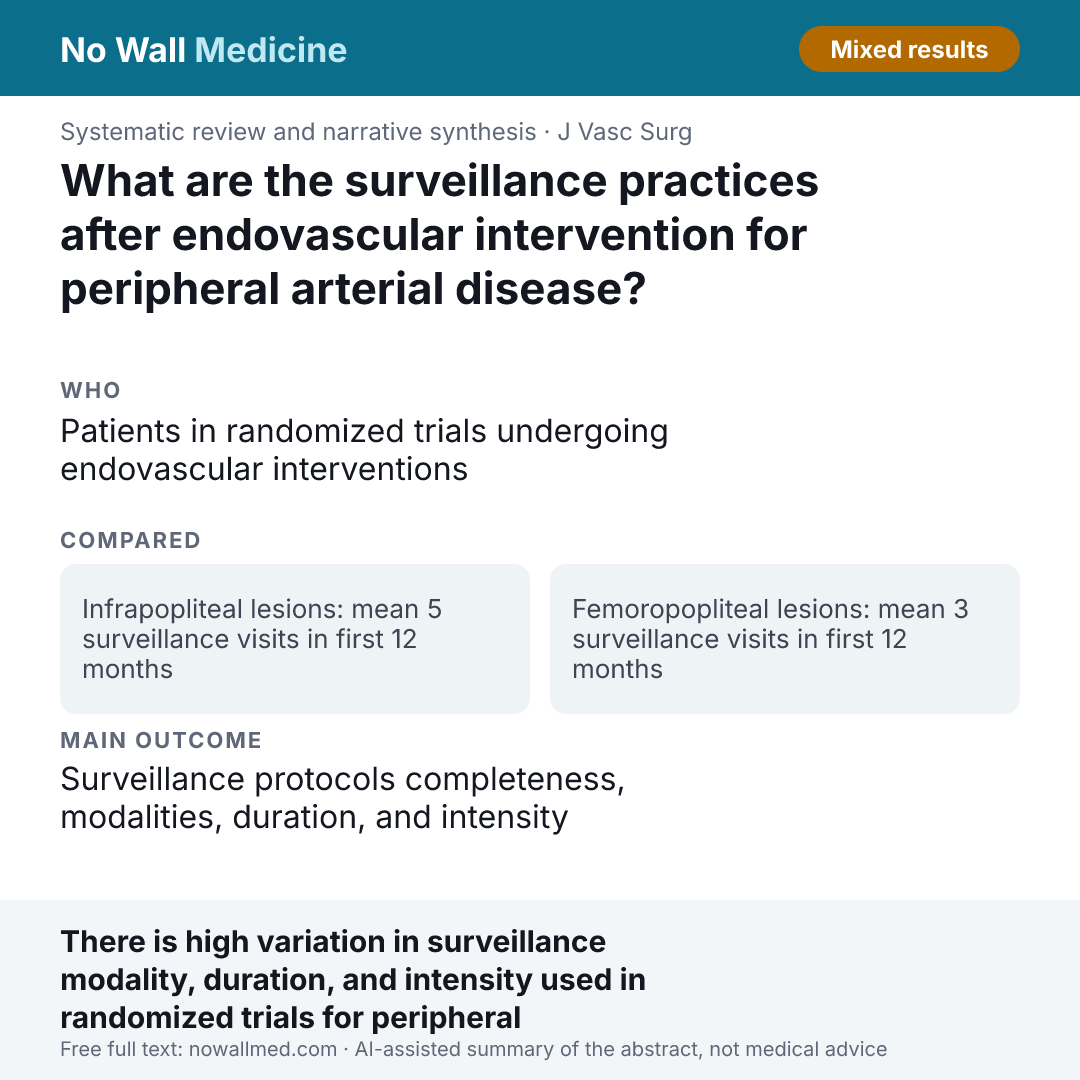
- Researchers reviewed 103 randomized trials that used 96 different surveillance protocols to monitor patients after endovascular procedures for peripheral arterial disease.
- The median number of follow-up visits in the first 12 months was three, with a mean surveillance duration of 21 months.
- Protocol details were incomplete in 32% of trials, and most used a mean of 3.46 different monitoring methods, such as clinical exams and ultrasound.
Why it matters: The optimal timing and method for monitoring patients after endovascular intervention for peripheral arterial disease remains controversial.
Discussion prompts
- Would these patients look like yours? Who was left out?
- Is the main outcome one that matters to patients?
- Is the difference large enough to change what you do?
Cite: Wong KHF, Zucker BE, Wardle BG, et al. Systematic review and narrative synthesis of surveillance practices after endovascular intervention for lower limb peripheral arterial disease. J Vasc Surg. 2022;75(1):372-380.e15. doi:10.1016/j.jvs.2021.08.062
Free full text: J Vasc Surg website · Summary and visual abstract: nowallmed.com/a/systematic-review-and-narrative-synthesis-of-surveillance-practices-12c2v7h/ (AI-assisted from the abstract; check the paper before relying on it).