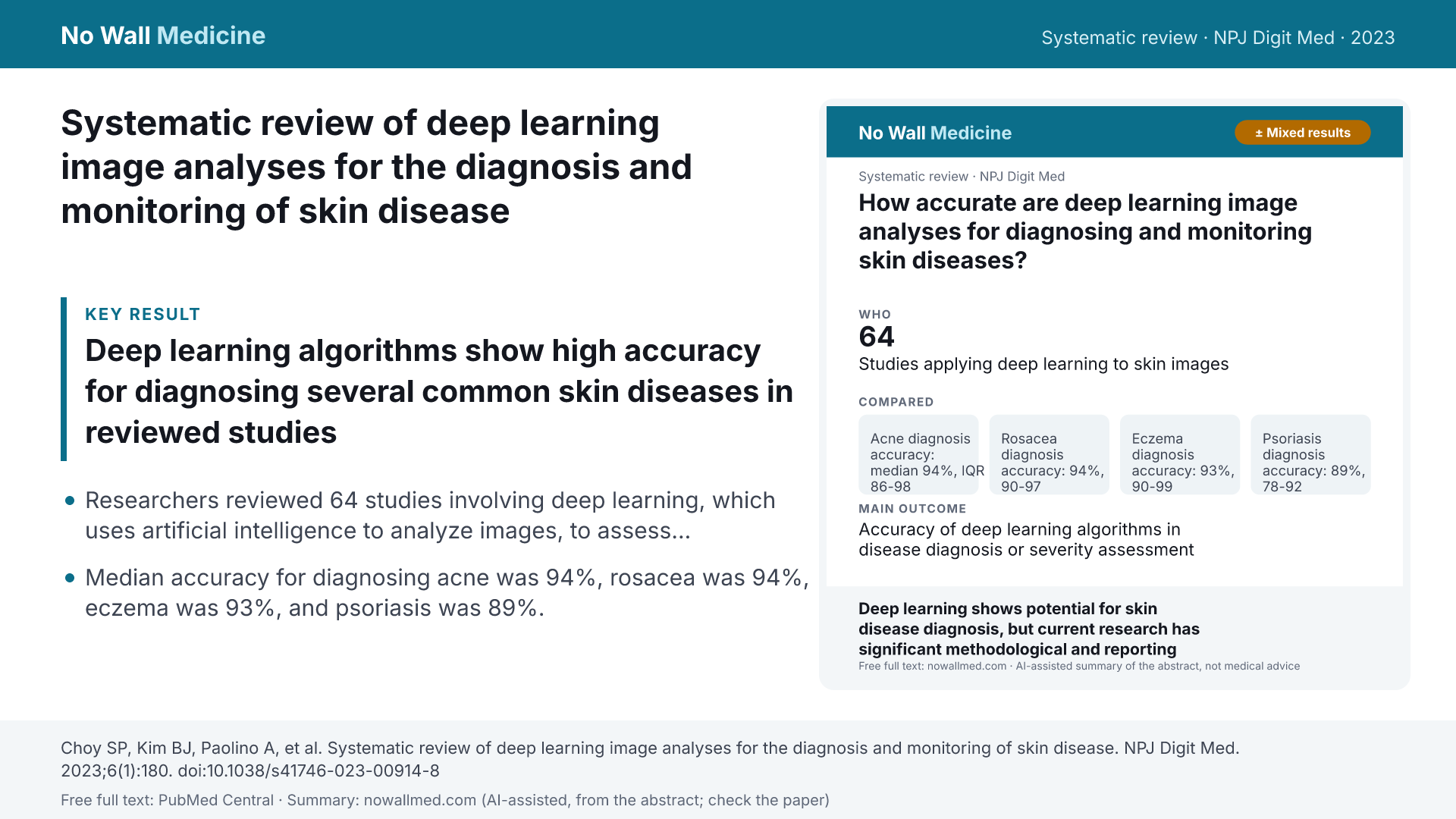
Deep learning algorithms show high accuracy for diagnosing several common skin diseases in reviewed studies
Systematic review of deep learning image analyses for the diagnosis and monitoring of skin disease
Systematic reviewMixed results
How accurate are deep learning image analyses for diagnosing and monitoring skin diseases?
Who
64
Studies applying deep learning to skin images
Compared
Acne diagnosis accuracy: median 94%, IQR 86-98
Rosacea diagnosis accuracy: 94%, 90-97
Eczema diagnosis accuracy: 93%, 90-99
Psoriasis diagnosis accuracy: 89%, 78-92
Main outcome
Accuracy of deep learning algorithms in disease diagnosis or severity assessment
Bottom line: Deep learning shows potential for skin disease diagnosis, but current research has significant methodological and reporting limitations.
Limitation: High risk-of-bias and high-level applicability concerns in most studies, with limited reporting on ethnicity or skin type.
NPJ Digit Med · 2023-09-27Download image
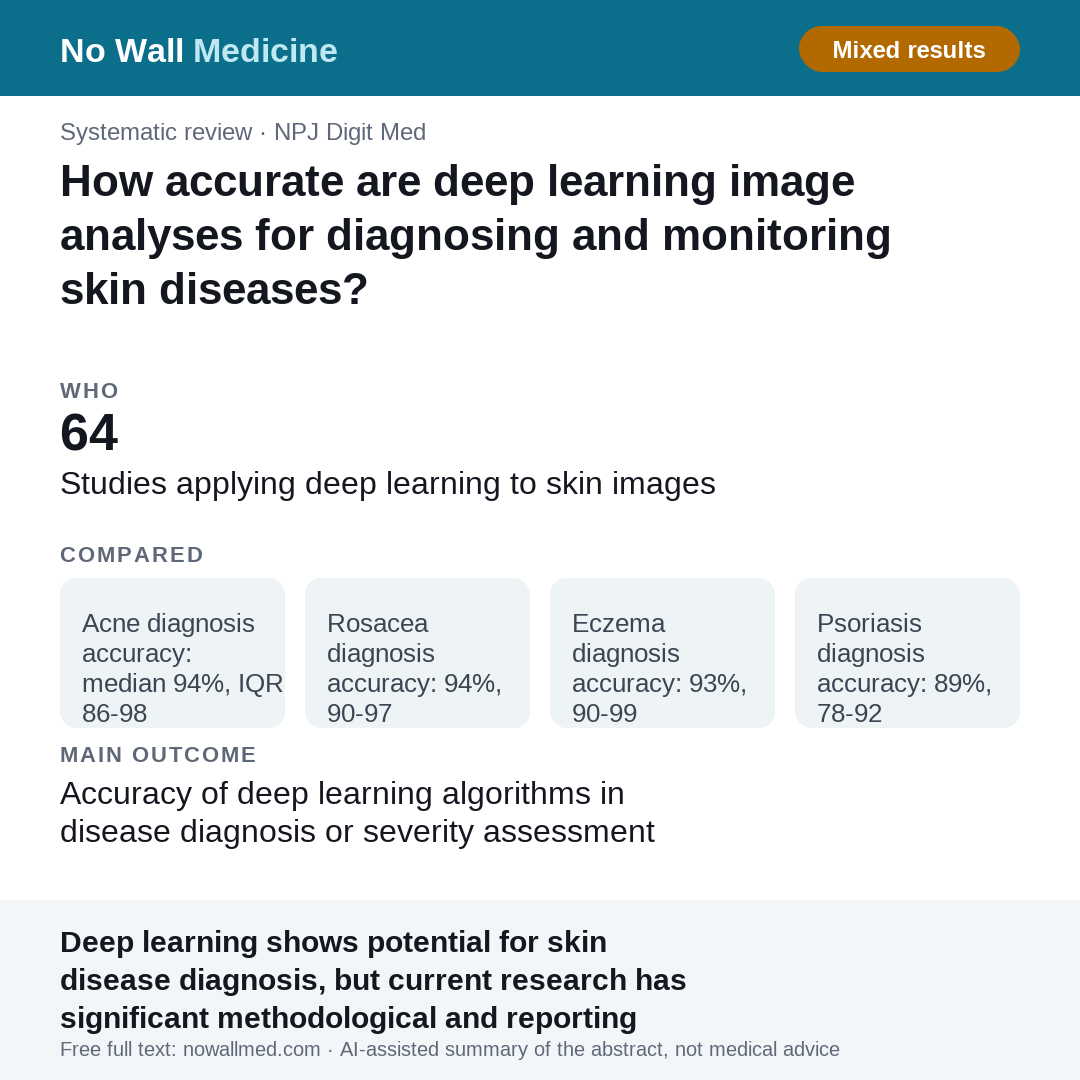
Clinical question: How accurate are deep learning image analyses for diagnosing and monitoring skin diseases?
Why it matters: It is unknown if deep learning can accurately diagnose and monitor the more than 2000 skin diseases beyond just skin cancer.
Key points
- Researchers reviewed 64 studies involving deep learning, which uses artificial intelligence to analyze images, to assess the accuracy of diagnosing and monitoring skin diseases.
- Median accuracy for diagnosing acne was 94%, rosacea was 94%, eczema was 93%, and psoriasis was 89%.
- Most studies had a high risk of bias, and only 12 of 64 studies reported the ethnicity or skin type of the participants.
Limitation the authors note: The authors stated that 59 (92%) studies had high risk-of-bias judgements and 62 (97%) had high-level applicability concerns.
Headline and key points written with AI from the paper’s abstract, with every number checked against it. Read the paper before relying on them.
Was this summary helpful?
Cite this article
Choy SP, Kim BJ, Paolino A, Tan WR, Lim SML, Seo J. Systematic review of deep learning image analyses for the diagnosis and monitoring of skin disease. NPJ Digit Med. 2023. doi:10.1038/s41746-023-00914-8
Spotted a mistake? Suggest a correction
Top studies every Monday
The week’s key trials and guidelines in your specialties, plus any topics you follow. By email, free.
Get the weekly digest